The Safekeep

by Yael Van Der Wouden

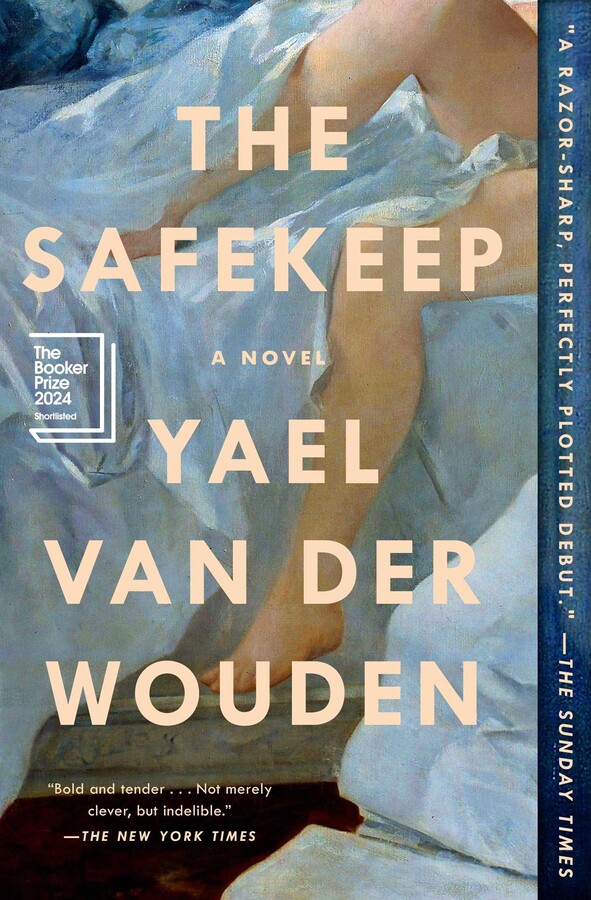
The Safekeep is a novel that explores themes of pain, loss, isolation, identity, and love. Set in the aftermath of World War II, the protagonist, Isabel, leads a life marked by routine and emotional detachment. Although she maintains a relationship with her two brothers—Hendrick, to whom she is close, and Louis, whom she finds irritating—her social circle is limited. Isabel continues to live in her childhood home following her mother’s death, with few connections beyond her aunt, uncle Karel, and Johan, a persistent suitor whom she entertains out of obligation. Her days are consumed by managing the household, particularly through meticulous inventory of its possessions. She fixates on counting the spoons daily to ensure nothing is missing. The house serves as her sanctuary and sole companion, yet it ultimately belongs to her eldest brother, Louis.

Isabel seems cold and rigid. When Louis brings his mistress, Rose, to live at the house for a month while he is away, Isabel is incensed, recoiling from any attempt at friendship from Rose, and especially affronted when Louis says Rose can sleep in their dead mother’s room.

Isabel’s life can be divided into two parts: before Rose and after. Rose becomes the catalyst for various revelations about Isabel’s history, relationships, and sexuality. The novel’s first third focuses on Isabel’s character and her daily routines, illustrating her lonely existence and posing the question of whether it is by choice. The second third explores Rose through her journal entries, as read by Isabel, while the last third examines the consequences of decisions made and the insights gained about oneself and others.

The novel is skillfully crafted. Its sensual scenes are neither gratuitous nor exploitative, and the unfolding love story is both poignant and ultimately hopeful.

I Medusa

by Ayana Gray

“ He is wealthy and popular…he will not be punished. Meanwhile, the girls here are prey.” (I Medusa).

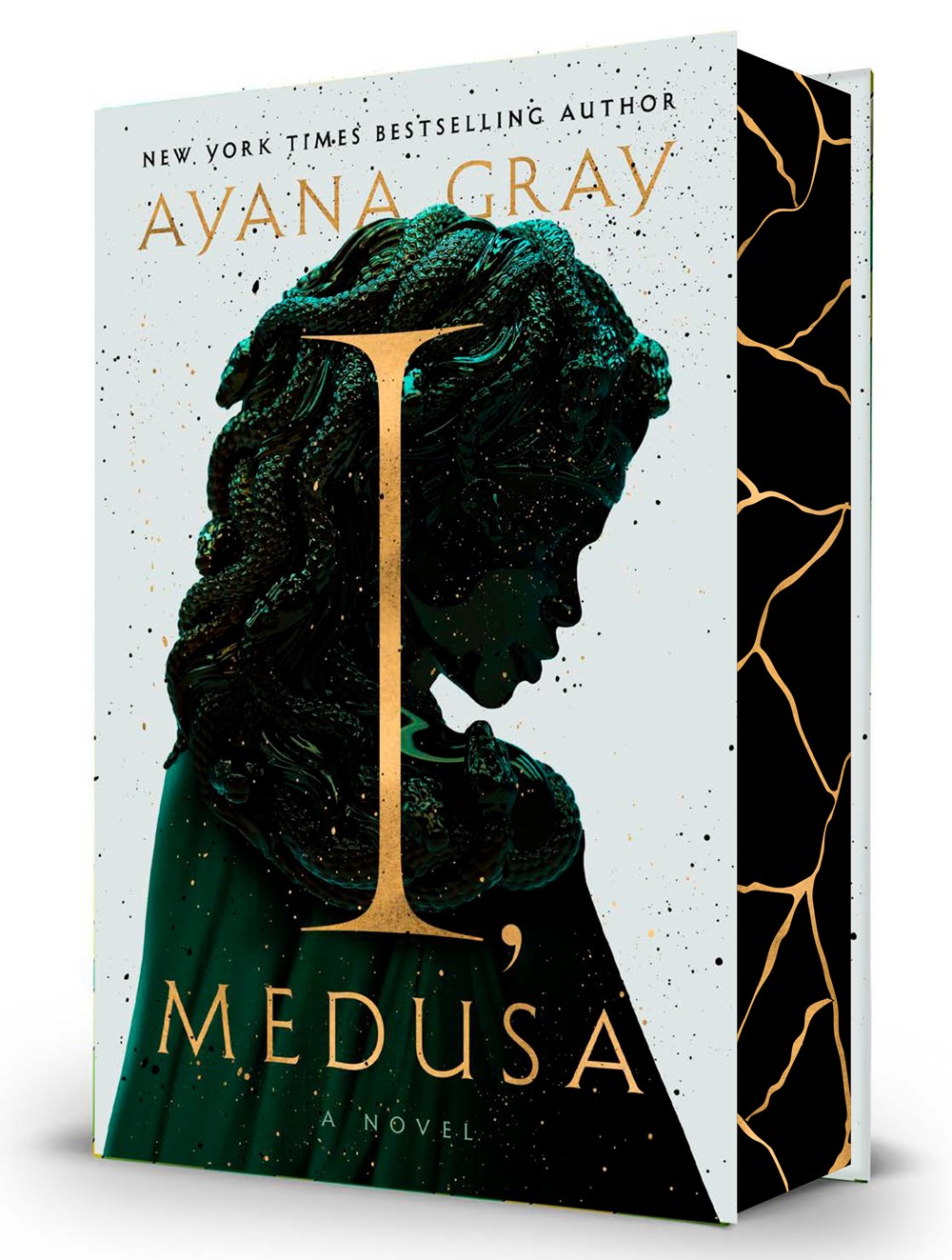
I Medusa turned out to be an unexpected surprise. The novel unfolds over a year. Medusa, or Meddy, is 17 and preparing with her sisters for a spring feast. Unlike her sisters—Euryale and Stheno, both goddesses—Meddy is mortal. Her parents, gods of the Sea Court but not Olympians, still resent their lesser status. Meddy feels powerless compared to her family but possesses intellect, courage, and a strong sense of justice. She is sensitive to injustices in the court, including discrimination and mistreatment of women and children. These qualities attract Athena, who invites Medusa to be her acolyte in Athens, where, as myth suggests, chaos soon follows.

Ayana Grey does an incredible job in humanising Medusa as a 17-year-old girl. From her infatuation with Posidon and her inability to recognise the fact that he is grooming her for his own sexual conquest (she is constantly making excuses for his behaviour, attempting to convince herself that he sees her as special and that his love for her is different from the “love” he has for his wife, Amphitrite, or his mistresses). In fact, we, the readers, can’t help but yell at her in her naivety… However, her way of thinking seems very age-appropriate.

Medusa is characterized as a young woman we can’t help but love, even though her choices frustrate us. Gray reminds us of her age and that her choices stem from her parents’ poor upbringing—for example, she has no idea what sex is and is confused by her body’s response to seeing Poseidon with a sea nymph during her spring feast. She is often ruled by her heart rather than her mind. Her pursuit of justice turns violent, first with her fists, then with the power her curse gives her.

*spoiler warning*

I was so brokenhearted at the end, even though it was no surprise. Meddy goes to sleep with hope and optimism in her heart. Dreaming of her future where she can use her curse in a way to benefit others, just to meet her demise before the sun rises. We get to know Meddy intimately; she is characterised as an empathetic, sweet young woman, even after she is cursed. She is a victim of those in power, not a monstrous villain as most myths portray her.

Ayana Grey uses her narrative to discuss the nature of rape culture and the issue of men in power getting away with exploiting young women … two issues that we are facing today. It would make an amazing book club pick or novel for study, as it offers a plethora of points of discussion.

Thank you to Random House and Netgalley for the copy

Hamnet

by Maggie O’Farrell

I love Shakespeare and loved teaching his works. When I taught Hamlet, I also explored Shakespeare’s life and the play’s historical background with my students.

Because of this, my review is personal and shaped by my love for Shakespeare and his famous play.

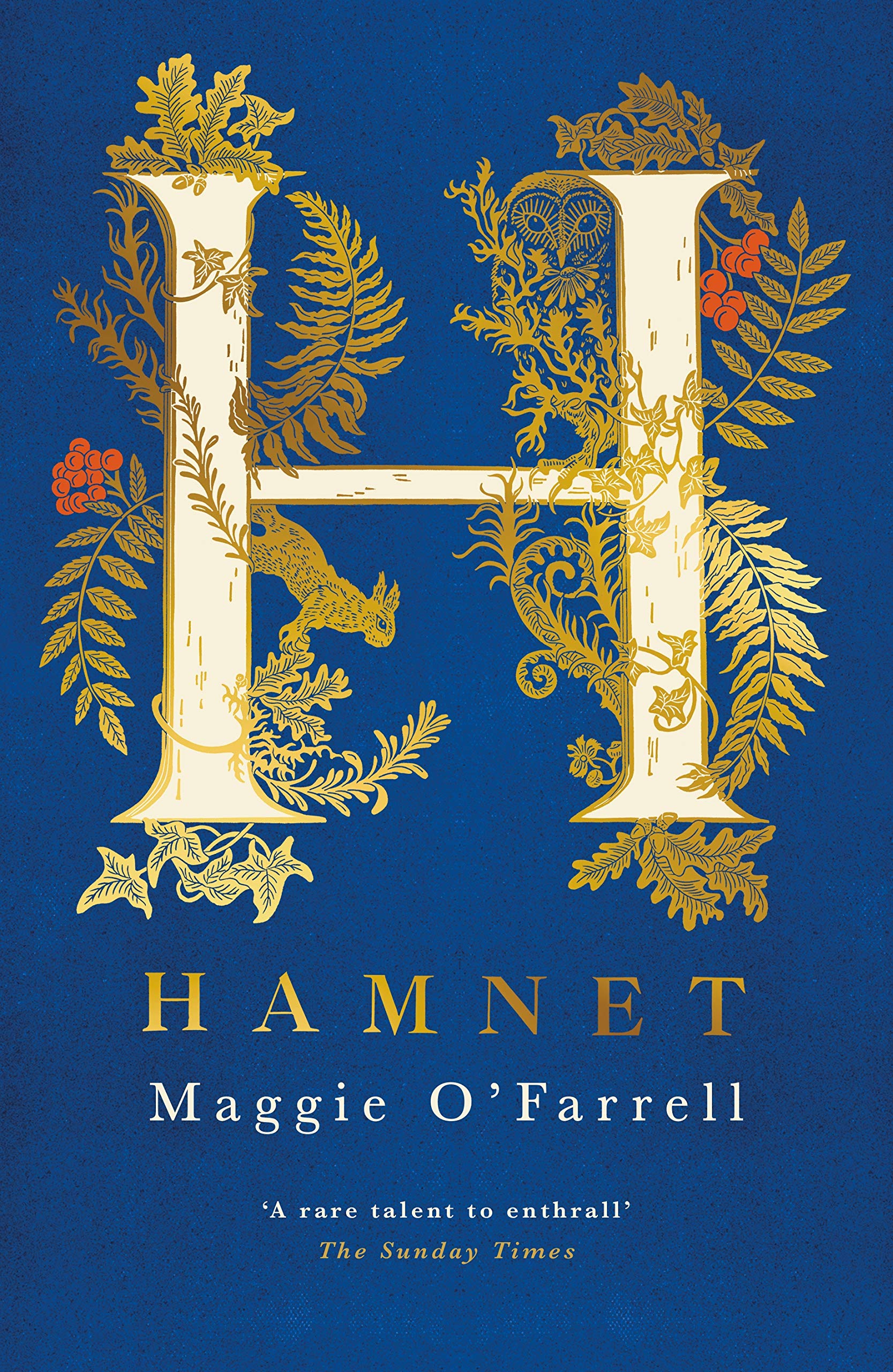
The novel begins as we meet Hamnet, the son of William and Agnes. He is desperately looking for an adult to help his twin sister, Judith, who has suddenly become very ill. We see the story through Hamnet’s eyes—his worry for Judith, his confusion when he can’t find help, and the pain he feels from his grandfather’s abuse.

I loved this book. The main character is Shakespeare’s wife, Agnes. (Shakespeare’s real wife was named Anne, but that detail doesn’t matter here.) Agnes has become one of my favorite female characters in literature. We first meet her as a young girl, witnessing her mother’s traumatic death during childbirth. Her mother was gentle, mystical, and almost otherworldly. Later, we learn about Agnes’s abuse by her stepmother, who always knew that Agnes’s mother was her husband’s true love. Like her mother, Agnes is a healer, a bee whisperer, and sensitive to the spirit world. Because of this, both her stepmother and the townspeople see her as odd and unmarriageable.

But when a young man arrives to tutor her brothers and takes a particular interest in her, she cannot help but recognize that beneath him, his hidden mind and a soul that is unlike any she’s known.

Spoiler alert!

We find out that poor little Judith has the plague, and Agnes uses every bit of learning she has gleaned over the years to cure her child. In the meantime, William, who is off with his players entertaining audiences with his plays, is sent. The attention is focused on Judith; all the while, we should be concerned about young Hamnet. Young Hamlet is the sweetest son/brother, selfless, smart, and incredibly brave. We, the readers, are indeed heartbroken over his death. 

The novel then explores the grief of Agnes and William. Agnes’s deep heartbreak stands out, especially since we have followed her life so closely throughout the story.

I am bewitched by O’Farrell’s writing. Its lyrical style is enchanting and impactful. She brilliantly varies timelines and various character points of view to keep the reader mesmerized with the story and empathetic towards her characters. 

I would definitely use this novel as a mentor text and as a literary study for my students.

Season of Fear

by Amy Cooper

Season of Fear was the perfect book to start my new year. An easy, fast-paced read that was hugely entertaining and at times poignant in theme. 

Ilse lives with her mother and sister in Heulensee, a small village surrounded by the forest Hexenwald, a forest filled with bloodthirsty beasts like the Nachzehrer, a vampiric creature, and the enormous serpents Lindurum. In order to stave off the beasts of Hexenwald, the women, just the woman, have to feed the “Saint of Fear” their terror. The more authentic and terrifying their screams, the more satiated the Saint will be. But not before it devours a woman or two.

Heulensee is a village that follows several religious practices that are detrimental to women. They are the ones who have to feed the Saint. They are the ones who must undergo a rite at 18, during which they must visit the Saint’s lair and survive the night to placate not only the monster but also the preacher. 

Unfortunately,  Ilse has a problem. She does not feel fear. She feels sadness, anger, and a plethora of other emotions, but she does not feel fear, a fact that angers the Saint, who then threatens her that if she does not express adequate fear, it will devour her sister Dorthea. So Ilse is then banished to Hexenwald in order to find a way to defeat the Saint and save her sister. On her journey, Ilse learns about herself, the origins of the Saint, and a way to use her absence of fear to protect herself and those she loves. 

I really enjoyed this novel; it reads like a traditional fairy tale, complete with folk-eating beasts and lessons to be learned. 

Thank you to Little Brown and Co. and Netgalley for the copy.

Wild Reverence

by Rebecca Ross

Wild Reverence is a slow-burning Romantacy story. For most of the book, we are schooled in a world of Gods, Goddesses, and Mortals. We have the Immortals of the Under Realm and the Immortals of the Skyward Realm, and poor Matilda’s parentage includes both… which leaves a young girl struggling with a sense of identity and belonging. When tragedy occurs in her Under Realm home, she is forced to leave and find solace in Skyward, but will she be accepted? 

In the meantime, Matilda has met the boy of her dreams, Vincent, the only problem is she can only meet him in his dreams, oh, and he’s a mortal. For a chunk of this novel, Matilda’s and Vincent’s story is secondary; they “grow up,” each finding their place in the world (or, in Matilda’s case, her worlds), and each coming face to face with their newfound powers and the discovery of their weaknesses. Each faces betrayals and moments of weakness, but in these moments, each learns who they truly are and what potential they have to save the ones they love, unless, of course, it is contrary to what the fates allow.

So I’m not a huge fan of Romantacy, and I’ve never read anything by Rebecca Ross. I picked up Divine Rivals once and carried it around the bookstore, but didn’t end up buying it, and I am beginning to rue that day. Not that you need to read the Divine Rival books to fully enjoy Wild Reverence. I really admire Ross’s writing. It is really quite beautiful. Her prose is vivid, and the plot unravels like a movie in my imagination. 

A perfect Christmas read AND a perfect gift for those in your life who are fans of Romantacy. 

Thank you to St Martin’s Press and Netgalley for the copy.

Fox

by Joyce Carol Oats

It took me a while to read this novel. Because of its VERY heavy subject matter, I had to take a good, long break between reading sessions. Not because it wasn’t incredibly engaging, but because I couldn’t sit with the incredibly “icky” feeling that would sit and grow in the pit of my stomach, but then again, most of Joyce Carol Oats’ writing makes me feel unsettled. She does not tiptoe around issues and immerses her readers in this psychological web of disturbed characters.

Everyone loves Mr Fox. He is a romantic, dashing English teacher who recites poetry. All the adolescent girls in his class adore him, and each feels especially special if chosen for his “Looking Glass Bookclub.” However, as his name implies, Mr Fox is a sexual predator who preys on his students. He is selective with the students for his club: they must be pretty and come from wealthy, powerful families.

One morning, a damaged car is found stuck in a bog. Inside is the mutilated body of Mr Fox. 

Who could have killed him? Was it the Headmistress who had a crush and discovered his secret? Or a parent, seeking revenge for their daughter’s trauma? The detective faces many suspects.

As the story progresses, more secrets are revealed, revealing a dark side of human nature. 

Oats mostly writes in the first person, placing us in the minds of various characters, including Mr Fox. Spending time inside the mind of a serial paedophile is incredibly taxing, so reader beware.

This novel explores class, exploitation, secrets, lies, and half-truths. Every character is deeply flawed. It’s hard to find any redeeming qualities among them.

Even though Joyce Carol Oates often writes on difficult topics, she is one of my favourite authors. Her talent with prose (she shows rather than tells) snares the reader until the end, when she releases you, unsettled.

Obvious trigger warnings for child sexual abuse. 

Thank you to Netgalley and Random House for the copy.

Gone Tonight

by Sarah Pekkanen

Is psychopathy hereditary? This is one of the questions readers will have whilst reading this novel. Ruth is keeping secrets. Secrets about her past. No one knows what she has done, not even her own daughter, Catherine. A catastrophic event happened when Ruth was still in high school, and she’s been on the run ever since. And you know what? She’s done a pretty good job at evading the people of her past, her father, mother, and even the brother she is so close to, who has had to live with her disappearance. Throughout life, she has perpetuated the lie that  when she became pregnant in high school, her overly religious parents abandoned her. She’s also done a pretty good job at raising her daughter, Catherine. As a single mother, Ruth has raised her daughter to be a successful nurse on her way to a new city and a new job. 

But life begins to go awry when Ruth starts showing signs of early-onset Alzheimer’s. Ruth begins to write the truth of her life, or at least what she remembers, in notebooks because she believes her daughter should know the truth of her parentage and the truth behind her mother’s story. 

Devastated by her mother’s diagnosis, Catherine cannot understand her refusal to get formally assessed or make care plans. Suspecting something is amiss—her mother’s responses feel more like lies than simple memory loss—Catherine starts investigating. What she uncovers proves to be confusing and contradictory than expected. Yet, bits of truth slowly emerge, forcing Catherine to realize she may not know the woman she’s called mother at all.

Pekkanen has organized her novel in chapters written from the viewpoints of both Ruth and Catherine, allowing us to see their individual perspectives. However, neither Ruth nor Catherine can be considered a reliable narrator, which adds ambiguity to the truths we encounter as readers and aligns our discovery process with Catherine’s.

Overall, this book offers an engaging and accessible read—an ideal respite between heavier novels. Its fast-paced plot makes it easy to finish in one sitting. 

Thank you to Netgalley and St Martin’s Press for the copy.

The Forest of Missing Girls

by Nichelle Giraldes

This book is a creepy hybrid where young women go missing and the community comes together to track down their kidnapper, or worse yet a serial killer and a supernatural science fiction novel (I’d reference a novel in particular but then I would be hugely spoiling the plot). 

The novel starts with Lia Gregg returning home to her mother, Elizabeth, and her sister, Evie, to their little house in the woods. Her father is there too, but he seems disengaged from his family and, well, is basically disengaged from the entire plot, to be honest. Lia has experienced a breakup with her boyfriend, and she’s feeling a little lost. Soon after her arrival, Evie and her friend Maddie are hanging out in the backyard when Maddie disappears. Maddie’s disappearance immediately causes concern because, for years now, young girls have been mysteriously disappearing from the area. 

Soon, we, the readers, come across a chapter written from a different point of view. We are suddenly experiencing an alternative plot from the viewpoint of a very confused girl. Could she be Maddie? Could she be another one of the numerous girls who have gone missing? All we know is that she is absolutely clueless about who and where she is. All she knows is that there is this woman named “Mother” who is caring for her.

I was really entertained by this novel. It is a puzzle, and as soon as I started putting together the pieces, when all of a sudden a picture started forming, I couldn’t wait to see what the picture looked like in its entirety. 

I would have a problem with the science-fiction/supernatural element of this novel, but Giraldes skillfully weaves it into her storyline.

A great book to add to your Christmas reading list!!

Thank you to Poisoned Pen Press and Netgalley for the copy.

The Devil in Oxford

Jess Armstrong

The Devil in Oxford is the third novel in the Ruby Vaughn Mystery series. Full disclosure, I have not read the first two. The novel can be read as a stand alone, however as I read, I couldn’t help but feel as though I would have enjoyed it more if I knew some of the backstory that was referenced such as how did she and her love interest Ruen meet, her history with the solicitor, how did she come about living with Mr. Owen (my favourite character by the way.
Ruby Vaughn is a “disgraced heiress” who has a penchant for attracting both the supernatural and mystery. Armstrong, through her characterization of Ruby, both indirectly and directly, successfully portrays her as a strong-willed, intelligent, and precocious woman who wonderfully does not “know her place”. Ruby lives with an eccentric, charming old man, their housekeeper, Mrs Penrose, and, of course, a cat. Mr Owen owns a rare book shop where he and Ruby work… a rare book shop, my dream location (and my dream job, if I’m being honest), so this fact may have contributed to my affection for the book.
The novel starts with Ruby playing tennis with her good friend Leona, during which she notices Leona acting peculiar. When called out, Leona skirts the issue. Ruby then returns home to find that Mr Owen has procured tickets to an intriguing exhibition of “curious” oddities and artefacts. Where, of course, a bloody crime ensues, Ruby’s love interest arrives, and Lenore may or may not be a suspect. Poor Ruby has a lot to navigate in this novel: her personal life, solving a crime, and discovering the true character of the people most important to her… thank goodness she has her cat, Fialla, as support.

I really liked this novel. I liked Ruby; she was spunky, stubborn, and confident when it came to solving mysteries, but not so confident in her personal life… like most of us. I loved Mr Owen and his grandfatherly nature. I especially loved the setting; as soon as you mention a rare book store in an academic setting, I’m hooked. I did, however, miss not being “present” to witness the spark that set fire to the slow burn that is the central romance.  So I’m definitely going to seek out and read the first two. 

Thank you to Netgalley and Random House for the Copy

The Porcelain Menagerie

by Jillian Forsberg

Full transparency, it took me a while to actually get “in” to his novel, but the sense of the extent of the research once I started reading, and the extensive research was impressive enough for me to stick with it. 

The novel unfolds across two timelines. It opens in 1718, introducing Johann Kandler, his brother, and their preacher father. The narrative catalyst occurs when Johann and his brother encounter a merchant—whom I interpreted as a Santa Claus figure—whose horse requires a new shoe. This merchant possesses a plethora of porcelain sculptures, objects unfamiliar to the boys. Both are captivated, and after the merchant departs, he leaves behind the horseshoe, a talisman that inspires Johann to pursue craftsmanship. Over time, following his brother’s death, Johann apprentices with Master Benjamin Thomae, a skilled metalsmith and stonemason. Johann’s exceptional talent soon attracts the attention of King Augustus of Poland, who commissions him to create a menagerie of precious creatures for the royal court.

The second storyline occurs 20 years prior to Johann’s investiture. This secondary story is that of Turkish Handmaiden Fatima, soon to be the King’s mistress, replacing his “favourite” Mistress Maria. Fatima is not happy with her opportunity in the court. She recognizes the king as someone selfish, cruel, and not at all loved by his people. To help her pass the days, she becomes involved in the menagerie of animals the king has collected over the years, a menagerie that is soon to be immortalized in porcelain.

Throughout the years, Johann becomes close to the King’s rejected mistress, Maria, and her daughter, Katharina, who seem to be walking on porcelain themselves to avoid displeasing the king’s high demands.

I somewhat enjoyed this novel. Jillian Forsberg conducts extensive research and then successfully creates living, complex, dynamic characters around it. She does an effective job of showing us how obsession can corrupt and how those with limited power must manipulate their reality to survive.

Although certain sections felt slow-paced, I was able to follow the plot throughout. This novel is well-suited for readers interested in meticulously researched historical fiction.

Thank you to Netgalley and History Through Fiction for the Copy

If Pets Wrote Poems

written by Susan Johnston Taylor and illustrated by Sandie Sonke

Ok, I absolutely loved this book. Poetry isn’t a genre I normally gravitate towards, even though I admire poets greatly…I could never write a great poem; however, Susan Johnston Taylor has approached poetry in such a unique and entertaining way that I couldn’t help but be charmed.

This book will, without a doubt, ignite curiosity about various authors through the perspective of their pets.

This children’s poetry book features poems written by pets. For example, Flush, Elizabeth Barrett Browning’s cocker spaniel, writes “To Elizabeth, My Person” in the style of Browning’s “To Flush, My Dog.” Naturally, students will want to find Browning’s poem to read more about Flush.

In another poem , apparently, Jack Kerouac owned a Persian Cat named Tyke. Tyke writes a poem called “One Mouse,” modelled after Kerouac’s “One Flower.” Did I look up “One Flower”? Yes, I did. 

And then there is my favourite, a poem written by Edgar Allan Poe’s Cat named Catterina, named “The Raven” written in the style of, yes, you guessed it, “The Raven”. Love, love, loved it. 

In my opinion, this book would be a wonderful addition to any classroom, from the earliest grades up to grade twelve. Featuring poems about the pets of their poets, it offers a unique and engaging way to inspire a love for poetry.

This book will be published in March 2026 —put it in your cart now for a wonderful surprise in the spring.

Thank you to Gnome Road Publishing and Netgalley for the copy.

Aurora’s Journey

By Kayla Williams

Aurora’s Journey is a wonderful children’s book that beautifully presents the themes of coming of age, family, courage, and the importance of cultural wisdom. 

Aurora is an Inuk child whose family leaves her to care for her grandmother while they go on a hunting trip. After nights of snowstorms and long after her family was due to return, Aurora bravely decides to go and find them.

On her journey, Aurora relies on the lessons of her father and the songs of her grandmother to help overcome her fear and ultimately survive her hostile environment. Aurora encounters deep cold, bears, hunger, and intense snowstorms on her quest. When Aurora tells her father of her adventure, he proudly tells her, “You trusted the land. That is the greatest strength of all”. 

This book, with its powerful themes and engaging narrative, is a perfect fit for any classroom. It beautifully illustrates resilience through respect for the land and the strength of cultural wisdom, making it an incredible addition to any curriculum.

Thank you to Kegedonce Press and Netgalley for the copy.

The Mad Wife

by Megan Church

This novel drew me in and had my attention until I finished reading the final page. Written in first person, we are immersed in the life of Lulu, a housewife living in the 1950s. Lulu was once an aspiring photojournalist, filled with dreams and ambitions of her own. But upon meeting the love of her life,  she puts aside these ambitions for dreams of a new kind. To become a wife to Henry and a mother to
Lulu’s attempt to be the perfect housewife is manifested in her obsession with making the perfect moulded jelly salad. In fact, she becomes known as the neighbourhood queen of moulded food. 
When I first began reading this novel, I inferred that Lulu may be suffering from postpartum depression compounded by the fact that she is again pregnant. Her emotional fragility, compounded by the resurfacing memory and guilt associated with the death of her father and the needs of her disabled brother, Lulu does not seem to be managing.
When a new family moves into the neighbourhood, Lulu becomes obsessed with knowing who they are, especially the wife, Bitsy. Lulu believes Bitsy’s emotionless behaviour is a result of being lobotomised, a practice often conducted in the 50’s to treat “housewife fatigue” and “female hysteria”. 
Lulu’s behaviour soon becomes so erratic that her husband feels like there is no other alternative but to place her in an asylum where she is continuously medicated and prescribed electroshock therapy. Is Lulu truly mad? She is definitely an unreliable narrator, but if you look closely at her words, you can see that they often hold an element of truth. We also learn of a particularly truamatizing event in Lulu’s life that most likely contributed to her break. 
Meagan Church artfully crafts this novel to follow Lulu’s descent into melancholy and paranoia. We experience her fatigue, the weight of unrealistic expectations, her guilt, heartbreak and ultimately her ‘madness’. The novel also serves as a powerful critique of society’s dismissiveness towards female health even today. ‘All you need to do is lose weight. ‘It’s hormonal. Here are some tranquillisers. Let’s shock the sadness and melancholy out of you. ‘Or maybe we should sever the neural tracts in your brain, that should make you docile and happy.’ It’s a stark reminder of the struggles women have faced and continue to face in the realm of mental health.
I was quite captivated by this novel. It is rich with symbolism, character development and theme. And it definitely is a wonderful example of an unreliable narrator.
Thank you to Source books and Netgalley for the copy.