Devon is not human, she is a book eater. She does not get her nourishment from food but rather from eating the written word. With each text she consumes, Devon absorbs the knowledge each text possesses. And her blood runs black like ink.
The chapters in this novel alternate between the past and present. We learn about Devon and the Fairweather family one of Six families of book eaters where few females are born. Although this makes Devon a princess it also makes her a prime commodity for marriage for the explicit purpose of propagating their species. Love is irrelevant.
Next, we are thrown into the present where we learn Devon has escaped the family with her son and is living life on the run, hiding from not only her own family but from the “knights and dragons” whose mission it is to preserve the secrecy and sanctity of the Families. Escaping hasn’t been easy for Devon, having her five your old son with her makes it difficult, especially if the child is a mind eater. Devon must find the drug “ Redemption” in order to control her son’s need for consuming the brains of others.
Fast-paced, viscerally gripping, and descriptive beyond measure. You’ll spend all night reading until its resolution.
Twelve-year-old Maddie is a normal teenager who just wants to do normal things like having a party at her grandmother’s vacant house without her parents knowing.
Maddie has it all arranged: she will tell her mother she is staying with her father and tell her father she is staying at her mother’s. Having succeeded in this ploy she then buys junk food and awaits the arrival of her two best friends. Unfortunately, her friends cannot come so Maddie spends the night alone with her junk food and old black and white movies.
Now, everything would be fine and dandy if the political situation hadn’t been precarious. With curfews and military vehicles a common sight, life for Maddie and her family has been different, to say the least. Tragically, the evening Maddie decides to trick her parents and stay at her grandmother’s, the state is evacuated and Maddie is left all alone with nary a human around to help her. Soon the power is cut off and food becomes scarce and Emma is forced to use her imagination and grit to survive both the physical and mental hardship she encounters.
This novel is written in verse, and in being so adds a wonderfully melancholy tone to the writing. It reads like a stream of consciousness, therefore, making Emma’s experience more emotionally impactful.
How does Emma spend her days? Will Emma survive? Will her parents ever come to realize she has been left behind?
A great book to have in a classroom library or middle school book club.
Escape from Chernobyl is a fictional account of the Chernobyl disaster, a global incident that most young people know nothing about.
16-year-old Yuri Formichev is an intern at the Chernobyl power plant in Pripyat Ukraine on the border of what was then the Soviet Union. Yuri’s dream is to be an engineer at the nuclear reactor but in the meantime, he is assigned as a custodian hoping to impress his superiors so that he can work his way up to intern as an engineer. Yuri lives with his Aunt, Uncle, and his two cousins Alina and Lev.
The story immediately throws us into the action of the story. Yuri has just arrived for his shift at the reactor when he feels a shaking of the walls. Soon the walls crack and other workers are covered by debris. In the meantime a man is knocking at the door of Yuri’s family telling them they must leave the city for their safety. If they leave they will be abandoning Yuri.
Will Yuri survive? Will Alina and Lev escape the radiation that is beginning to permeate the area?
Escape from Chernobyl is a perfect read for reluctant readers. It is short, engaging, and accessible to people of all reading levels.
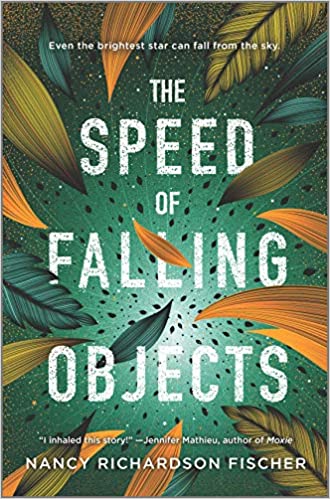
Life hasn’t been easy for Danielle “Danny” Warren. When she was 7, her adventurous father leaves her and her mother to become a famous “Reality Star”. Danny believes her father abandoned her because she suffered a horrible accident and lost her eye, an accident that not only stole her sight but also her courage. When her father invites her on a trip with him to the Amazon to film an episode of his Reality show, Danny believes it would be the perfect time to get to know her father and prove to him that she is not the frightened little girl he left behind. Unfortunately, the plane crashes into the jungle, and Danny not only has to face but she must also come to accept the man her father truly is.
The Speed of Falling Objects is truly an adventure story where the protagonist experiences more than her fair share of peril all the while falling in love for the first time.
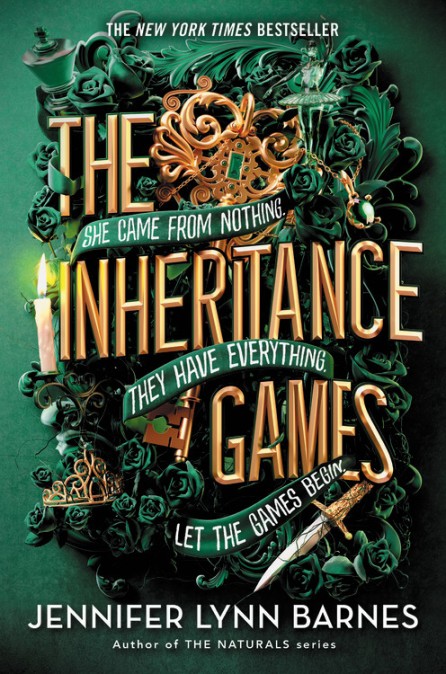
I love novels with puzzles and riddles, hidden passageways, and old libraries. In The Inheritance Games, we have all of these with a bit of romance and mystery thrown in. Avery Grambs inherits 2 billion dollars from a stranger much to the dismay of his grandsons. There is, however, one the condition, upon receiving the estate, she must live in the mansion for one year, along with the same family he has disinherited. During this time she navigates through clues and puzzles in order to find out who, in fact, is her mystery benefactor. Much to her chagrin, Avery finds herself attracted to one of the grandsons, an attraction that complicates things because she can trust no one.
A wildly entertaining YA novel with a smart and feisty protagonist. Both the characters and the plot keep the reader entertained throughout. Sure to be part of a series.
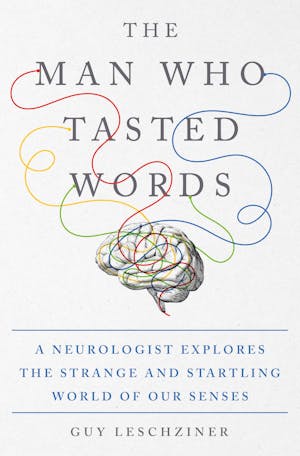
This book is a fascinating collection of stories about individuals who live with incredibly complex and unique neurological disorders. One account is of a young woman who sees colours whenever she hears music where the colours change as the style of music changes. A second is about a young man learning to live with Asymbolia, never experiencing physical pain but having to live with the repercussions of having broken every bone in his body. We also read about the Riddoch phenomenon, Ciguatera Toxicity, Synaesthesia, Aphantasia, and the terrifying Carles Bonnet syndrome. Leschziner makes the biology behind the various diagnosis very approachable for those of us who are in no way schooled in science.
The stories of each of his patients are written with empathy and compassion and truly humanizes each person’s experience. I love the way the author leads us to each story with an anecdote from his childhood or from medical school thus personalizing the material rather than presenting it as a textbook.
Admiringly, the author honours the idea that we are all intricately unique and that “essentially our brains work as guessing machines, interpreting what’s coming in through our senses in the context of our model of the world. What we perceive relates to our existing beliefs about the world…”
This is a fascinating book for everyone to read, not for the science behind neurology but also for the inspiring strength portrayed in each of the patients whose stories fill the pages.
Thank you to Netgalley for the free ARC. This book will be published on February 22, 2022.
I’m finding it difficult to put into words how much I loved this novel. I don’t often gravitate to novels written in verse but honestly, the cover of this one was breathtaking so I had to take a look inside. For the entirety of my reading, I had to sit still for fear of breaking the magic in which I found myself, magic that kept me transfixed upon the spiritually intimate relationship between Moth and Sani.
It’s been two years since Moth lost her family in a car crash. Although she lives with her aunt, she feels guilty to have survived and has felt displaced and lonely ever since. Moth drifts through school friendless and alone until she meets Sani, a beautiful young man who draws, sings, and plays music. But there is something amiss with Sani, he is loving and creative one minute, and then withdrawn and isolating the next. Moth suspects it has something to do with the medication he sporadically takes.
Moth and Sani form a bond that grows beyond friendship. He too feels displaced living with his mother and abusive stepfather and soon decides to travel to Window Rock on the Navajo Nation to be with his father. Moth, having fallen in love with Sani, goes with him. On this journey, they both discover truths about themselves truths that are both disturbing yet freeing.
After reading Me(Moth) I can say it’s one of the best YA books I have ever read. I found myself consistently writing down beautiful lyrical lines such as “ why do I feel like the dust of your name is buried in my bones (71) and “ I don’t know how to be whole anymore/whatever you need you can borrow from me. ( 134.) Aren’t they beautiful?!
I read it quickly the first time quickly because I needed to see a resolution of a multitude of thematic strings that had started to weave together, and then I needed to read again so I could pause and savour McBride’s beautiful use of language and imagery.
If I were still teaching High school I would use this novel or portions of this novel in a literature study. Foreshadowing, imagery, voice, atmosphere, figurative language are just a few curricular links you can make using this text as support; a text that most young adults would find enchanting.
When I read I often read from the point of view of a teacher. I envision how can I use an engaging book or portions of this book in class to teach figurative language, literary devices, or Author Style. If I was still in the classroom, Me(Moth) would be a mainstay for instruction on author style. More importantly, it is SUCH an engaging read it will definitely inspire a love of reading novels, especially novels in verse.
The novel deals with themes of identity, grief, mental illness, physical abuse, loneliness, culture, the importance of ancestors.
An interesting addition is Moth and Sani’s playlist. The lyrics of a few songs are scattered throughout a section of the text where Moth and Sani go on a road trip. McBride kindly includes this playlist at the back of the novel so if we so choose, we can listen to the same songs as the characters while the story is unfolding before us.
Amber McBride offers her book as “a gift, an iron/to smooth the wrinkles of [our] spirit”
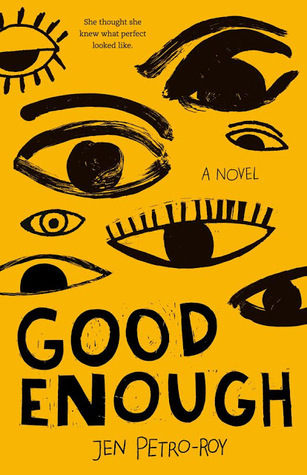
Ok, let’s cut to the chase; this novel is an honest portrayal of a 12-year-olds struggle with anorexia. It is written as journal entries that provide an intimate look into her thoughts and emotions concerning: her motivation for not eating, her feelings of inadequacy, and her relationship with food. The author, Jen Petro Roy, was diagnosed with anorexia when she was young so the experiences relayed through the eyes of our protagonist Riley sound authentic and raw.
The entirety of the novel takes place in a treatment Centre where Riley undergoes weekly weigh-ins, having nurses stand outside the door making you count aloud so that they know if you throw up, counselling sessions. At the end of the day Riley’s writing gives us a realistic view of how she is processing her experiences and emotions. Riley is sarcastic, honest, and actually quite funny in her entries. I found it fascinating to follow her journey of healing and the baby steps it took for her to become strong enough to leave treatment. Her change comes slowly and with a lot of work, all of which is documented through the engaging voice of her journals.
This novel can be used as a segway into discussions around body image and mental and physical health, offering opportunities for parents and educators a non-threatening way to discuss these important issues.
This novel made me tear up, not only because of the storyline but how beautifully it is crafted. Acevedo weaves together the story of two sisters: Camino Rios who, lives in The Dominican Republic, and Yahaira Rios, who lives in New York. When their father is tragically killed in a plane crash, the sisters discover their father has been living a double life, a life he shares with two different families. The lives of the daughters are completely different from one another. Camino’s mother has died, and she lives with her aunt Tia, a woman who “has seen death & illness & hurt/ but never forgets how to smile or tell a dirty joke” (pg 60). Camino plans to attend an international school and one day go to a university in the US to become a doctor. In the meantime, she has to navigate a world where most young women her age become pregnant or get forced into prostitution. So far. Camino has been safe from this fate because since she was thirteen, her father has “paid ElCero to leave [her] alone” (pg.36) (El Cero “recruits” girls to work as sex workers). And now that her father has died, she is a target.
Yahaira, on the other hand, lives in New York with her mother. She attends private school, plays chess, and has a loving girlfriend. She and her mother own their apartment “where there is a small courtyard out back/where [they hold] summer barbecues for the family and neighbors” (pg. 129).
The tragedy of their father’s death forces the girls to accept their father’s actions and decide whether or not they want to accept each other as family.
Acevedo alternates point of view in each chapter in such a way that makes the reader empathize with both characters. We can’t help but hope the young women truly become sisters in every sense of the word.
So I’m looking for new books for junior high classrooms. NEW books. Not Holes, or Hatchet or The Outsiders. NEW titles. I found one. And, read it in a day and I loved it. I even teared up at the end.
What About Will is written by Ellen Hopkins. Now for those of you who have spent any time in a junior or senior high school library know that Hopkin’s novels are ALWAYS signed out. This is interesting because she writes her novels in verse and, in my experience, most students don’t immediately gravitate towards verse.
Hopkins’s novels often deal with difficult themes using intense issues such as drug abuse, physical abuse, and sex trafficking, to name a few. What About Will, however, deals with a serious issue but in a heartwarming and empowering way.
The story is told from the viewpoint of 12-year-old Trace. Trace’s life is pretty awesome; he lives with his mother and father and his big brother Will whom he adores.
One day though, Trace’s life takes a dramatic turn when Will is tackled in a football game and suffers a serious concussion. Will recovers but, he no longer is “Will”. He is angry, in pain, shoves those whom he loves away from him, and starts to make decisions that put his life at risk. The stress of the accident causes his parents to divorce, and soon, Trace feels the need to tippy-toe around any serious issues he is experiencing in order to spare his loved ones’ stress. Even if it means keeping secrets that can turn out to be fatal.
Trace is a kind-hearted, selfless young man who just wants to keep those he loves safe and together. Unfortunately, he finds that no amount of good intentions on his part can sway the choices of others.
I really loved this novel so much that I’m including it in a book collection for Junior High Teachers to use for classroom book clubs. If I were still in the classroom I would try and possess several copies to use for literature circles or independent novel studies. It’s accessible to most readers because of its format. Students will not be overwhelmed by the number of words on the page or vocabulary.
“His shirt was freshly laundered, a sharp crease ran down the sleeve, and Mungo took that as a sign that some woman cared for him, that he was worth something to someone.” (Douglas Stuart).
This novel sucks you in, rips your heart out, and leaves you sobbing on the floor. Seriously. I haven’t been this emotionally impacted by a novel since A Little Life by Hanya Yanagihara…and it took me a summer of reading fluffy books to heal my heart.
Young Mungo is about Mungo, the youngest child of three raised (if you can call it that) by a single mother whose presence is sporadic and, more often than not, fueled by alcohol. Mungo’s life consists of: spending time with his older sister Jodie who serves as a surrogate mother when she is not working, alone, or reluctantly vandalizing, stealing, and fighting in his brother Hamish’s gang.
Mungo is a gentle soul who seeks out friendship and affection from whomever he can. Sadly he is often abused and taken advantage of because of this. Besides the love of his sister and the mother-like attention he gets from his next-door neighbour, Mungo finds friendship and love in his neighbour James. The fact that James is both male and Catholic makes their affection for each other dangerous.
With this second book, Douglas Stuart has become one of my favourite authors. His gift at storytelling is vivid and visceral. The reader quickly becomes immersed in the life of Mungo Hamilton, and at times we are left breathless with emotion.
Young Mungo will be published April 5 2022
Trigger warning: physical, emotional, and sexual assault.
Thank you to Netgalley for my copy.
You’ll find my review of Stuart’s first novel Shuggie Bainhere
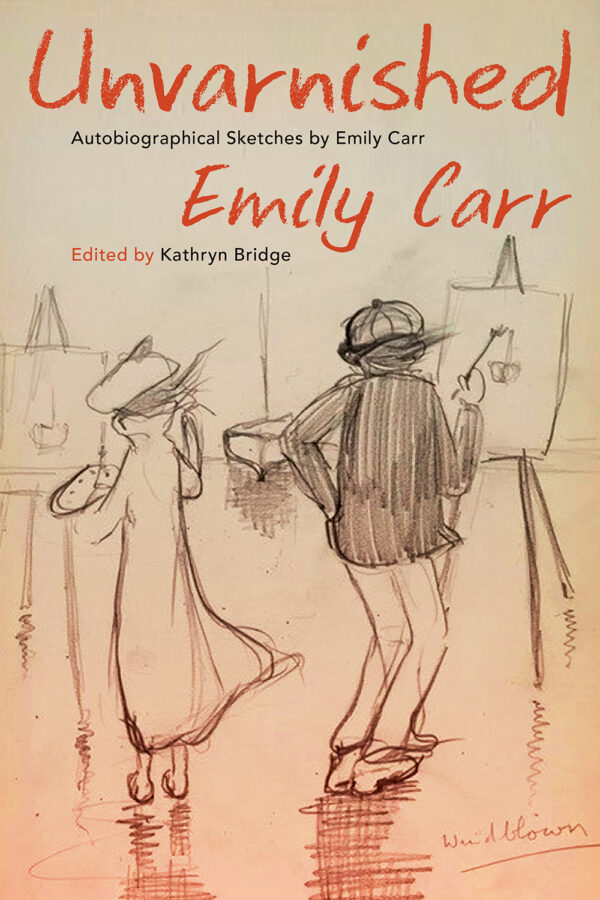
I love Emily Carr’s paintings. Whenever I get the chance to visit Victoria, BC, I try to see the Art Gallery of Victoria to view their collection of her works. I have, however, never read any of her prose.
Unvarnished me is a phrase Carr used to “describe herself, her personal writings, private papers, and objects she deemed her honest self” (Kathryn Bridge).
Unvarnished is a non-threatening yet intense immersion into Carr’s writings, writings that range from postcards she’s written to friends and family, personal journals, and her short stories. In addition, the text includes visuals of Emily Carr’s journals, artwork, and photographs of the artist herself.
Kathryn Bridge does an impressive job weaving together this collection, creating an intimate portrait of one of Canada’s most celebrated artists.
“ And yet, the stars are not lost. They form patterns. Constellations. If you know how to look, there are stories woven into the very essence of stars” (When Stars are Scattered).
Graphic novel grades 8-12
Themes displacement, political unrest, resilience, family, loyalty
The story takes place over three significant times in the life of our protagonist: as a child, as a teenager, and as a young man.
The brothers Omar and Hassan live in a refugee camp in Kenya. When the story begins, they have already lived in the camp for seven years after fleeing Somalia under the threat of violence. Tragically, during this time, their father was killed and their mother went missing. The refugee camp in which they live is incredibly large with markets, clinics, schools, and neighbourhoods of various wealth.
Omar would love to go to school but doesn’t because he fears for the safety of his little brother Hassan. Hassan is nonverbal and because of the traumatic experiences in Somalia, becomes extremely distressed when Omar leaves him.. Eventually, Omar gets the chance to attend school, with the help of their neighbour and guardian Fatuma who agrees to care for Hassan. At school, Omar realized that the only way he will be able to leave the refugee camp is to become educated enough to impress the UN workers who visit. Then, with luck, he will eventually succeed in his “interview’ to be placed in a new country.
The day-to-day life of a political refugee is detailed in this novel. At times it the novel describes the violence the boys experienced while fleeing Somalia and the violence Hassan faces in the camp itself. This violence, however, is not gratuitous or graphic. This graphic novel is an effective and engaging way to present the realities of a refugee camp through the convincing and empathetic voice of someone who has actually lived it.
This novel would be very suitable for book clubs in jr. and sr. high. Several cross-curricular connections can be made with Social Studies and Religious Studies. The various themes offer opportunities for depth of discussion and reflection.
If not used as part of classroom study, it definitely should be made a part of every school or classroom library.







 Ink And Spine