Wild Reverence

by Rebecca Ross

Wild Reverence is a slow-burning Romantacy story. For most of the book, we are schooled in a world of Gods, Goddesses, and Mortals. We have the Immortals of the Under Realm and the Immortals of the Skyward Realm, and poor Matilda’s parentage includes both… which leaves a young girl struggling with a sense of identity and belonging. When tragedy occurs in her Under Realm home, she is forced to leave and find solace in Skyward, but will she be accepted? 

In the meantime, Matilda has met the boy of her dreams, Vincent, the only problem is she can only meet him in his dreams, oh, and he’s a mortal. For a chunk of this novel, Matilda’s and Vincent’s story is secondary; they “grow up,” each finding their place in the world (or, in Matilda’s case, her worlds), and each coming face to face with their newfound powers and the discovery of their weaknesses. Each faces betrayals and moments of weakness, but in these moments, each learns who they truly are and what potential they have to save the ones they love, unless, of course, it is contrary to what the fates allow.

So I’m not a huge fan of Romantacy, and I’ve never read anything by Rebecca Ross. I picked up Divine Rivals once and carried it around the bookstore, but didn’t end up buying it, and I am beginning to rue that day. Not that you need to read the Divine Rival books to fully enjoy Wild Reverence. I really admire Ross’s writing. It is really quite beautiful. Her prose is vivid, and the plot unravels like a movie in my imagination. 

A perfect Christmas read AND a perfect gift for those in your life who are fans of Romantacy. 

Thank you to St Martin’s Press and Netgalley for the copy.

The Forest of Missing Girls

by Nichelle Giraldes

This book is a creepy hybrid where young women go missing and the community comes together to track down their kidnapper, or worse yet a serial killer and a supernatural science fiction novel (I’d reference a novel in particular but then I would be hugely spoiling the plot). 

The novel starts with Lia Gregg returning home to her mother, Elizabeth, and her sister, Evie, to their little house in the woods. Her father is there too, but he seems disengaged from his family and, well, is basically disengaged from the entire plot, to be honest. Lia has experienced a breakup with her boyfriend, and she’s feeling a little lost. Soon after her arrival, Evie and her friend Maddie are hanging out in the backyard when Maddie disappears. Maddie’s disappearance immediately causes concern because, for years now, young girls have been mysteriously disappearing from the area. 

Soon, we, the readers, come across a chapter written from a different point of view. We are suddenly experiencing an alternative plot from the viewpoint of a very confused girl. Could she be Maddie? Could she be another one of the numerous girls who have gone missing? All we know is that she is absolutely clueless about who and where she is. All she knows is that there is this woman named “Mother” who is caring for her.

I was really entertained by this novel. It is a puzzle, and as soon as I started putting together the pieces, when all of a sudden a picture started forming, I couldn’t wait to see what the picture looked like in its entirety. 

I would have a problem with the science-fiction/supernatural element of this novel, but Giraldes skillfully weaves it into her storyline.

A great book to add to your Christmas reading list!!

Thank you to Poisoned Pen Press and Netgalley for the copy.

The Haunting of Hecate Cavendish

By Paula Brackston

Ok, I LOVED this book. I loved the setting, I loved the atmosphere, I loved the characters, and I especially loved the writing. 
The novel takes place in England in the late 1880s, and Hecate goes to work at Hereford Cathedral to assist the librarian in sorting and caring for the cathedral’s extensive collection of books. Upon her arrival, Hecate soon discovers she can communicate with ghosts, and the Hereford Cathedral is riddled with ghosts! Hecate shares her gift with her father, who (being a scholarly man himself, somewhat knowledgeable in archaeology and the occult) is incredibly supportive of his daughter. 
All is well in the village until suddenly a murder occurs, and then another and then….
Hecate learns through her communication with the ghosts and her study of artefacts buried deep in the cathedral walls that a dark force has been unearthed and is beginning to wreak havoc upon the villagers. 
This novel has magic and mystery. It is a ghost story with fantastical creatures. The plot is detailed and intriguing, and the characters are engaging and interesting. Most of all, Brackston is a skilled writer with beautifully crafted prose.
It is always a treat to find a novel that not only entertains its readers with a compelling plot but can also serve as a mentor text for word choice and sentence structure. 
There is now a second novel in this series, called The Cathedral of Lost Souls, which will be published in November that I CANNOT wait to read.

Thank you to Netgalley and St. Martin’s Press for the copy.

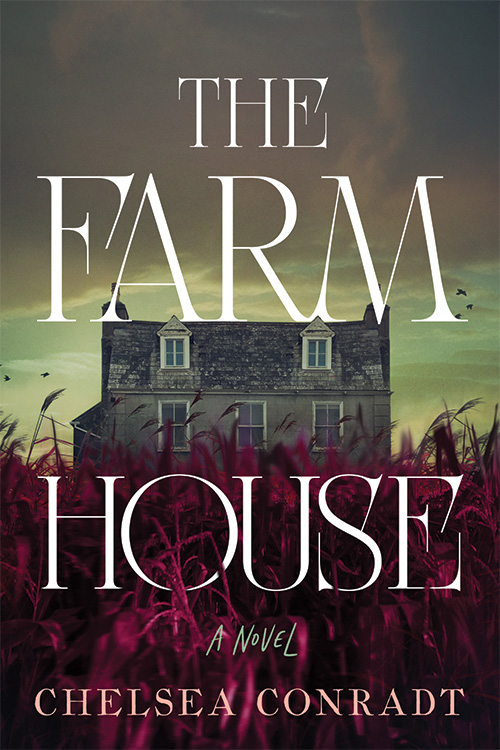
The Farm House

by Chelsea Conradt

After her mother’s death, Emily Hauk moves from her city life in San Francisco to a rural farmhouse in Nebraska. A change that would hopefully help her grieve her loss as well as slow down from the hustle and bustle of life. After all, it was easy for her husband and herself to work from home. Here, they can plant a garden, go for long walks, and listen to the silence. As an avid runner, she could run for miles and miles without worrying about the obstacles of urban life.
The idyllic lifestyle Emily wishes to create for herself isn’t quite as easy to create as she had hoped. Emily soon realizes that the farm isn’t exactly as it seems; the barn appears to move independently, its distance from the house increasing and decreasing daily. Strange lights appear in the barn in the middle of the night when no one should be on the premises, and on top of it all, Emily starts hearing voices and, more disturbingly, finding human teeth on the property. Still, unfortunately, her husband doesn’t take her seriously, and neither does the local sheriff. Eventually, Emily becomes aware of the farm’s violent history, which explains the unsettling experiences she undergoes.
The Farm House is a ghost story, a psychological thriller, and a crime story rolled into one. It is a perfect addition to your summer reading list!

Thank you to Poisoned Pen Press and Netgalley for the copy.

Girls

Annet Schaap

I love the retelling of fairytales. Authors like Gregory Maguire and Angela Carter have successfully retold classic tales to make them commentaries on character, history and the social condition…just like original fairy tales were constructed to scare children to follow the straight and narrow. Annet Schaap’s short story collection Girls is one that I would put in league with Maguire and Carter.
Girls is a retelling of various fairytales, concentrating on girls and women in our society. The female characters are not princesses; instead, they are modern young women who face the same issues our female characters of old face: finding a husband, societal isolation, predatorial males, appearance, and abandonment. These characters, however, do not have handsome princes or fairy godmothers to rescue them. They have to rely on their own experience and grit to survive and make decisions for themselves independent of societal norms. Unlike classical fairytales, these stories don’t necessarily end with a “happy ever after”. Instead, they end realistically, if not melancholy, but always with our female protagonist, the designer of her fate.
This collection possesses a tonne of educational possibilities, making it a perfect anthology for study in grades 8-12, depending on which tale you choose to study. It could provide a rich analysis of the format as a mentor text, comparing and contrasting themes between traditional and modern retelling. Like conventional fairy tales, it offers ample opportunities for discussing symbolism and metaphor in-depth, enriching the student’s understanding of literary devices and their application in modern literature. 

Thank you to Netgalley and Pushkin Press for the Copy.

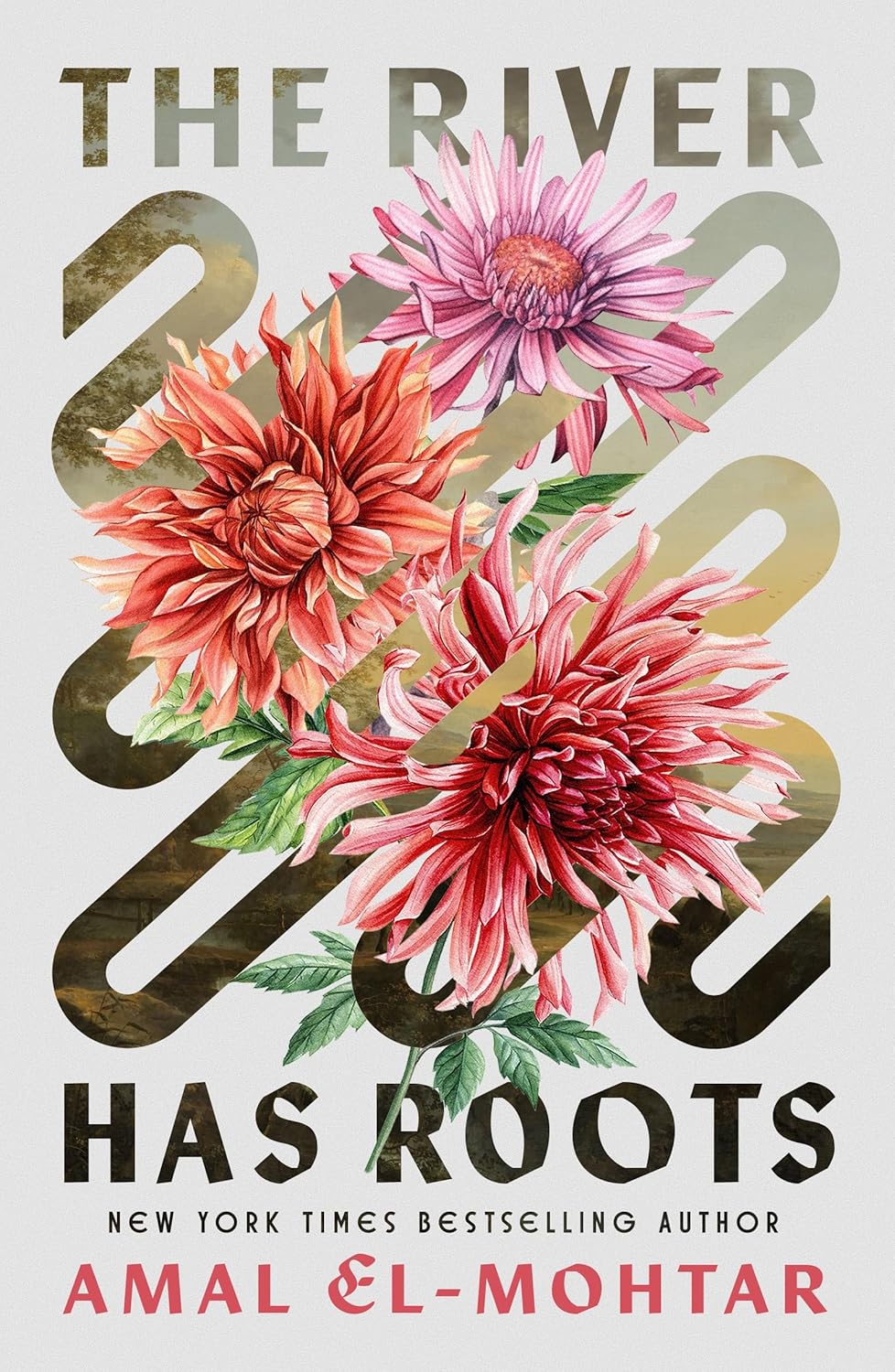
The River Has Roots

by Amal El-Mohtar

“There was a time when grammar was wild-when it shifted shapes and unleashed new forms out of old. Grammar like gramarye, like grimoire. What is magic but a change in the word…but that is the nature of grammar-it is always tense, like an instrument, aching for release, longing to transform present into past into future into will. (pg. 1-3)

The Hawthorn sisters, Esther and Ysabel, live in the small village of Thistleford located on the edge of “the beautiful county of Acadia, the beautiful land- the land beyond; antiquity”  in other words, the beautiful land of Faerie. The sisters have 2  jobs: the first is to weave beautiful willow baskets, and the second most important is to sing to the willows. You see, “when they sang together, you could feel grammar in the air”. Ester, the eldest, is being pursued by the bachelor Mr. Pollard, who “always had the beseeching expression of a whining dog; his hand, bafflingly, were always somehow both cold and moist”…needless to say, Esther is in no way interested. Instead, her heart belongs to Rin (a beautiful nonbinary character). Rin is Fae; Rin is beautiful, loving, brave, and adoring. However, Ester is in a dilemma; although she loves Rin, she vows to never break the bond she has with her sister Ysabel. She loves her sister beyond life itself, and their bond is intricately woven together, not just because they are sisters but because of the magical bond created by the grammar when they sing.

When a violent incident occurs and tragedy strikes, Esther has to choose between living in the world of Faerie with her love and staying in human form or living in the land of humans in the form of a swan. Will the bond between the sisters survive the conflict that ensues? 

This novel is a treasure trove for literary analysis. Its symbols, including the river Liss, the Willows, Mr Pollard, and the land of Faerie, are rich and complex, offering ample material for exploration. The novel’s prose, too, is a delight, best savored when read slowly and contemplatively, much like a piece of poetic verse.

This novel is also beautifully published, interspersed with what looks like linocut artwork by artist Kathleen Neeley, enchanting and folkloric.

If you loved How To Lose the Time War, co-written by El-Mohtar you love this novel.

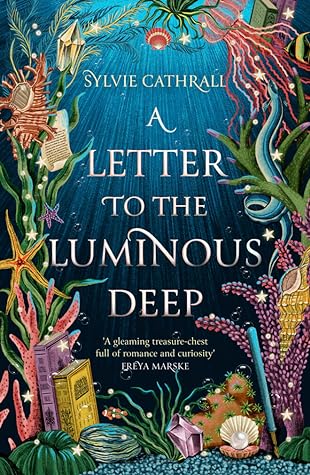
A Letter to the Luminous Deep

by Sylvie Cathrall

CRUMPLED DRAFT OF LETTER WRITTEN BY HENEREY CLEL, 1002 

My dear E., 

I have thought of nothing else but you and your letter over the past day or so, and I do not intend to start thinking of anything else anytime soon” (pg 257, as well as the back cover)

This novel is an absolute enchantment. It weaves together the genres of Science Fiction, Romance, and Mystery with Victorian overtones in a way that will leave you longing for a time when people narrated their lives through beautifully written letters, or “Automative Post Missives” as they are called in this story. I had the pleasure of both reading and listening to this novel, and I must say, the Audible Book is one of the best multinarrator recitations I’ve ever experienced.

What is the plot? Well, Sophy  (a deep sea scientist/explorer) has lost her sister…her sister E has inexplicitly disappeared. E was a recluse of sorts, finding contentment in her underwater home, that is, until something curious occurs, so curious in fact that she seeks answers. The only way a recluse like E can find answers is to write to someone who may be an expert in such curiosities, Henerey. Charmingly enough, E and Henerey fall in love through their correspondence. When both E and Henerey vanish suddenly, Sophy and Henery’s brother Vyerin begin to work together (through letters, of course) to solve the mystery of their missing siblings. 

The novel comprises not only the letters of E, Henerey, Sophy and Vyerin but also a smattering of letters of other quirky yet charming characters. 

Not only is the plot of this novel intricate and mesmerising but so is the writing. This novel would make the most amazing mentor text for a junior and senior high classroom for a number of reasons: it would teach descriptive writing and how it creates mood and atmosphere as well as characterisation (through tone and word use). 

Teaching figurative language (some letters are incredibly poetic) as well as vocabulary.

Teaching narrative storytelling as well as letter writing ( a lost art, I am sure)

I mean, just read this passage: 

“ I should mention that the water felt different from the lovely sea to which I am accustomed. It seemed to ooze around me- warm and slippery, as though it had thickened like a custard. The sensory unpleasantness of the water, however, could not dim its visual splendour. Despite the imposing darkness, the water possessed a kind of luminescence: an odd purple and green and grey glimmer like the last moments of a sunset” (pg. 239).

 This novel has the potential to inspire readers to write more beautifully. The descriptive passages, such as the ones I’ve shared, can serve as excellent examples for aspiring writers to emulate. I long to write this beautifully!

A beautiful book. I loved it. AND it sets itself up for a sequel!!!! Yay!!

Thank you to Netgalley and Orbit Press for the copy.

The Poppy War

by R.F Kuang

I love the Poppy War. It is intense. It is heavy. It is magical. It is heartbreaking. I thought about the characters and their choices long after I read it. 

When I first encountered Kuang’s work in Babel, I was struck by her distinctive writing style. It’s a style that I envy, one that I wish I could emulate. Her sentences are not just words on a page, but lyrical, concise, impactful expressions that brim with imagery and emotion. 

When you start reading The Poppy War, you’ll want to gulp the plot down as quickly as possible, but you will choke on its intensity and detail. No. You have to sip. There is SO much information regarding plot character and world building in each and every sentence.

Rin, our tragic hero, is a war orphan fostered in the Rooster province. She’s faced with a future dictated by her fate, one that she refuses to accept. Instead, she sets her sights on a different path, one that leads to the Kejee, the Empire-wide exam . Passing this exam would grant her entry into the most prestigious military school in the Empire, a chance to shape her own destiny. 

While at school, Rin uncovers her heritage, a revelation that sheds light on her unusually powerful gifts. This aspect of the story not only adds depth to Rin’s character but also enriches the world-building, as it reveals a hidden layer of the book’s supernatural realm.

Having yet to graduate, Rin and the rest of her fellow schoolmates are thrown into a war where they have to put to use the skills and strategies they have learned in real-life and death battles.

The Poppy War is not just a novel, it’s a rich tapestry of themes. It delves into the ethics of war, exploring concepts like genocide and the means justifying the end. It grapples with identity, power, and responsibility. And it celebrates the bonds of friendship. These themes are not just surface-level musings, but wonderfully complex and beautifully developed, with more to come in the second and third books of the trilogy. 

The world-building is enthralling. The political systems, cultures, supernatural realm, military, and educational systems are beautifully detailed, and all contribute successfully to the progression of the plot, the development of characters, and the strengthening of themes. 

The Poppy War has become one of my favourite books of the year. I am in the process of reading the second book the in the trilogy, and it’s starting off as just as wonderful as the first.

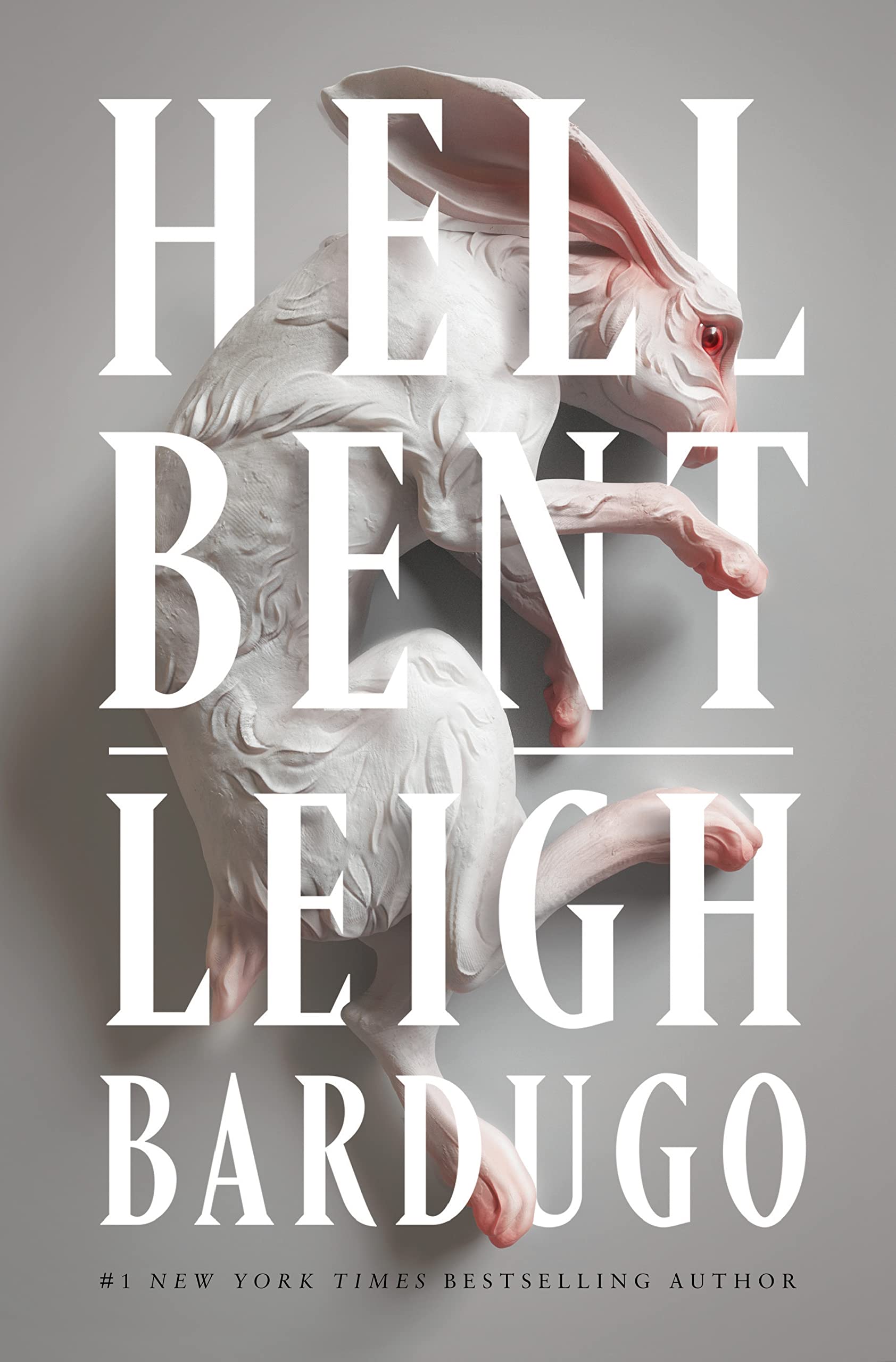
Ninth House and Hell Bent

by Leigh Bardugo

I’m not usually a rereader, but I bought Hell Bent a year ago, the second in the Alex Stern trilogy (I believe there is a third book coming) by Leigh Bardugo. When I read it, I soon realized I needed to remember details from the first book, Ninth House, to appreciate it properly. I remember absolutely LOVING Ninth House. One of my favourite genres is dark academia. Who doesn’t love old libraries, secret societies, symbols, rites, and history?
Our main character is Galaxy (Alex) Stern, a young woman who experiences a horrific event that places her in the hospital. There, she meets Dean Sandow, head of Lethe House, a secret society at Yale. Dean Sandow offers her a full scholarship in exchange for one thing: she uses her “gift” to help Lethe House or the Ninth House that helps regulate the other Eight. Alex’s gift, you see, is that she can see ghosts or “greys”, and sometimes greys can interfere with certain rituals.
In her new environment, Alex encounters a diverse group of individuals; some are ‘interesting’ members of the various Houses, possessing knowledge in the mystical arts, while others are ‘normal’ people like her roommates. Balancing these two drastically different lives proves to be a challenge, but Alex begins to form a family of sorts and grows incredibly close to a handsome man named Daniel Arlington or ‘Darlington’ The plot, filled with suspense and mystery, is fast-paced, a little gory, and incredibly imaginative, with sprinkles of humour. Ninth House concludes with a thrilling twist, as Alex and her companions embark on a perilous journey to hell to rescue one of their own.
Now, I’ll tread carefully with my opinion of Hell Bent, as I don’t want to spoil anything. I found Hell Bent just as captivating as Ninth House. In this second novel, we delve deeper into our characters’ lives and the origins of the various Houses at Yale. We witness Alex’s journey of self-discovery and see her grow more confident in her own history and identity. She becomes brave enough to forge authentic relationships with those who share the realities of her life, a development that is both heartwarming and relatable.
I can only dream of having an imagination like Leigh Bardugo. I haven’t read anything else of hers…she has a new novel out this month called The Familiar that seems to be calling my name. I LOVED BOTH of these books.

The Will of the Many (Hierarchy #1)

by James Islington

This novel,’ The Will of the Many’ by James Islington, has not only become my favourite book of the decade but also stands out for its unique blend of universal themes, a dynamic and suitably flawed main character, and world-building that is both enthralling and threatening. It’s a fantasy with glimmers of science fiction that will keep you hooked from the first page.
‘The Will of the Many’ is not just a coming-of-age story; it’s a journey that will mesmerise you. It’s a tale of self-discovery, courage, and sacrifice that had me emotionally invested from the moment I opened it.
Its freakingly unique settings (elements of ancient Rome, medieval Europe, and glimmers of modernity) and an intricate and engrossing plot with layers and twists and turns and so, so many questions have left me anxiously awaiting a second novel.
Read it! I need to discuss some of the theories I have surmised after reading.

The First Bright Thing

by J. R. Dawson

Full disclosure: it took me a couple of tries to get into this book, and by “tries,” I mean I only gave it a couple of pages before dismissing it for something else (and then something else and something else…I was in a bit of a slump with no patience and unrealistic expectations for amusement) but once I did het into it, I absolutely LOVED it.
Imagine, if you will, a selection of the population possessive of particular gifts or “sparks” as they are called in the narrative. Now, these sparks are anything from time jumping, location jumping, healing, and the power of persuasion, just to name a few. Some people choose to use their spark for good, and others, well, others use their power selfishly to manipulate the world around them to suit their desires.
The story centres around a circus, a circus made up of Sparks. The circus offers a safe haven for people who need to escape the trauma created by World War One and the anxiety brewing in the world with the murmurings of World War Two. Our main character is the Ringmaster herself, Rin, who, with her Spark family of circus performers, travel the country in their circus train, pitching their tent in locations where they are needed most. But the circus environment is less than ideal; even though the government (made up of non-sparks) tolerates them, Sparks are viewed as suspicious and are often victims of harassment and violence and referred to as freaks. Not only does the Ringmaster, Rin, have the responsibility of keeping her circus Sparks safe, but she is also running from her own nightmare, her abuser, the Circus Master.
On top of the fantastic plot and the intriguing characters, this book can also be considered a political narrative. If you had the power to change the past to alter the future with the intent to prevent a war, would you? To what extent would you get involved with the revelation of fate, or would you command destiny yourself? To what extent would you involve those you love in your commandeering of the future? Would you do so for their sake? Or for yours?
About midway through, I did have the ending figured out. Still, the writing was so engaging I didn’t mind the predictability.
This novel would be perfect for mentor text to teach foreshadowing, flashback, theme, characterization, and atmosphere. I would absolutely recommend this novel to high school students.

Thank you to Netgalley and Tor Publishing for the free copy.

The Left Handed Book Sellers of London

by Garth Nix


Imagine living in a London, where an alternate dimension of goblins, zombies, and giant-sized wolves exist. You wouldn’t know this dimension exists except for the fact that you, yourself, may have some “magic” blood in you. But no worries, to help you navigate this peculiar London is a left-handed bookseller named Merlin, who you just happened to meet when he was saving your life from a Sipper, also known as a vampire.
Well, Susan Arkshaw is our protagonist who, at eighteen, has moved to London to go to art school. Still, the move isn’t going exactly according to plan.
This is a fast-paced novel with incredible world-building. I LOVED it and have already bought the sequel, The Sinister Booksellers of Bath, which you’ll want to buy because this first book has left you wanting to return not only to this wonderful fantasy world but to Susan’s story as well.
This novel would make an excellent read-aloud for any junior and senior high ELA class.

A Court of Thorns and Roses

by Sarah Maas

Well, this was a perfect summer read for me.

Easy to read ( like gulping a lemonade or a Corona on a hot summer day), escapist (who doesn’t like faerie realms?), romantic (who doesn’t like a bad boy…or two?), and a kick-ass female protagonist who does more saving than being saved herself.
A fast-paced, spicy fantasy. I will undoubtedly be reading the rest of the series.