We Do Not Part

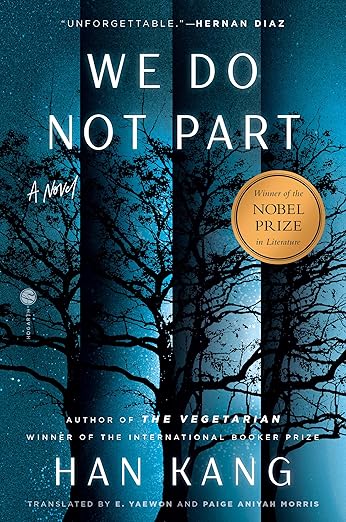
by Han Kang

The only other novel I’ve read by Han Kang was The Vegetarian, and I knew then that Kang was an author like no other. Using lyrical, poetic language rife with symbolism and metaphor, Kang takes deep political and historical issues and persuades us to think deeply about the human condition. The plot of  We Do Not Part is quite simple; our main character, Kyungha, receives an urgent text from her friend Inseon. Insean has suffered an injury and is being treated in a hospital in Seoul. Inseon tasks Kyungha to go to her home on Jeju Island to care for her bird, which has lost its mate and cannot live longer than a few days in isolation. 
Getting to Jeju Island is quite a task in and of itself; not only does Kyungha suffer debilitating migraines, but she now has to deal with incredibly unreliable remote transportation, blizzards, and hunger. Also, Jeju Island isn’t an island; it has a traumatic history where a massacre of tens of thousands of islanders had been slaughtered by anti-communist troops. This novel weaves from reality to surrealism, a ghost story, a psychological study, and a discovery of self.
This novel would make an amazing novel study for high school students. Not only would it serve as a mentor text, but it would also serve as a master class in writing. The themes it possesses would make for deep and meaningful class discussions.
Look at this beautifully descriptive quote: 
“Snow falls. On my forehead and cheeks. On my upper lip, the groove above it. It is not cold. It is only as heavy as feathers, as the finest tip of a paintbrush. Has my skin frozen over? Is my face covered in snow as it would be if I were dead? But my eyelids must not have grown cold. Only the snowflakes clinging to them are.”

Thank you to Random House and Netgalley for the copy.

I Am Wind: An Autobiography

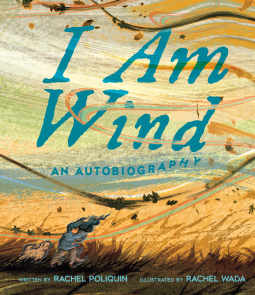
written by Rachel Poliquin illustrated by Rachel Wada

This book is BEAUTIFUL. Poetry, science, culture, folklore, history artwork. This book is a perfect example of how to use a multitude of genres to teach a concept.  A quintessential hybrid text. 

First of all, Wind is personified. It is the main character of the text. Wind tells us their story through poetry:” I Am Wind/I whistle. I howl/I’ll steal your hat, your house, your kitten, your kite/ I whisper whisper whisper secrets in the leaves…I am the Great Rushing in All Directions” (Poliquin). Wind is portrayed as a beautiful, gentle friend and destructive enemy. 

Wind also tells us their story through history with little “Wind Chronicles,” which describe types of winds in various cultures and record historical events of destruction and peril caused by tornados and storms.

Wind also charmingly tells of its characteristics directly (as if in an extended character sketch): how it is created, the types of wind forces, how man has harnessed Wind for its own uses (sailing, wind farms), how it is perceived in mythology, and its multitude of names in various cultures.

Throughout all of this wonderful poetry, prose, and information are the most beautiful paintings in the most vibrant colours. A multitude of lessons could be created from the artwork alone.

For educators and families with young children, I am Wind: An Autobiography is a delightful addition to your library. It’s not just informative; it’s engaging and absolutely beautiful. This book will captivate your little ones, making learning a fun and interactive experience.

…oh and the book creators live in British Columbia so we’ve got some Canadian content AND indigenous content (this always makes me happy).
I will be recommending this book to every teacher I know!

I will definitely be recommending this book to every teacher I know!!

You will be able to own this book November 5, 2024

Thank you to NetGalley and Penguin Random House for the free copy.

The Poppy War

by R.F Kuang

I love the Poppy War. It is intense. It is heavy. It is magical. It is heartbreaking. I thought about the characters and their choices long after I read it. 

When I first encountered Kuang’s work in Babel, I was struck by her distinctive writing style. It’s a style that I envy, one that I wish I could emulate. Her sentences are not just words on a page, but lyrical, concise, impactful expressions that brim with imagery and emotion. 

When you start reading The Poppy War, you’ll want to gulp the plot down as quickly as possible, but you will choke on its intensity and detail. No. You have to sip. There is SO much information regarding plot character and world building in each and every sentence.

Rin, our tragic hero, is a war orphan fostered in the Rooster province. She’s faced with a future dictated by her fate, one that she refuses to accept. Instead, she sets her sights on a different path, one that leads to the Kejee, the Empire-wide exam . Passing this exam would grant her entry into the most prestigious military school in the Empire, a chance to shape her own destiny. 

While at school, Rin uncovers her heritage, a revelation that sheds light on her unusually powerful gifts. This aspect of the story not only adds depth to Rin’s character but also enriches the world-building, as it reveals a hidden layer of the book’s supernatural realm.

Having yet to graduate, Rin and the rest of her fellow schoolmates are thrown into a war where they have to put to use the skills and strategies they have learned in real-life and death battles.

The Poppy War is not just a novel, it’s a rich tapestry of themes. It delves into the ethics of war, exploring concepts like genocide and the means justifying the end. It grapples with identity, power, and responsibility. And it celebrates the bonds of friendship. These themes are not just surface-level musings, but wonderfully complex and beautifully developed, with more to come in the second and third books of the trilogy. 

The world-building is enthralling. The political systems, cultures, supernatural realm, military, and educational systems are beautifully detailed, and all contribute successfully to the progression of the plot, the development of characters, and the strengthening of themes. 

The Poppy War has become one of my favourite books of the year. I am in the process of reading the second book the in the trilogy, and it’s starting off as just as wonderful as the first.

Pretty Ugly

David Sederis and Ian Falconer

This picture book is fantastic in so many ways. First, it’s funny and a wee bit gross. Second, it has a multitude of universal themes, so it doesn’t matter how old you are when you read it; you GET it. This book would be an amazing text to use when introducing Socratic discussion of the subjectivity of “beauty.” Fourthly (yes, FOURTHLY!!!), it makes THE most effective text to teach writing in any grade.

In his picture book “Pretty Ugly”, David Sedaris shows us that looks are irrelevant to the depth of familial love. When Anna made ugly faces so often that one permanently stuck, she tried everything, including visiting a doctor to change her appearance to what it was before, but to no avail. Her family tries to assure her that “beauty is on the inside” and that they love her very much. Pondering her family’s words, she reaches inside and turns herself inside out, ultimately making herself more beautiful than before.

This book is concise and perfect for teaching how to summarize. It also lends itself nicely to personal and persuasive writing.  For example, an introductory paragraph for a persuasive essay for junior high could be:

“Beauty is in the eye of the Beholder” is a phrase we have heard so often it has become trite. How can we internalize the authenticity of this statement? Why picture books, of course. In the picture book “Pretty Ugly”, David Sedaris shows us that familial love renders looks irrelevant.

So, if you’re looking for an exemplar to teach summarizing, paragraph writing, or persuasive writing, this book is perfect.

Or, if you want to read a picture book that will make you think while you giggle, “Pretty Ugly” is perfect.

….oh, I just realized you could also use the title to teach oxymorons.

Thank you Netgalley and Astra Books for the free digital copy.

The Will of the Many (Hierarchy #1)

by James Islington

This novel,’ The Will of the Many’ by James Islington, has not only become my favourite book of the decade but also stands out for its unique blend of universal themes, a dynamic and suitably flawed main character, and world-building that is both enthralling and threatening. It’s a fantasy with glimmers of science fiction that will keep you hooked from the first page.
‘The Will of the Many’ is not just a coming-of-age story; it’s a journey that will mesmerise you. It’s a tale of self-discovery, courage, and sacrifice that had me emotionally invested from the moment I opened it.
Its freakingly unique settings (elements of ancient Rome, medieval Europe, and glimmers of modernity) and an intricate and engrossing plot with layers and twists and turns and so, so many questions have left me anxiously awaiting a second novel.
Read it! I need to discuss some of the theories I have surmised after reading.

Fayne

by Ann Marie MacDonald

Well, I’ve been procrastinating about reviewing this one. Not because I hated it but because I loved it. And it is a long read deserving of engaging discussion and the investment of a reread. (and I hardly EVER reread novels). Ann Marie MacDonald is a force. Her creative brain is astounding. Her writing is filled with facts and philosophy, plot and poetry. She is a perfect mentor author who has written the ideal mentor text limitless in its potential for literary, thematic or personal discussion.

The novel is set in the late 1800’s. Our protagonist is Charlotte, a precocious child who spends days rambling about the family estate. Charlotte, motherless, loves her father immensely. But as Charlotte gets older, her curiosity and aspirations become too large for her father and the social constraints at the time; she is, after all, a girl and, therefore, should be raised to be a proper wife with no fanciful notions of pursuing academia. Aaaand, her curiosity may lead her to discover the unspoken truth behind her mother and her own identity. 

This novel was so good that I didn’t want to put it down, so I also purchased the audio copy, and both listened and read. I was so glad I did. The author herself narrates the novel, and may I say that it is one of the most engaging narrations I’ve ever listened to. I felt as though I was in seventh grade again, and my teacher was reading the Hobbit aloud….mesmerizing. And It made me appreciate the writing even more.

This novel discusses themes of identity, family, friendship, the confinement of social norms, gender issues, and legacy. 

Fayne is definitely a holiday read. Christmas holidays or summer so that you can devote the time to read/listen to it in its entirety. This novel is one of my favourite novels of all time… so far. : )

The Mystery Guest

by Nina Prose

Well, Nina Prose has done it again! If you loved her novel The Maid, you’ll love The Mystery Guest. We are back at the Regency Grand Hotel with Molly, now “Head Maid”. As Head Maid, Molly is responsible for preparing the tea room for the world-renowned, best-selling murder mystery writer J.D. Grimthorpe. As per Molly’s propensity, everything is perfect, that is until Mr Grimthorpe drops dead just as soon as he is about to make a news-shattering announcement. This time, Molly knows what to expect when a death occurs in her hotel, and she uses her acute observational skills to gather as much evidence as she can, not just because she wants to solve the case but because she doesn’t want the wrong person to get accused of the crime…like last time.
I absolutely loved being back with Molly. Nina Prose writes a good mystery rife with numerous suspects. In this novel, we also get a portion of Molly’s backstory when she was a little girl living with her Gran. Prose skillfully weaves this backstory and the present-day crime together so that I was engaged in both storylines. I also loved the plot developments that happened in the last third of the novel that lend themselves wonderfully to a third novel that I absolutely cannot wait to read!

You can pre-order The Mystery Guest which will in stores November 28th.

Thank you to Netgalley and Penguin Random House Canada for the free copy!

The Invisible Hour

by Alice Hoffman

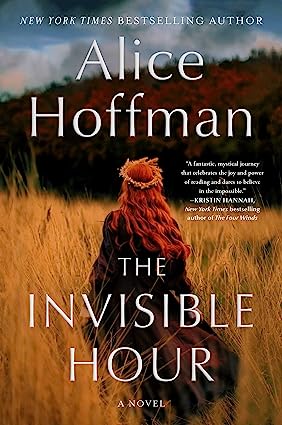
I had forgotten I liked Alice Hoffman’s writing. The Invisible Hour was THE perfect re-introduction to her storytelling. This is a novel about the power of books, a belief I hold near and dear to my heart because I have seen it manifested over and over again in my students. When Ivy is little more than 17 years old, she becomes pregnant and disowned by her parents. Being in such a precarious situation, she is easily convinced to join a cult where she is partnered with none other than the cult leader himself, Joel Jacobs. But when her baby Mia is born, she recognizes the prison in which she has placed her daughter and looks for ways to instil a sense of freedom in her daughter. This freedom includes finding sanctuary in the town’s library, where Mia falls in love with the writing of Nathanial Hawthorn; in fact, the first book she picks up is The Scarlet Letter, and in it is an inscription from Hawthorn himself that seems weirdly and intimately linked to Mia herself born over a hundred years after Hawthorn’s death?
When Mia is threatened with torture and imprisonment within the cult, she finds strength in Hawthorn’s words and escapes the only world she’s ever known.
This story has a little bit of everything: time travel, romance, and drama, but mostly it is a novel about how we can find strength and belonging in books, and I love this.

Thank you to Simon and Schuster and NetGalley for the free copy.

You can buy The Invisible Hour August 15!

Morgan is My Name

by Sophie Keetch

In High School, I loved Mary Stewart’s Arthurian Legend series. My favourite character was Morgan, sister to Arthur, apprentice to Merlin, sorcerous in her own right, but a minor character with the likes of Arthur and Merlin being the story’s focus. On the other hand, Sophie Keetch has written an entire book telling Morgan’s story. Yay!
The novel starts when Morgan is a young girl and her father, the king, is killed. King Uther comes to court and forces the Queen (her mother) to marry him and then pretty much dictates the lives of everyone in the land as most kings were wont to do in the middle ages. Ever the rebel, Morgan is sent to a convent where she is delighted to have the opportunity to study (her passion, anatomy and healing). But her stepfather king eventually interrupts her happiness and orders her back to court, where she has to stifle the powerful woman she is if she is to survive the politics of the land. But just how long will she be able to live a life dictated?
I loved and loved LOVED this book. I loved the characterization of Morgan. I loved the strong female characters presented. I loved the love story, the political intricacies and the elements of “Arthurian legend” woven throughout. What a great addition to my summer reading.
Keetch writes in prose that is accessible to every reader.
Thank you to Random House and Netgalley for the free copy.

The Summer of Bitter and Sweet

by Jen Ferguson

I have tried over and over again to write about this novel but I cannot find the words that accurately explain my thoughts and feelings surrounding it. I love this book. This book needs to be made available to read AND be discussed in every grade 8-12 classroom. Ferguson discusses subjects such as: intergenerational trauma, sexual assault, sexual identity, racism, among others gently and respectfully. Discussion around these topics is not sugar coated, but neither is it gratuitous. The beautiful note to the reader before the novel begins gives you an idea of the care and love Fergason has for her readers. She lists the trigger warnings of her content and tells us “More than anything, I care about you. Your health, happiness, safety, and well being matter more than reading this book.”  

A wonderful book. Read it.

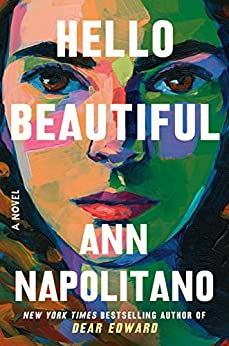
Hello Beautiful

by Ann Napolitano

I loved this book. It has become one of my favourites of the year.
I loved its characters, I loved its themes, and I absolutely loved how it was written.

This is a novel about love and loss and family, and self-discovery and about something near and dear to my heart, it is about sisters. 
Beautifully written, Hello Beautiful is a novel not to be missed. I was lucky enough to be sent an advanced digital copy, but today it will be out on bookshelves and I’m about to buy myself a hard copy to have on my shelf to reread and share with others.
If you’re already compiling a summer reading list this is definitely one to add!

Thank you to Netgalley and Random House for the free copy.

If We Were Villains

by M. L. Ric

I love Shakespeare and upon reading this novel it is apparent that M. L. Ric loves Shakespeare too! 

The  characters are literally Shakesperian actors, or rather students studying to be Shakespearian actors. Our cast of characters range from a villain to an ingenue.Our main character, Oliver, is neither a villain or an ingenue, rather he is “every man” that one character Shakespeare always includes in his play that seems close enough to the audience that we can understand and believe the events and motivations of the characters more readily.

Like Shakespeare, Ric organizes his novel in 5 acts, then, each scene in each act serves as chapters. I love the parallels in organization. 

The similarities to Shakepeare’s craft just don’t end in how the novel is organized. The themes in the novel are as big as Shakespeare’s themes, love, hate, guilt, power, betrayal and the repercussions from choices taken within each theme. Obviously I have first read this novel for the plot, but it is definitely worth a reread in order to see just how layered and interconnected he made his story to the plays themselves. 

An engrossing story in the genre of Dark Academia (my new favourite) that is totally worthy of a reread. I would also use it to “hook” my high school students into studying Shakespeare. 

So far, If We Were Villains is one of my favourite books I’ve read this year!

The Sleeping Car Porter

by Suzette Mayr

“9: 45 P.M. Standing next to his step box, Baxter hovers: immobile and elastic, ready to spring forward to lift a suitcase, dissect a timetable, point to the conductor, nod, lift more suitcases, now hat boxes, answer more questions, and nod, nod, nod. Trouser cuffs drag in the dust, shiny boot heels clap against the train station platform; a child runs toward an observation car, ribbons and cuff-links and tickets and goodbye letters swish to the ground. Hands reach toward him, grab at him for a lift up, grab his coat pocket, wave in his face. A sea swell of passengers, spilling toward his car; a maelstrom of departure-time panic”. The Sleeping Car Porter by Suzette Mayr pg 11.

I want to write like Suzette Mayr. Vivid descriptions, an interesting cast of characters, and a main character whose story is one of heartache, confusion, and blinding determination.
Baxter is a Black sleeping car porter working the Canadian National railway on routes that span a multitude of provinces. Obviously being a porter is anything but glamorous, and Baxter is constantly taken advantage of, verbally abused, and dismissed by a plethora of passengers who demand attention to the most frivolous of requests. Throughout it all, Baxter attempts to go above and beyond his duties so that he does not run the risk of being written up, gaining demerit points or ultimately being fired from his job. However, what keeps Baxter focused on performing the best job possible is the possibility of tips. You see, Baxter is saving up to go to dental school, and at the beginning of the novel we learn he only needs $101 more dollars in his dentistry fund in order to go to school for four years. Throughout the novel we can’t help but root for Baxter to defeat his exhaustion and survive the demands of the passengers so that this can be his final route and he can move forward to fulfill his dream to be dentist.
I was particularly interested in the way Mayr creates her main character. Weaving together flashbacks, events in the present, and Baxter’s fuzzy hallucinatory recollections and interpretations of his reality (brought on by lack of sleep) Mayr places us as close as possible in the shoes and mind of this man.
I would definitely use portions of this novel as a mentor text in a high school classroom. Using the quote above one could discuss a variety of literary devices (imagery, onomatopoeia, metaphor, personification) and how to use colons and semicolons!
Please note that there are portions of this novel that are sexually explicit so be careful of its use in the classroom.