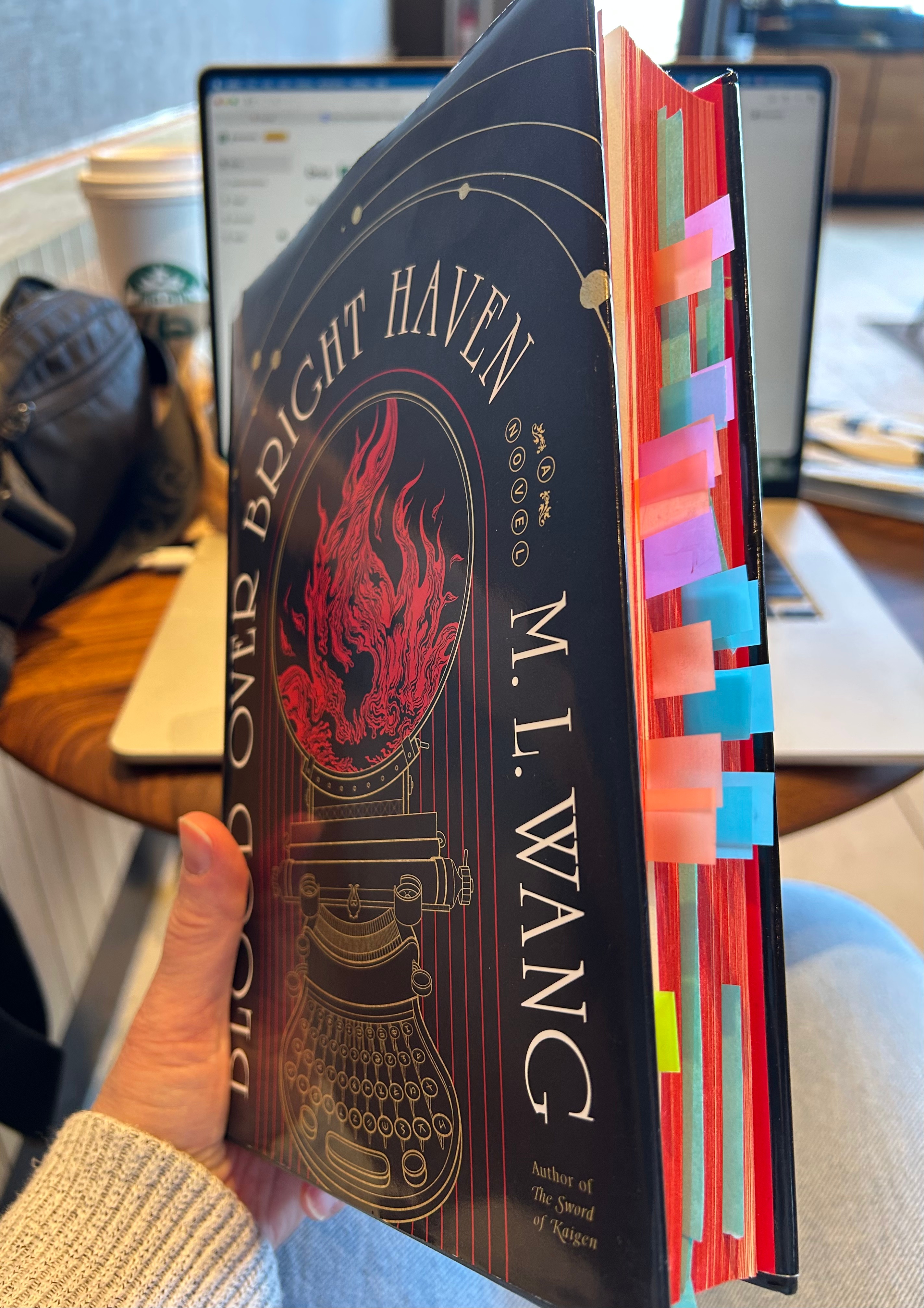
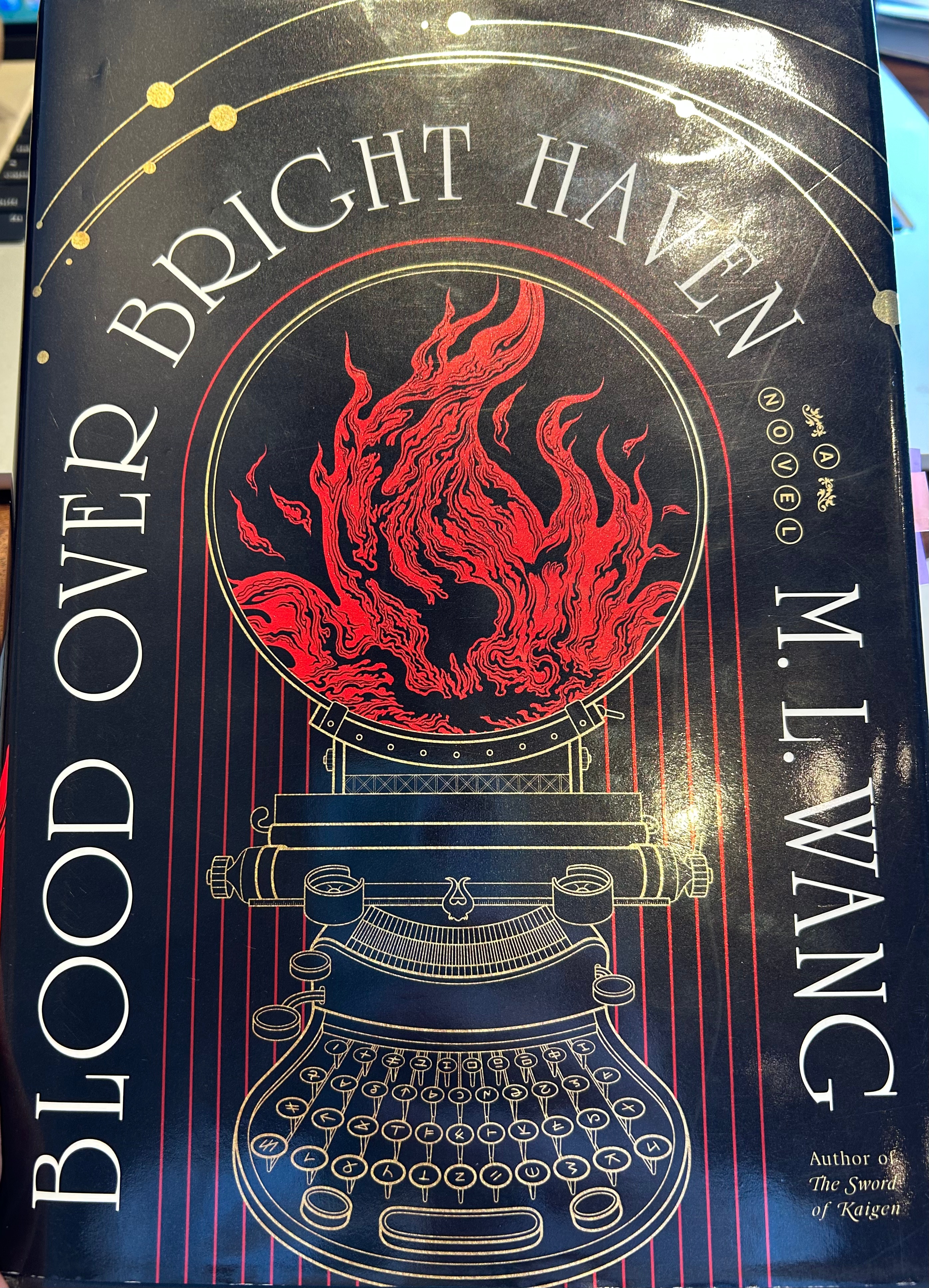
I really liked this novel, so much so that I had to bust out my mini sticky notes. The novel begins with the character Thomil and his people, the Kwen, attempting to escape a violent culling by “Blight” (a magical energy that strikes any and every living thing it senses ), an introduction that sucks us right into the plot. The second chapter, however, is significantly different. We meet Sciona just about to perform an entrance exam into the prestigious High Magistry at the University of High Magics and Industry, a feat that is almost impossible, as no other female has ever been admitted.
Soon, Thomil and Sciona’s lives collide, and both must overcome their prejudices to reveal the truth behind the political machinations of their world and bring justice to those who have been sacrificed for the upper class’s benefit.
This novel is rife with themes that are incredibly applicable to our world today. It is a perfect example of how science fiction and fantasy can serve to show us injustices, and an entitled, wealthy, and politically powerful class of society can manipulate philosophy, religion and history to serve their own ends to the extent of abusing and obliterating the lives of other classes and cultures in order to do so.
Well written, fast-paced, and perfectly concluded, with engaging characters and fascinating world-building, Blood over Bright Haven is a very good addition to your reading list and would make a wonderful addition to independent novel study in secondary school classrooms.
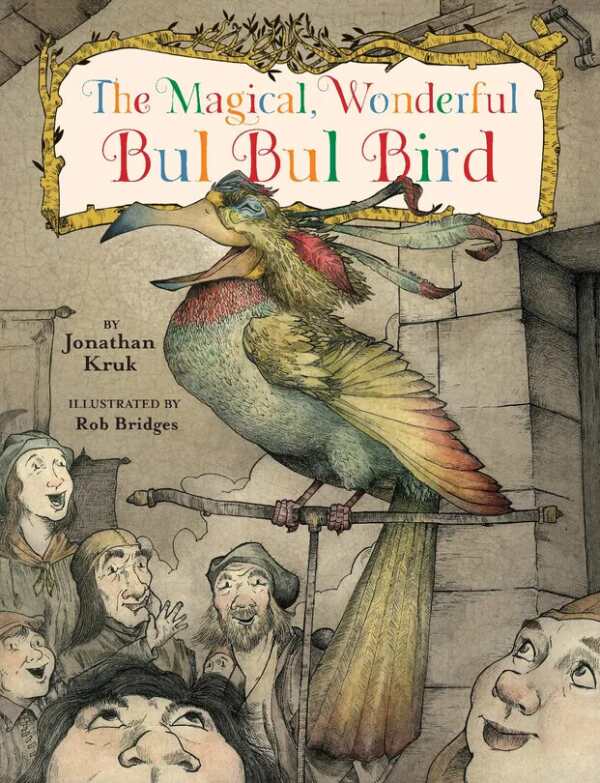
This book is, itself, magical for several reasons. First, it is a charming story based on a Latvian folktale. King Kraukis is feeling lonely. He’s got his children with him, Prince Koku, Prince Balt, and Princess Sofija, but he is still feeling lonely. You see, his castle seems to be too far away for anyone to visit, so he is lonely. But then Princess Sofija has the best of ideas; she tells her father about the Magical Wonderful Bul Bul Bird, and if they had this bird, people would come from far and wide to see its beauty. The eldest prince is determined to find the bird and bring it back, but when he doesn’t return, the second prince vows to find his brother and bring the bird back himself. But when the second brother doesn’t return, the “prudent” princess Sofija goes (something she had wanted to do all along, but was dismayed to find she is a girl). Does she find her brothers? Is the Bul Bul bird dangerous? Will the princess return to her father alive?
The second reason this book is magical, at least for me, is its absolutely charming vocabulary. In particular, it uses complex words that children will enjoy pronouncing and learning, such as “prudent, azure, sovereign, boombosity, pompous, imperious.” This delight in language is why I love it when children’s books include challenging yet fun vocabulary.
And the third is the illustrations. The artist Rob Bridges’ illustrations remind me of the old pictures you’d find in fairytale books, intricate, odd, fantastical and sometimes a little creepy!
This book is a special addition to any children’s library.
Thank you to Netgalley and 4U2B Books and MediaFor the copy
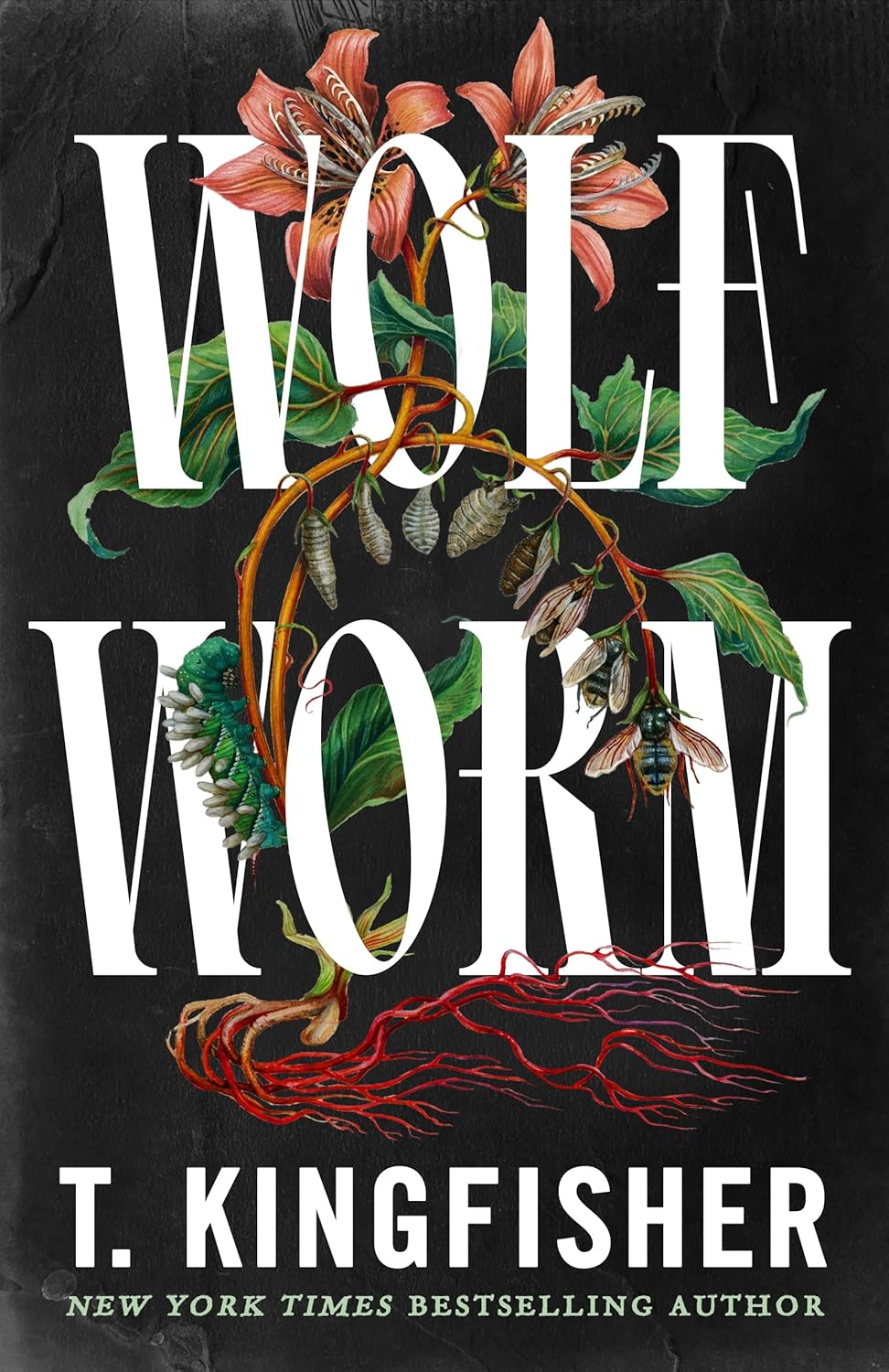
Since the death of her father, Sonia Wilson has had to put aside her beloved profession of being a scientific illustrator and become an art teacher. With only a few friends and an oppressive headmistress, she seeks employment elsewhere…but there aren’t a lot of positions available, because she is, after all, a woman in the late 1800s. So when the reclusive scientist Dr. Hadler hires her to illustrate his work of bugs, worms and squiggly, squirming critters, she willingly obliges.
After trekking through the woods with creepy Mr. Phelps, who offered to chaperone her and narrate the nightmarish folktales of devils and blood thieves you would meet in the woods, she arrives at Dr. Hadler’s North Carolina mansion….wonderfully creepy, atmospheric.
Sonia soon realizes that the doctor’s work is rather odd and that the artist before her disappeared under mysterious circumstances, compounded by the fact that the animals in the area are behaving rather creepily, she begins to regret her decision to work. Also, what is with the creepy shed on the property, a place that the doctor brings live chickens and keeps under lock and key?
The story is narrated by Sonia, whose voice is so personable and funny (which is wonderfully juxtaposed against the creepy atmosphere). I really wanted to be her friend and, over a bottle of wine, hear all about her experience. Just a heads up, if you don’t like bugs and blood, this novel may not be for you. Kingfisher is quite graphic in her descriptions.
Except for a few parts that seemed somewhat redundant (especially when Sonia is questioning the reality of a horror she saw), the novel is humorous, suspenseful, and everything I expected from the author.
…oh, and I absolutely loved the Kents.
This is an great Southern Gothic to add to you audio book list.
I listened to the audio of this novel. Mary Robinette Kowal is the narrator, and she is absolutely wonderful. She is very effective with voices, accents, and intonation of emotion. I would definitely listen to other audiobooks she narrates.
Thank you to MacMillan Audio and NetGalley for the copies.
You’ll be able to buy Wolf Worm at the end of May.
If you’ve never heard of Mona Awad, I need you to stop what you’re doing and pay attention, because I’m about to send you down a rabbit hole you will not regret.
I’ve only read three of Mona Awad’s works, and all three can be classified as dark academia my favourite genre. Canadian author Mona Awad has quite theimagination. She writes novels that read like fevered dreams, especially for those of us who have a history of viewing ourselves as insecure, anxious, and at times with self-doubt.
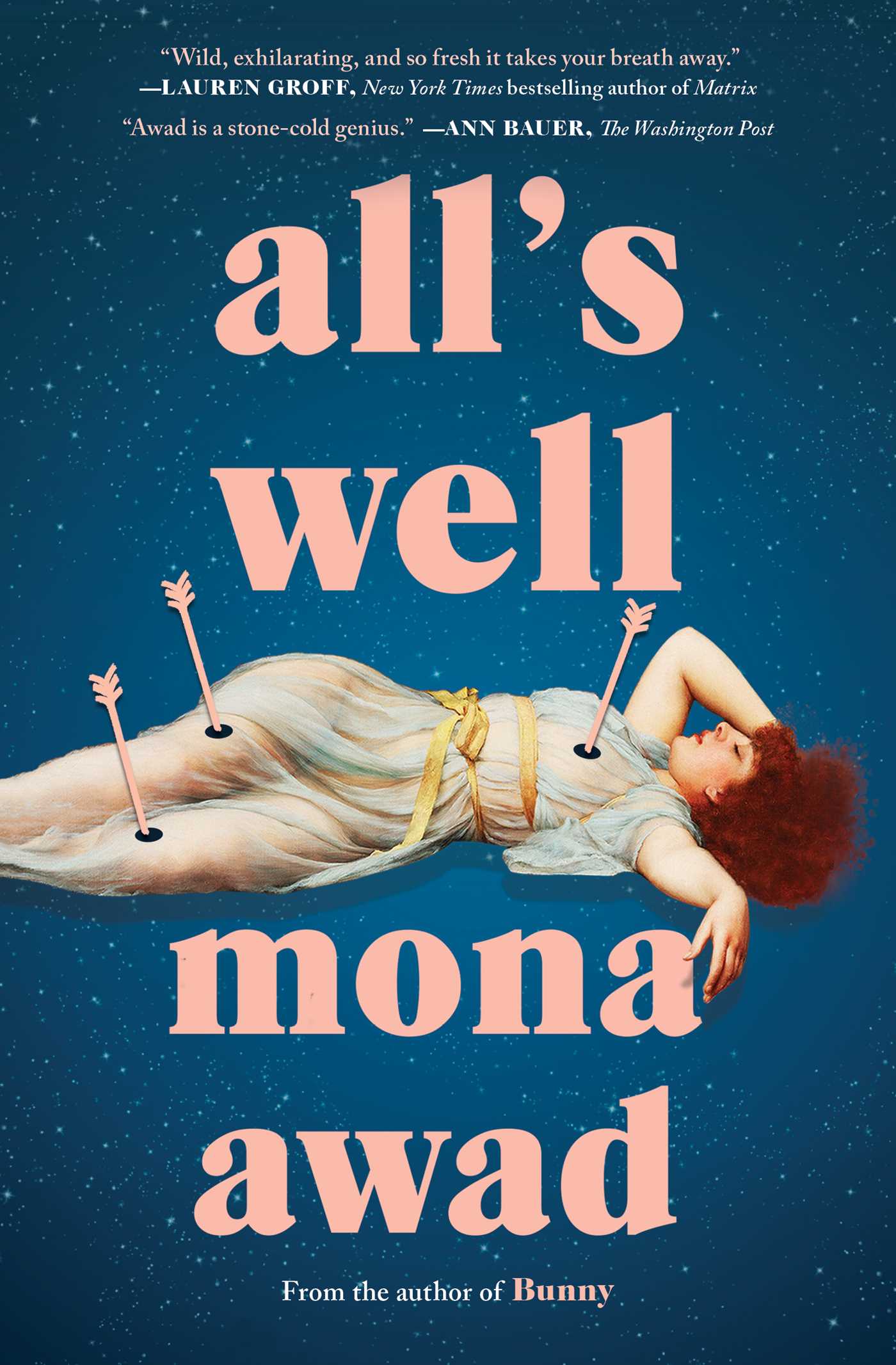
My first experience with Awad was her novel All’s Well. Honestly, I bought,this novel, because I thought the cover was beautiful, and because it was a reference to Shakespeare’s play. Miranda Fitch is a college drama teacher who is bound and determined to produce Shakespeare’s All’s Well That Ends Well, mostly because she wants to relive a time in her life when she was at the height of her acting career, playing the lead role of Helen. Her students, however, are equally bound and determined to perform Macbeth — a play that Miranda holds directly responsible for her debilitating chronic pain. When she meets three strange men at a bar (men who symbolize the three witches of Macbeth) Miranda engages in the most bizarre conversations. Soon after, the physical and emotional pain she carries begins to transfer onto the people she dislikes, and Miranda starts to feel a dark, intoxicating sense of power at the expense of others.
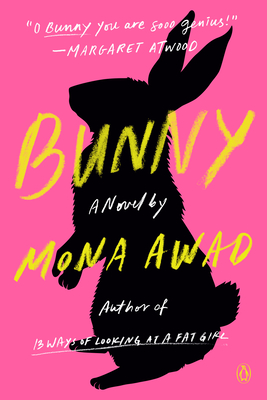
Now, Bunny. Bunny is the most wild of novels. Samantha McKey is part of a creative writing cohort at an Ivy League university. The entire story is told from her point of view, but we glean through her narrative (and she is an extremely unreliable narrator) that she is a loner. She views herself as superior to the others in her cohort, referring to them as “the Bunnies.” Soon, however, she is invited to join the Bunnies’ “Smut Salon” — a gathering where they meet to discuss their work. But the Smut Salon goes far beyond discussion. Soon the Bunnies are kidnapping, killing, and conducting all sorts of experiments to create. There are hints woven throughout that Samantha may be mentally ill, and that the world of the Bunnies and the Smut Salon is entirely a creation of her own mind.
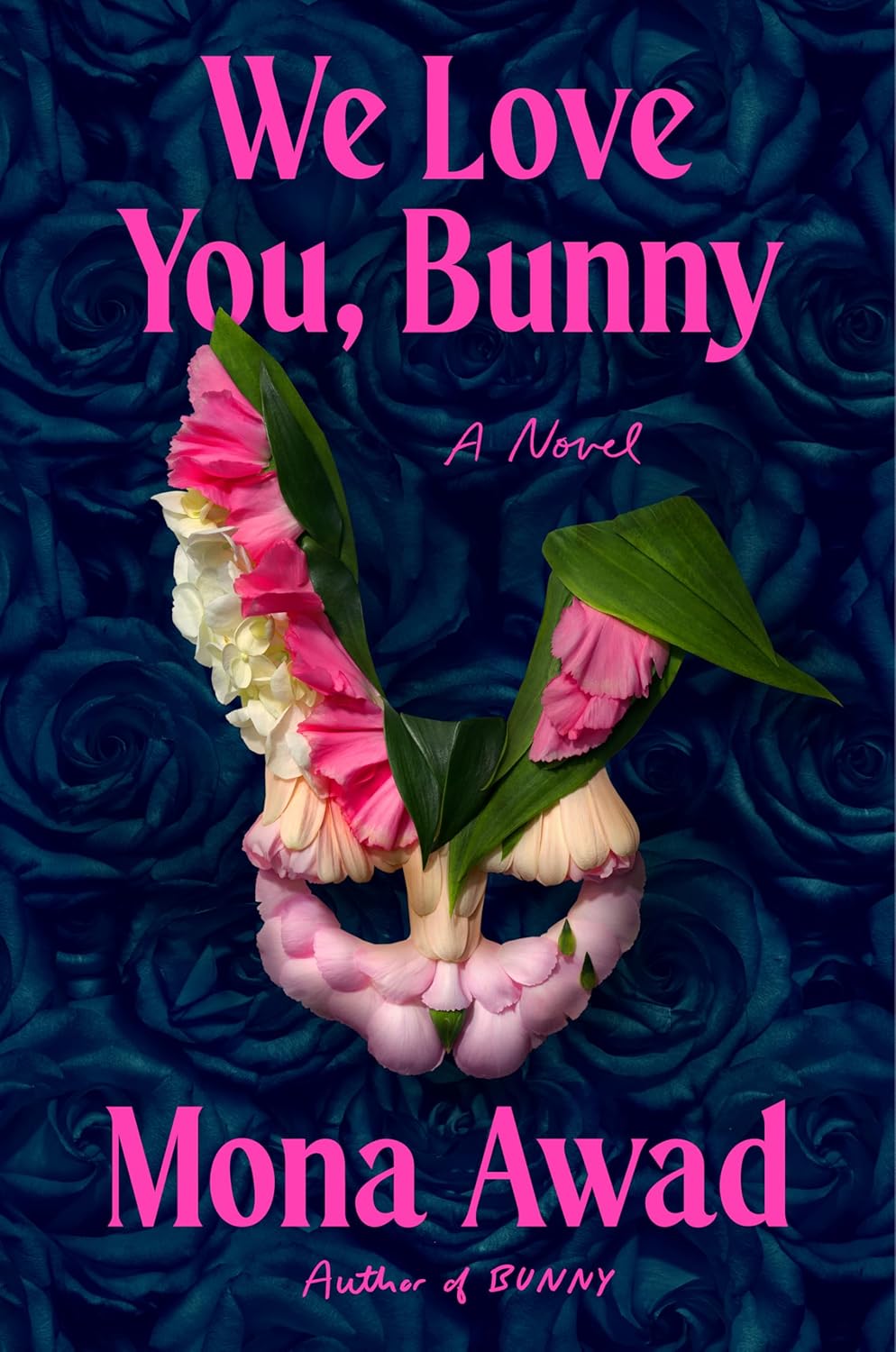
The sequel to “Bunny:” “We Love You, Bunny,” made me rethink every interpretation of “Bunny” I ever had. It’s written from the various points of view of the Bunnies themselves …they finally get to tell their side of the story. It seems Samantha, our protagonist and narrator from “Bunny” has written a bestselling novel about, of all things, the Bunnies themselves. And they are not happy. Why? because they are not exactly written in the most flattering light. They kidnap Samantha and tie her up in the same attic where they once held their Smut Salon and conducted their gruesome creative experiments. In fact, the axe is still there — and it’s often picked up like a talking stick by the various narrators.
Where Bunny felt to me like a story about identity, creativity, and what one will sacrifice in order to create both an identity and a piece of art, We Love You, Bunny is more about on the creative process itself. It presents such questions as who owns a piece of art, what constitutes plagiarism, and what makes a creative work credible. Both novels, I believe, require a second reading and a long conversation in order to peel back all the layers
:Mona Awad is not for everyone but if you are someone who loves stories that blur the line between reality and imagination, that make you question everything you think you know about a character, and that stay with you long after you’ve closed the book she just might be exactly for you. I would love to know if any of you have read her work, and what you thought. As always, happy reading.
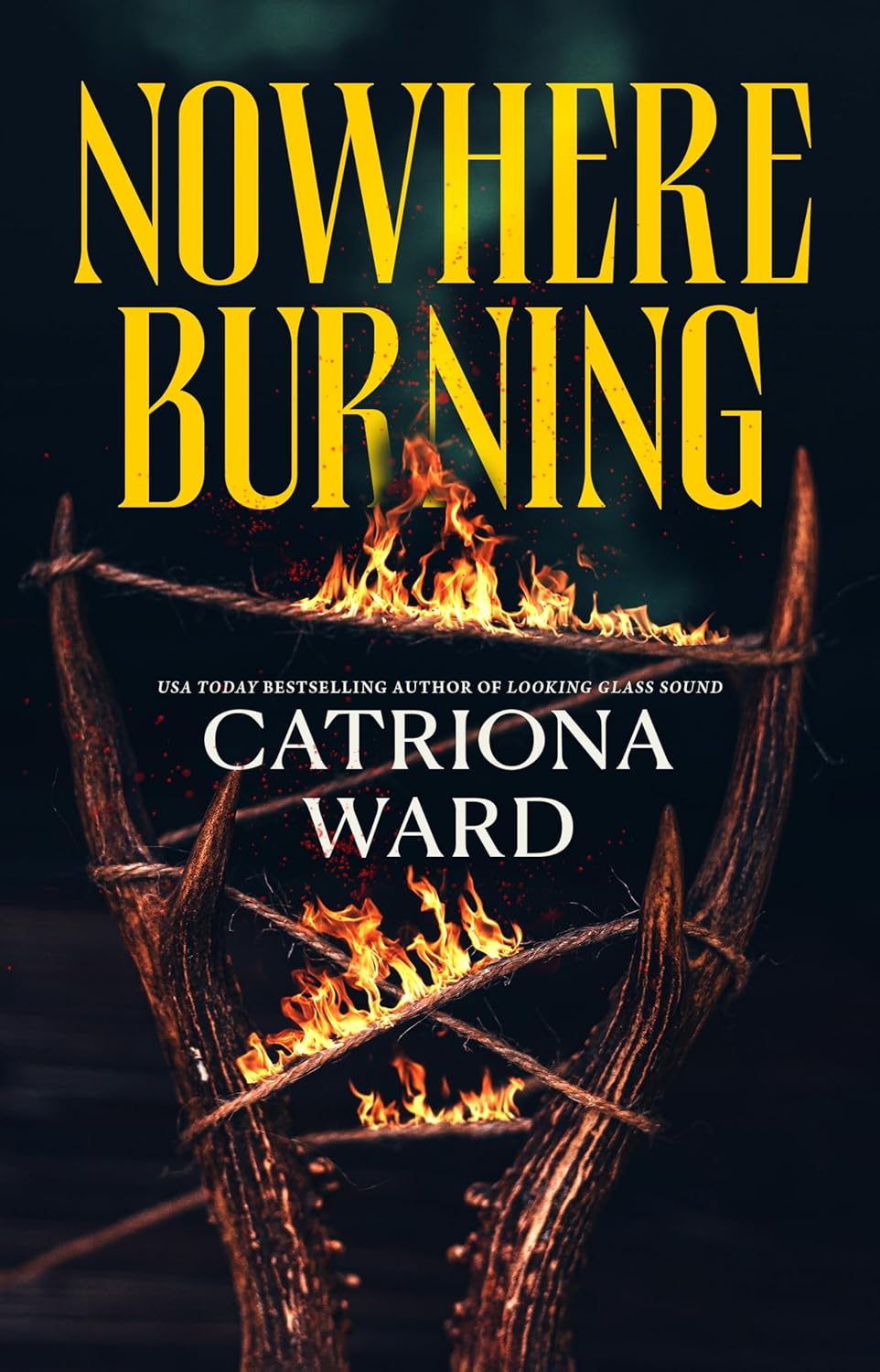
Full disclosure, Catriona Ward’s writing is a favourite of mine; she could rewrite the ingredients of a cereal box, and I’d love it. So I was fully expecting to love this new novel of hers, and I did. Although it isn’t my favourite novel of hers, it was still a good, creepy, suspenseful, mystery, thriller, and horror novel.
The novel unfolds through multiple perspectives and timelines, with the estate of Nowhere serving as the central, unifying “character” of sorts.
Leif Winham, a renowned actor, retreats from a life of glamour to his secluded estate, Nowhere. He leads an isolated and enigmatic existence, prompting neighbors to view him as an eccentric recluse while remaining intrigued by both his lifestyle and the estate itself.
Tom, a documentarian, is driven to investigate Nowhere and the mythology that surrounds both the estate and its founder.
Riley, a young girl, experiences significant trauma after being orphaned and placed in the care of a cruel, abusive guardian referred to as ‘cousin.’ Both Riley and her younger brother suffer under this individual, ultimately compelling Riley to make the difficult decision to escape with her brother. The only refuge she can imagine is Nowhere, a place described to her by a girl named Noon, who visits her at night. Noon explains that Nowhere is a place ‘in the mountains under the stars where everyone gets love and respect,’ and provides Riley with written directions to this sanctuary for children like her can find a home.
I found each of these three perspectives equally enthralling, and when Ward expertly weaves the storyline together, the novel becomes an impressive, intricate piece of storytelling.
I really enjoyed this novel, as I knew I would. It is deeply suspenseful, and I found the characters well-developed and interesting. I wanted to know their motivations, their backstories, and eventually how their lives unfold.
Thank you to Netgalley and Tor Publishing for the book
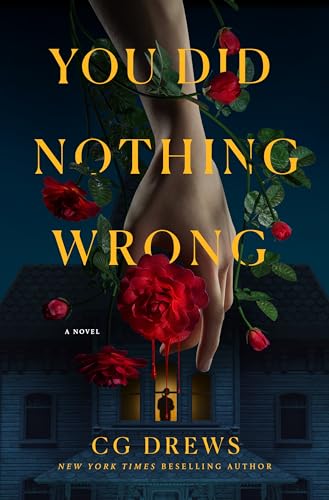
Elodie leaves her life as a single mother in Australia to join Bren in the United States. Bren appears to be the ideal husband: he is handsome, a reliable provider, and willing to help raise her autistic son, Jude. Elodie is also pregnant, which makes her feel she finally has the foundation to start anew with her family. However, she remains uncertain about the old family home where Bren has relocated them. The house is in a constant state of renovation, and Jude dislikes it, claiming he can hear the walls talking. As Jude’s behavior deteriorates, Elodie fears her seemingly perfect life may unravel, particularly if Bren discovers her secret—a secret that could jeopardize her happiness or even her safety. Yet, Bren harbors secrets as well. The central question becomes: whose secrets pose the greater threat?
Just a heads up—the ending is completely wild and unpredictable.
Well, this was a creepy book. I found some parts predictable, and I was more than frustrated with some of the choices Elodie makes, but CG Drews seems to masterfully write a psychological thriller that will make me read more of her works.
I also listened to this novel, and truth be told, I found the audio version even creepier. In fact, Saskia Maaleveld’s voice absolutely sent shivers down my spine. I had to listen to it in the bright sunlight of a walk and not in the dark of my bedroom at night. which is a testament to how well Saskia Maarleveld conveys character and atmosphere.
If you like psychological horror, then this is the book for you.
Thank you to Netgalley and St. Martin’s Press for the copy.
I both listened to and read this novel.
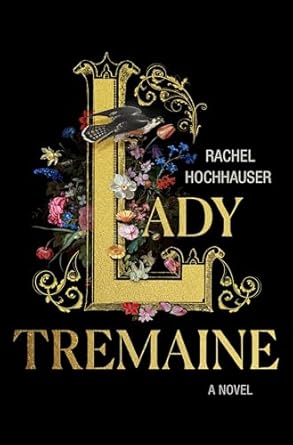
Lady Tremaine is more than just a twist on the Cinderella story. It’s a feminist retelling of a tale many of us grew up with, where a beautiful girl loses her parents and is mistreated by her stepmother and stepsisters. In this version, Hochhauser focuses on Lady Tremaine, whose full name is Ethedreda Verity Isolde Tremaine Bramlay. The story opens with Lady Tremaine hunting with her peregrine falcon. After her second husband’s death, she tries to keep up the appearance of wealth so her two daughters and stepdaughter have a chance to marry well and secure their futures in a society that limits women’s options. Ethel, as she’s called in the novel, understands the risks her daughters face as unmarried women. The book then goes back to her youth, when she met her first love, Henry, who introduced her to falconry and became her closest friend. As the daughter of a successful brewer, Ethel’s family has some standing, but they aren’t considered true equals by the upper class. Henry isn’t the eldest son in his family, so their marriage doesn’t cause much attention.
When Henry dies suddenly, Ethel’s father-in-law tries to marry off her two young daughters, who are only seven and eight, to avoid paying for their care. To protect them from becoming child brides, Ethel looks for a second husband and meets Lord Bramley, who is Elin’s (Cinderella’s) father. Like in the original fairytale, this marriage is short-lived, and Ethel is left widowed and without money. She stays at the estate but struggles to maintain it. With her daughters and two loyal servants, Ethel works hard to keep things going, while Elin stays in her room, preparing for marriage and living a sheltered life.
As per the fairytale, the court soon holds a ball so that the prince can meet a young marriageable woman. The ball presents the perfect opportunity for Ethel to prepare her daughters for a union that will secure all of their futures…however, the prince and his family aren’t all they appear to be. Will Ethel find a way to secure her daughters’ safety and future, or will she inadvertently expose them to the exploitation that exists within families of political power and wealth?
I really enjoyed this novel. A fairytale, voiced by a middle-aged woman, telling of her experiences, the wisdom gleaned from them, and the ferocity with which she makes the decisions she does to provide a better life for her daughters. She is a courageous character who becomes heroic rather than villainous.
I loved reading and listening to this novel. Written in first-person point of view, the narrator, Bessie Carter, is wonderful at embodying Ethel’s character and at varying the voices of secondary characters.
I would definitely introduce this novel into my High School Classroom as an independent choice for a novel study or small group study.
You can buy Lady Tremaine the beginning of March.
Thank you to Negalley and St. Martin’s Press and Macmillan Audio for the copies.
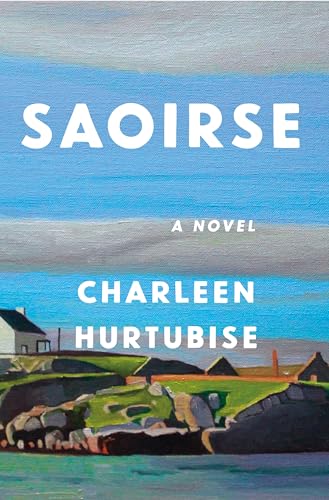
Sarah Walsh is on the run. The threat to her life is so intense that she steals the identity of another woman and flees to Ireland. On her flight, she meets Paul, a man who takes an uncomfortable interest in her, but Sarah has no one, so she accepts Paul’s help navigating a new country, even agreeing to stay with him and his family upon arrival. However, just like Sarah, Paul isn’t everything he appears to be. Soon, Sarah starts finding her own people and making friends, which is a huge relief after dealing with Paul and his oppressive family. The one exception? Paul’s dad is a kindly doctor who actually recognizes Sarah’s vulnerability and notices and encourages her artistic talent.
Her new friends anoint her with the name Saoirse (meaning ‘freedom’-an appropriate christening, as we shall soon see).
The novel alternates between Sarah’s time in Ireland as Saoirse, where she begins to reinvent herself and build her life anew, and Sarah’s past in Michigan, where we learn of the trauma she endures and her need to flee. The catalyst for the main conflict of the story (I’m not spoiling it because it happens at the beginning of the novel) is Saoirse’s public recognition as an artist, where she wins a prestigious award and is compelled to hold a public exhibit of her work.
The novel is one of resilience, heartbreak, love, found family and the importance of art in healing and recovery. I found it romantic (although at times frustrating with regard to Saoirse’s choices and rationale), infuriating in its themes of the archaic nature of the lack of a woman’s right to choose, and intriguing in its discussion of art. The chapters are organized and titled according to various artworks produced by Saoirse that seem to reflect, in both subject matter and medium, various periods of her life.
I both read and listened to this novel. If you are so inclined to listen to the audiobook, the narrator is wonderful.
Thank you to Netgalley and Caladon House for the copy.
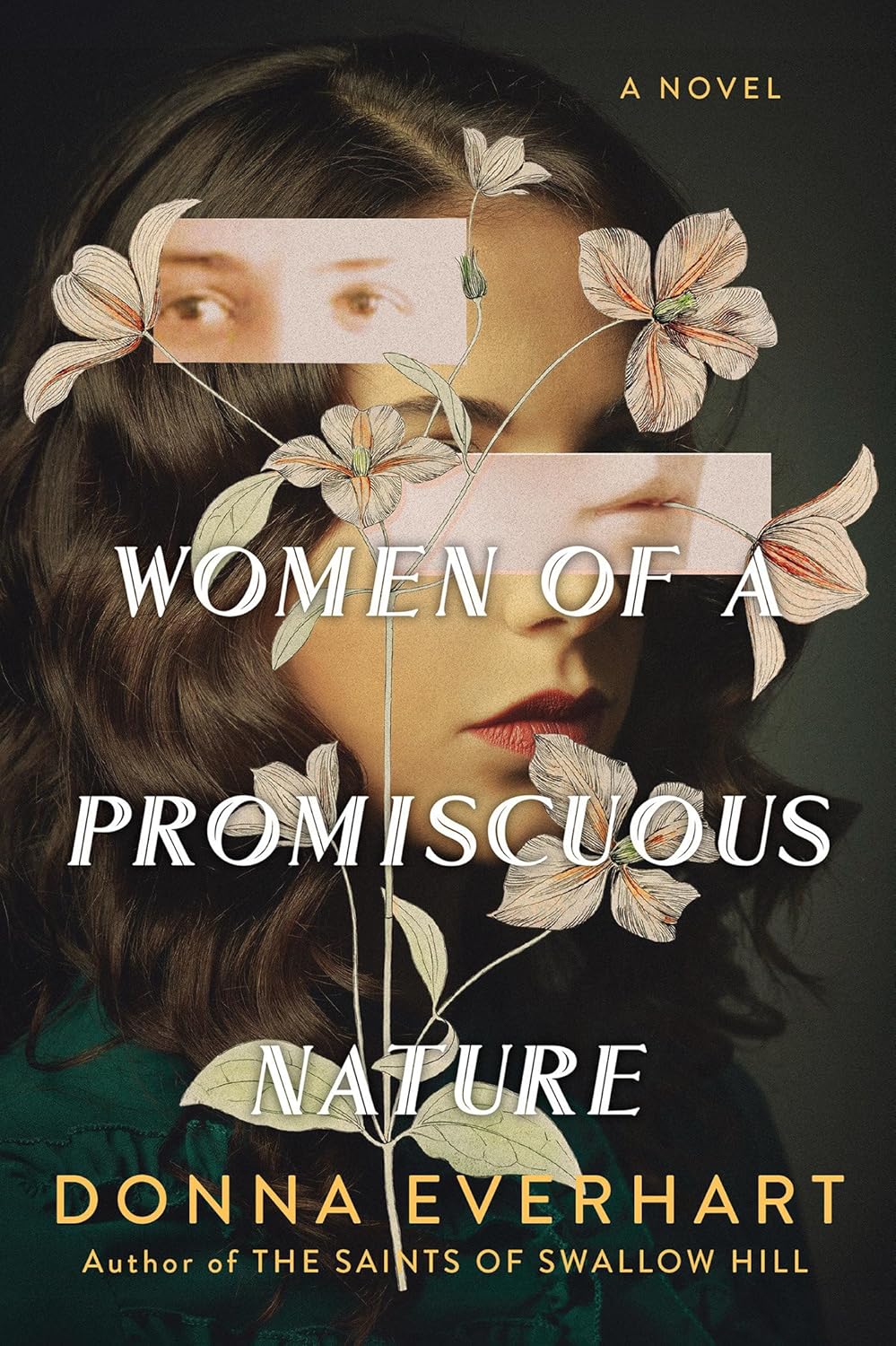
Hey, so apparently in 1918, men who were drafted into the army were succumbing to venereal diseases, and it was all the fault of women ( insert look of incredible annoyance here). In fact here is the quote “What the Secretary of War and the Secretary of the navy are hereby authorized and directed to adopt measures for the purpose of assisting the various States in caring for civilian persons whose detention, isolation, quarantine or commitment to institutions may be found necessary for the protection of the military and naval forced of the United States agains veneral Disease” from the Chamberlain – Khan Act of 1918.
Here’s another quote from Trials of Nina McCall: Sex, Surveillance and the Decades-Long Government Plan to Imprison ‘Promiscuous’ Women by Scott Stern: “It is the philosophy they helped to cement: that women and promiscuous people are dangerous and morally inferior and that they need to be stopped, locked up, and reformed.” Seriously. This information is provided by the author at the beginning of the novel…just to get your anger primed.
This novel discusses this time in American history, and I was outraged every second I was reading it.
Our main characters are 24-year-old Ruth, who was forcefully detained by the sheriff and endured a humiliating internal exam by a doctor who proclaimed that she had a venereal disease…all for walking alone to work at the cafe one morning. But hey, she was pretty and alone, so that made her promiscuous and a threat to mean right?
Then there’s Stella, just 15, pregnant by her own father, and her parents are the ones who turn her in. She gets sterilized and locked away, because apparently, she’s a threat too.
And don’t get me started on the other women who were forcefully detained for owning their own business, being mentally ill, or hey, you’re just too darned pretty to be single, so you pose a threat.
All of these women are institutionalized at the State Industrial Farm Colony for Women run by a woman by the name of Dorthoy Baker…a woman with a far more interesting past than the women she houses. Baker runs her institution using questionable measures. Her charges are punished for not enthusiastically embracing their rehabilitation .
To say I enjoyed reading this novel would not be suitable; I was, however, incredibly drawn in by its subject matter, themes and writing. Women of a Promiscuous Nature would make an engaging addition to book clubs. I would also recommend it as an independent study for high school classes; its writing style is accessible, as is its subject matter.
Thank you to Kensington Press and Netgalley for the copy.
Thirteen-year-old Fallon has secrets. All of them center around the origins of the scar on her face, a scar that runs from just above her left eyebrow to the top right edge of her upper lip. And when you’re in 7th grade, the last thing you need is an ugly scar; however, thankfully, Fallon has two incredibly close friends and a deep interest and talent in musical theater that helps. Upon the sudden death of her uncle, Fallon is forced to confront her truth and ultimately reveal her secrets to those she loves.
The novel is told from Fallon’s perspective. While the story behind her scar and her secrets is traumatic, most of her narration focuses on things many 13-year-olds experience, like dealing with snobby classmates, worrying about her talent, and navigating family and friendships. Fallon comes across as likable, positive, and funny. Even when serious things happen, she responds with a sense of lightness and optimism that shows her strength and resilience.
Even though the novel deals with serious subject matter, it never feels dark or ominous thanks to the brilliant characterization of Fallon, her voice, and her strength.
The audience for this book is ages 9-14. There are trigger warnings of physical, sexual, and emotional abuse.
A Scar Like a River is a great addition to any middle school library and works well for independent reading or small group book discussions.
Thank you to Little Brown and Company and Netgalley for the copy.
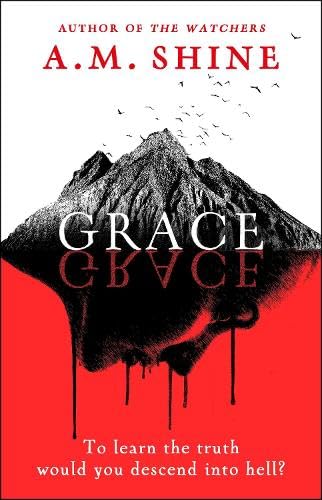
Grace is my first encounter with author A M Shine. Rooted in traditional Irish folklore, this Irish Gothic Horror novel is set on a remote island off the coast of Ireland. The novel opens with a prologue in which Declan desperately tries to save his wife, Chrissy, and his daughter, Grace, from an unseen terror pursuing them. We then quickly move forward to Grace on a tour boat, braving rough seas to reach an island the captain is clearly reluctant to visit—not only because it is perpetually cloaked in dense, ominous fog, but also because he refers to it as “LaVelle’s Island.” Just a few days before, Grace had been working in her antiquarian bookstore, sharing wine with her friend Carrie, when she received a call from a priest in Croaghnakeela informing her of her biological mother’s death. Grace always knew she was adopted, but she knew nothing about her origins. Driven by curiosity and a need for closure, she returns to her birthplace.
When she arrives, her life will be forever changed. You see, the island has been plagued by an unnatural evil, a force that is responsible for the disappearance of children, but has lain dormant for years, that is, until the death of Grace’s mother, Chrissy.
The chapters focus on individual characters, gradually revealing the islanders’ histories and their encounters with evil. As the story unfolds, readers piece together the mysteries of Valentine Lavalle, the young priest’s role, Grace’s significance, and the fog’s prevalence.
The novel is grisly, unsettling, and rich in Irish mythology. I thoroughly enjoyed it; the plot twist at the end was truly wicked, especially after everything we readers have endured.
To be honest, I would have really liked Grace to have a bigger role in the novel. The fact that she owned a rare and old bookstore made me believe she would use the tomes at hand to try to solve the island’s mystery. Instead, we get Father O’Malley as the main character, who pieces together the bits of information he gets from the island’s inhabitants. Also, I prefer a simmer before a full boil when it comes to horror and mystery novels. Grace is a novel that throws you right into the violent horror that is responsible for all the death and destruction. The novel then mostly concentrates on its origin, which is fine.
Grace will be out in February.
A solid three stars. I look forward to reading more from A M Shine.
Thank you to Netgalley and Head of Zeus Bloomsbury for the copy.


 Ink And Spine