link here: lainkandspine
for the love of story.

link here: lainkandspine
by Emily Ruskovich

This collection is made up of five short stories, all connected by the same haunting, quietly devastating voice.
The first story, Victor’s Room, follows Rebecca, a young mother who moves to a remote farmhouse where her husband spent his childhood. The story is told from her perspective as she wonders how she ended up there. She looks back on meeting her husband at university, where he taught and she was a student, and remembers their relationship, marriage, and the birth of their daughters. Over time, Rebecca realizes that many of her life choices were not truly her own, and she starts to see that her husband is not who he claimed to be. He tells her about growing up in the house, his childhood, and the death of his brother Victor, in a room that Rebecca later chooses as a sanctuary for herself. Reading this story made me feel uneasy; the relationship between Rebecca and her husband is very one-sided and manipulative.
The second story, Owl, follows a young man whose wife is shot by some neighbourhood boys who mistake her for an owl. Their relationship is already strained, so when she later disappears, he suspects either the boys are involved or that something from her past has finally caught up with her. I found this story heartbreaking and incredibly sad, with characters who feel like nothing more than victims of circumstance.
The third story, Round Lake, centers on a young woman who, after learning the truth about a key event in her life, starts to question everything, especially the life she has built around her memories. There were moments in this story I found incredibly easy to identify with. As I was reading, I kept thinking, I have totally responded this way, and this is exactly what I would have done.
Petty Creek Road is the one story I couldn’t quite identify with. It follows two older brothers who, because of circumstances in life, move in with each other and become the best of friends. When Butch, the younger brother, is tragically killed, his brother Will has to come to terms with his loneliness, the relationship he has with his son, and a gift he has denied possessing until now.
The final story, Nightjar, is about a young girl, Tess, who has to look after her little brother Rory during summer vacation. While doing so, she experiences something miraculous that gives her a sense of purpose and peace in her otherwise lonely and isolated life. The relationship between the young girl and her brother is incredibly realistic, sometimes funny and very heartbreaking.
Emily Ruskovich is a talented writer. Her stories draw you in with their beauty, and her writing is rich with description and metaphor. She is one of the best writers I have read.
Every story in this book will be suitable for High School study.
Thank you to NetGalley and Random House for the copy.
by Sally Hepworth
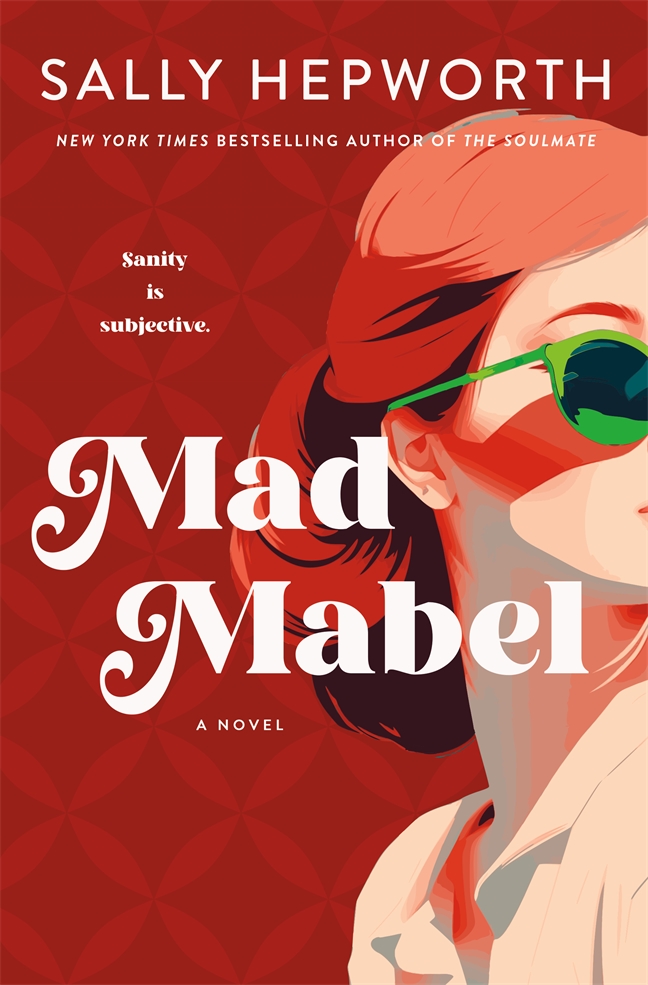
Well, I was pleasantly surprised to be so engulfed by this novel; I read it in one day. It was the perfect book for sitting on my balcony, sipping a beverage and reading until the sun set, and where I live that isn’t until 10:30 in the evening.
The first two sentences of the prologue are one of the BEST I’ve read in a while: “It’s interesting to note that there are two groups of people who are rarely, if ever, suspected of murder. These groups are elderly women and little girls. We meet Elsie Mabel Fitzpatrick who is 81 years old. Elsie and her bosom friend Daphne are chit-chatting about the neighbours, an eclectic group of people who all will take part in the story in varying degrees. It seems no one in the neighbourhood has seen or heard from their ninety-three-year-old neighbour Ishann, and to add to their concern, his packages of shipped vitamins are beginning to pile up on the doorstep, and his chihuahua Nugget has been yapping nonstop for a couple of days. Elsie takes it upon herself to check on him and crawls over the fence to see Ishan lying dead on the floor through the glass. The police are called, and they soon find out that Elsie is also “Mad Mabel,” a notorious murderer sent to prison when she was only 15 for killing…someone (no spoilers), so of course, being the person to discover the dead body and because of her history, she is not ruled out as a suspect.
The novel then skips back in time to give Mabel’s back story, where we learn who her parents are, what type of childhood she had and, of course, her possible motivations for murder. Chapters are labelled “Then” and “Now,” and Hepworth does an excellent job of only giving us the time frame in Mabel’s life that fits with the events happening in the “now”. As readers, we move from not knowing the true character of this murderer to actually befriending her. The Mabel of “Now” is strong and spunky, but the Mabel of “then” is a young, emotionally damaged girl who is abused by almost every aspect of society. As readers, we eventually learn that there could be several potential murder “victims,” but Hepworth is successful at not making it entirely predictable.
If you’re looking for an engaging story with an intriguing and somewhat funny protagonist, then you will love this novel. It does pull on your heartstrings with its treatment of Mabel.
Trigger warnings for child sexual, physical, and mental abuse, as well as violent scenes and domestic abuse. The story is not graphic, but the subject matter is sensitive—five stars, one of my favourites of the summer.
by Christopher Buehlman
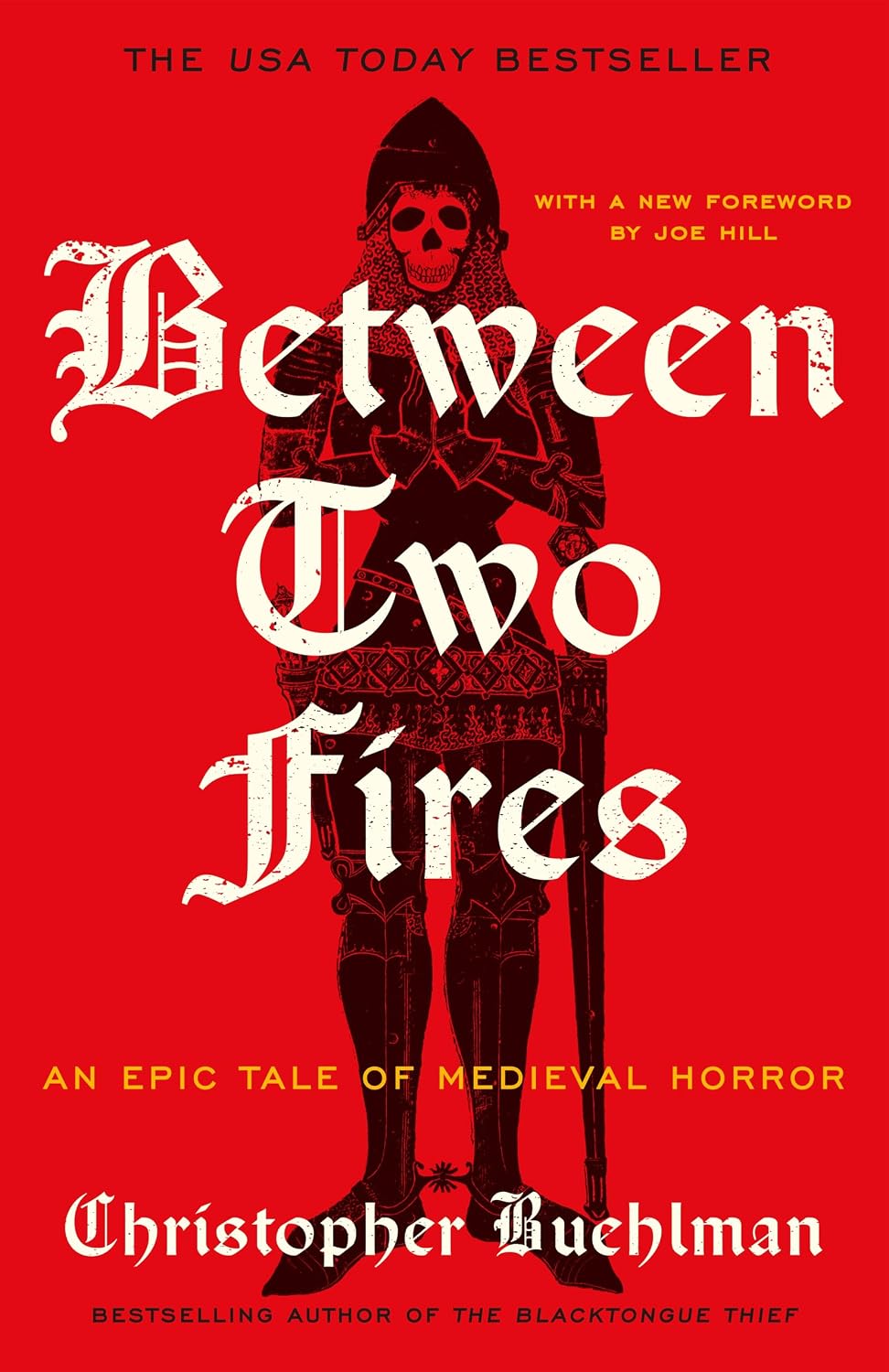
Fallen angels are preparing for battle. Lucifer and his minions have chosen medieval France as their battlefield, and what better way to recruit humans to their cause than by challenging their faith with the plague. It’s 1348, and our main character, Thomas, a disgraced knight, has already had a crisis of faith. After suffering betrayal by his brothers in battle and by his wife, he has taken to the life of a brigand. Thomas has committed crimes both legal and moral that he would rather forget, but hey, it’s the time of the plague, and survival is being used as an excuse for sinful behaviour by everyone. Everyone, that is, but a young girl named Delphine.
When Thomas meets Delphine, he feels inexplicably protective of her because she seems to epitomize innocence and good. And Delphine is indeed different. She is visited by angels and set on a quest to journey to Paris to “find” something and take it to Avignon, and she persuades Thomas to accompany her. Along the way, they encounter a plethora of evil in the form of monsters, demons, and the walking dead. They also encounter some good, one person in particular being important to their journey: Fr. Matthieu, a kind yet imperfect monk who brings some jovility and warmth to the trio.
We, the readers, know that these three are going to face an evil in Avignon that will build into a holy war, one where everyone feels as though God has abandoned them.
I really REALLY liked this novel. I listened to the audio, narrated by Steve West, and his narration was powerful. It almost reads as a morality play. Naturally, themes of forgiveness, redemption, crisis of faith, the duality of mankind, good and evil, and the corruption of religious and political institutions are developed, among others. The development of Thomas’s character is powerful to see, as he responds to the challenges he encounters, albeit mostly supernatural, in a very human and realistic manner.
It is a horror novel that is VERY atmospheric and features graphic violence, but I think that no matter who you are, you will like the ending.
by Archer Sullivan
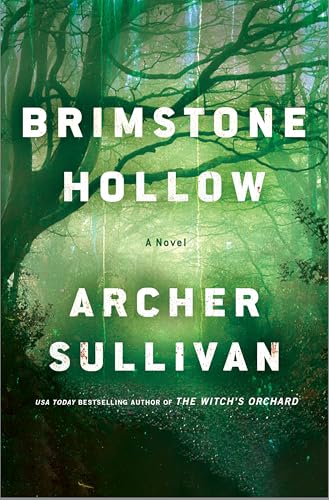
Brimstone Hollow is the second book in Archer Sullivan’s Annie Gore series. Annie is a spunky, independent private investigator we first met in The Witch’s Orchard. Sullivan has again written a Southern Gothic-esque mystery filled with interesting characters, a fast-paced plot, and an engaging protagonist. This time, Annie is approached by a young mother who wants to know how her estranged father, a “snake handling” preacher named Ezra King, died. The case takes Annie to a small Appalachian town, where she meets an assortment of townsfolk — some who followed the preacher, and some who didn’t. With help from the Chief of Police, Annie uncovers more than just murder: an entire underworld of criminal activity.
I expected to enjoy this novel, and I did. It’s a great palette cleanser if you’ve been steeping in heavy literary fiction — a quick, plot-driven read with a very likable main character. Sullivan also has a knack for slipping in a twist or two to keep things from getting predictable.
Thank you to Minotaur Books and NetGalley for the copy. Brimstone Hollow will be available for purchase August 11th.
by Charlotte Wood
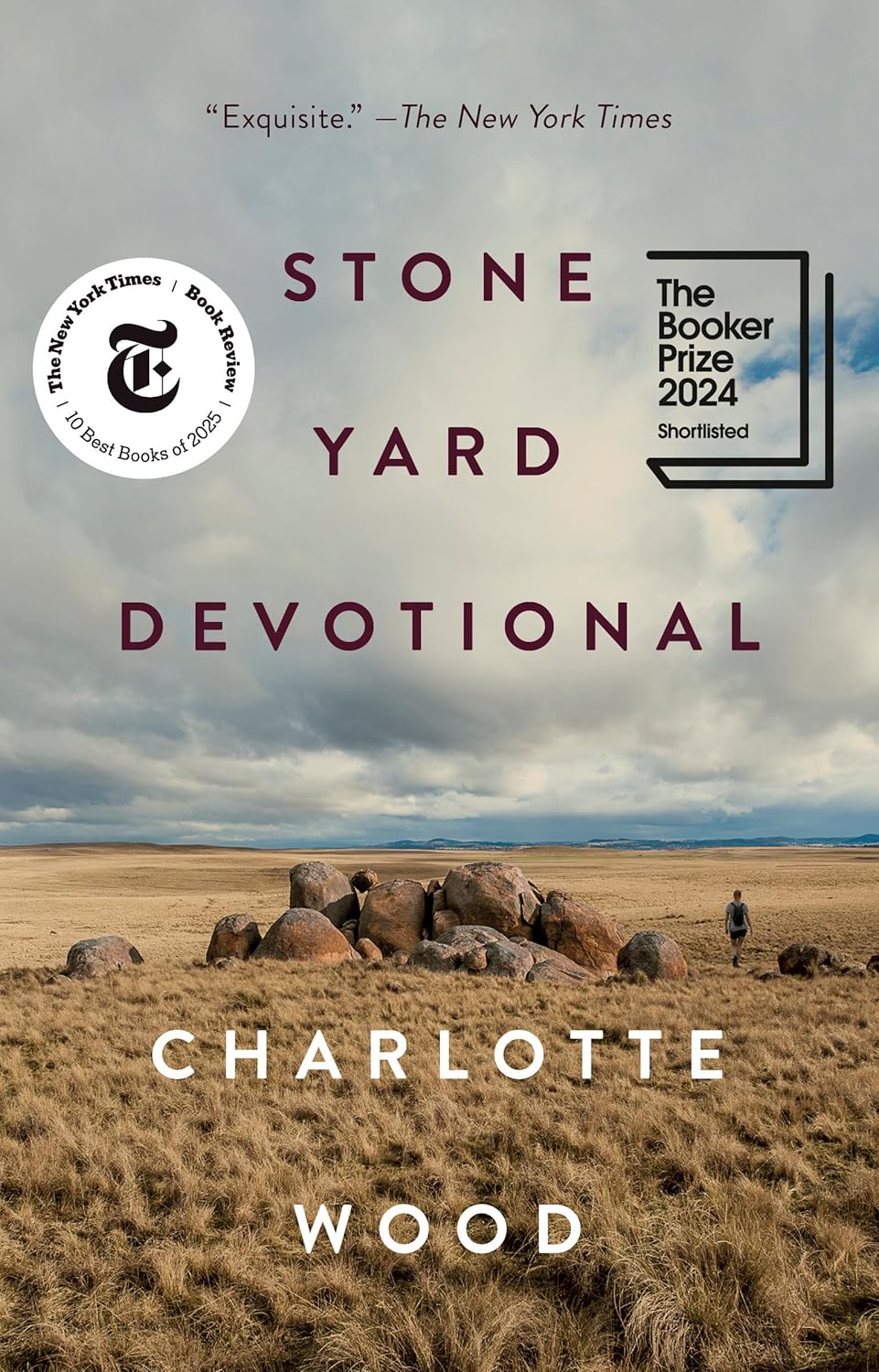
I’m not entirely sure why I picked up Stone Yard Devotional. I think it had something to do with a book podcast I came across, where the host mentioned it was the kind of book you read slowly, pausing to sit with what the words on the page are really trying to say. Not so much the telling of a story, but the meditation surrounding the narrator’s contemplation.
Our narrator walks away from her life running a “Threatened Species Rescue Center,” feeling it is essentially pointless. The world is going to hell in a handcart (my interpretation), and she retreats to a religious community of nuns. Not out of faith, but because “nothing is asked of [her], nothing expected” (pg. 18). From there, she turns inward, revisiting the events she believes shaped the woman she has become. As she settles into convent life, she begins to reflect on her upbringing, and particularly on her complicated relationship with her mother. Then three life-altering events unfold: a plague of mice, described in genuinely horrifying detail as the narrator and the nuns scramble to contain the infestation; the discovery of the remains of a nun who once belonged to their community, whose death appears to involve criminal circumstances; and the arrival of another nun, someone our narrator has crossed paths with before.
This is a deeply human novel. The examination of our narrator’s inner life is genuine, frustrating, and at times confusing, but through it all, it is rooted entirely in her truth.
Charlotte Wood’s writing is simple yet beautiful. There were several moments where I had to stop and just sit with her prose. For example: “Crossing the grass I made a clean track of footprints, deep green on the white spread of the lawn. It returned me to my childhood, to the sense of secret authority, imprinting one’s presence into a place with those clear, sharp prints. I exist” (pg. 39).
And: “I’m used to it now, the waiting. An incomplete, unhurried emergence of understanding, sitting with questions that are sometimes never answered” (pg. 69). The discussions you could spark from contemplating either of those passages alone would be well worth the read.
Stone Yard Devotional is a novel that can be finished in a relatively short time, yet its complexity and themes run deep. That combination of accessible length with rich, layered content makes it an ideal pick for book clubs and high school independent novel studies alike.
by Douglas Stuart
John of John is the third book of Stuart’s I’ve read, and it’s just as poignant, just as beautifully written as the first two.
Our protagonist, John Callum (Cal), is a young gay man struggling in life, moving from couch to couch, sneaking food, and having one-night stands. During their weekly phone calls, Cal’s father, John, says that Grandma Ella has taken ill and urges him to return home. Cal hesitates, feeling like a failure and dreading his return to the small Scottish Hebrides town where being a young gay man is far from ideal.
Cal returns home with his long, brightly dyed hair and androgynous appearance, exposing himself to his father’s verbal and physical abuse. We wonder if John’s violence stems from his wife’s departure and remarriage, Grandma Ella’s ownership of the property, or his own struggles as a Presbyterian minister, burdened by church rules and secrets his son’s presence brings to light.
Douglas Stuart’s stories overflow with theme and emotion. He crafts characters whose heartache, confusion, and love resonate universally, and captures the honest, heartbreaking bond of father and son. The novel explores identity, lineage, and the tension between pleasing parents and seeking one’s own path.
A beautiful novel, just as I expected. I will always be a Douglas Stuart fan.
Thank you to Grove Press and Netgalley for the copy.
by Daniel Kraus
I read Daniel Kraus’s Whale Fall years ago and absolutely loved the story, writing style, and themes, so when I learned of Angel Fall, I immediately bought it. Well, I had to order it because no bookstore near me carried it. But it sat on my bookshelf for months, and when I heard it had just won this year’s Pulitzer Prize, I decided it was now the time to read it. And you know what? My copy has a plethora of sticky tabs and annotations throughout. It’s not a quick read, or at least it wasn’t for me. There were so many profound themes, beautiful phrases, and places in the text that I want to revisit in the future.
The novel is set in France during World War I and follows Cyril Bagger, the son of a bishop whose personality is such that he is somewhat of a con artist, let’s just say he’s not fighting in the war for the sake of freedom. Despite his ideology, or lack thereof, Cyril serves as a Private First Class in the army, with the official duty of a grave digger. Early in the story, Cyril and four other soldiers are sent to investigate mysterious shrieks coming from the trenches because, as they are told, “the army does not leave a man behind” (pg. 41).
When Cyril and Arno, a fourteen-year-old soldier who lied about his age to enlist, attempt to cross No Man’s Land, they discover an angel trapped in barbed wire. They free her and carry her to safety. The angel has a mysterious quality—her radiant appearance is veiled under a cloak, and anyone who sees her perceives their deepest desire: for some, she appears as a missing loved one to others, a path to fortune. The soldiers who accompanied Cyril want to possess the angel for their own gain, but Cyril does not. The angel tells him, “You are the only one to ask nothing of me” (pg. 189).
The novel is a heavy read. Not that it’s sloggy or difficult, but it is very visceral in its depiction of war and prompts the reader to search their own heart for a personal understanding of humanity, especially during a time of conflict. It is also written as a continuous sentence (although I did find punctuation a very few times). In fact, Kraus writes, “like the carnage won’t ever end, it’s a sentence in a book careening without periods, gasping with too many commas, a sentence that, once begun, can’t ever be stopped, a sentence doomed to loop back in on itself to form a terrible black wheel that, sooner or later. Will drag each and every person to their grave” (pg 6). And the writing style does, indeed, create a tone of unending dread with the feeling of horrific monotony. The novel is also rich in symbols: the angel, the novel The Count of Monte Cristo, and the Bible, just to name a few. It is a novel worthy of the Pulitzer as it is a sobering story of not only the physical and psychological horrors of war, but also the potential moral ambiguity that comes with killing for an ideal. It is a discussion of theology, philosophy, morality, politics, and history. It is also, in a way, an examination of conscience…so yes, as I said, it is heavy.
Because of Kraus’s beautiful writing and the thought-provoking themes, Angel Down lingered in my mind for weeks after I finished reading, making it one of my most memorable books of the year thus far.
by Olivie Blake
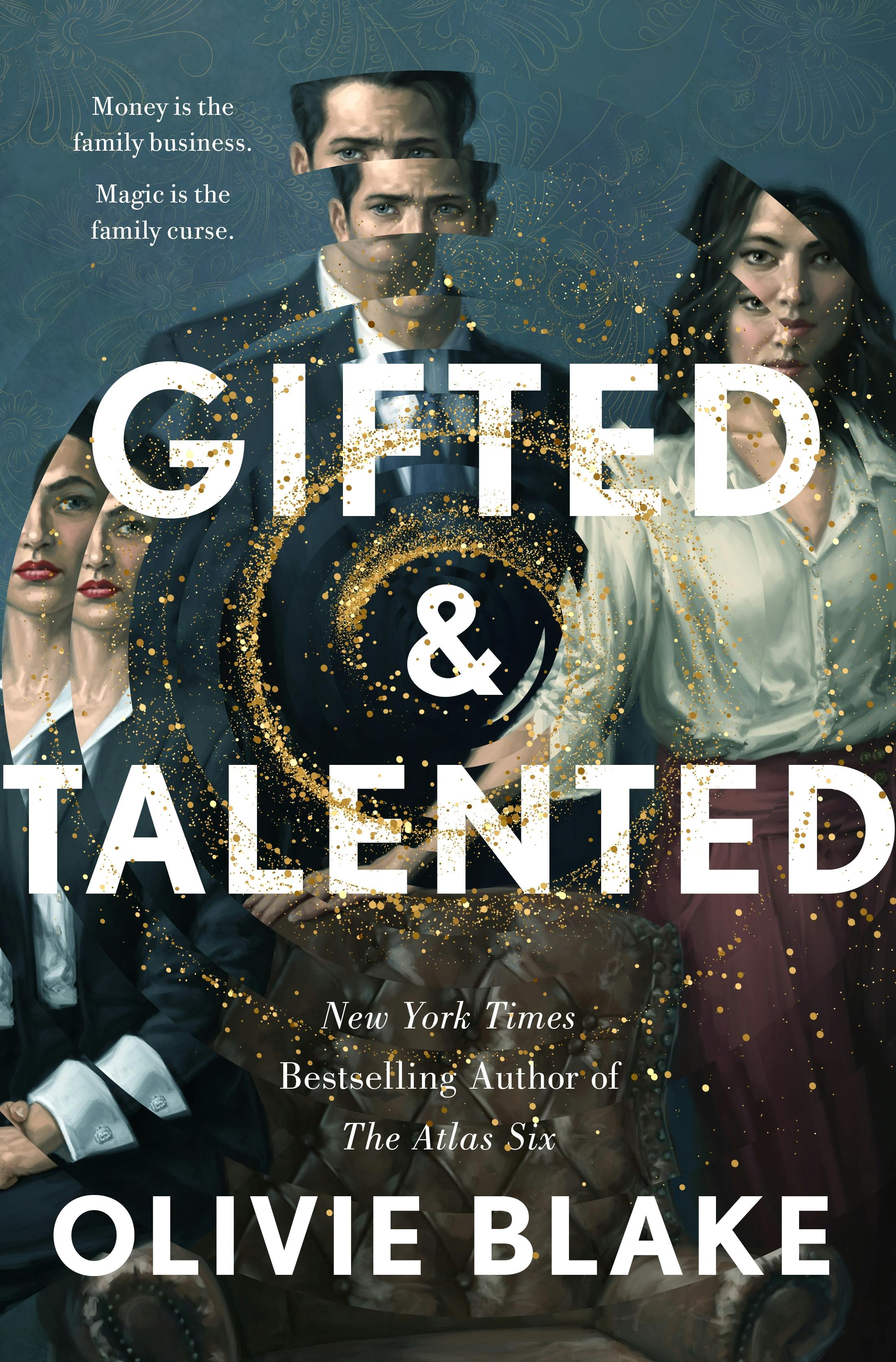
I admire Olive Blake’s writing tremendously. In this novel, she convincingly narrates the story from an omniscient point of view; in fact, her name is Death. So is she really dead? That is the question I kept asking myself as I read until….the other characters began to refer to her, then I knew she was actually a flesh and blood character, or is she? This question of mine makes sense once you start reading the book. Gifted and Talented is a novel about siblings. Actually think of the series Succession, but with heirs who are “telepathically and electrokinetically gifted.”
The novel’s plot is simple: the wealthy founder and CEO of a groundbreaking company dies, and each of his three children (two of whom are all but estranged from him) finds their way back home to discover who has inherited the company. And, of course, each of the adult children comes complete with their own massive set of luggage. Meredith, who always thought she would be the next in line, was somewhat shunned by her father and ended up working for a competitor building and marketing her happiness app “Chirp”; however, her ethics have come into question because her ex-boyfriend has discovered she has been using her “gift” to manipulate buyers into a false sense of happiness. Arthur, the only son, is a washed-up politician who is more of a frat boy than a man of the people. Seemingly kind-hearted but leading a life of debauchery, Arthur really doesn’t want to be a politician, especially because his gift, if unharnessed, would be very difficult to explain to the voters. But the guilt his father put upon him made him. And then there is Eilidh, once a promising ballerina, and closest to her father, the only Wren offspring to work with her father, who doesn’t really know what she wants, especially because her gift, when unleashed, is the most dangerous of them all. Then there is Death, and you will learn all about her as you follow the story.
A very well-written book with the most extraordinary character development. In fact, the book is mostly about character development, their discovery of self, their reckoning with their truth and the possibility of redemption and reconciliation. If you like character-driven books rather than plot-driven ones, you will enjoy this book immensely.
Thank you to Tor Publising and Netgalley for the copy,.
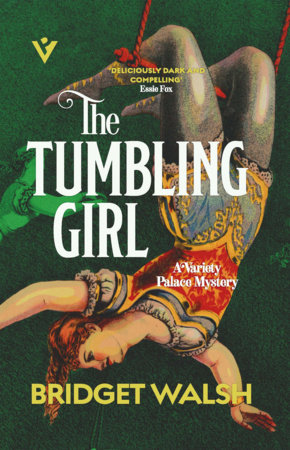
I love a good Victorian mystery. Minnie Ward and Albert Easterbrook are the protagonists. Minnie is a writer at the Palace, a circus-like playhouse featuring magic, acrobats, songs, and animal acts. One day, Rose, a “tumbling girl” and headline performer, disappears. Soon, it becomes clear she was brutally murdered, yet the police insist it is suicide, dismissing her as a woman of “questionable” reputation. Certain Rose would never kill herself; Minnie and Rose’s mother, Ada, hire former policeman-turned-private investigator Albert Easterbrook to prove it was not suicide.
As the plot progresses, we get drawn into the world of private men’s clubs, corrupt politicians, and a string of “Stanhopes” (I had to look it up) that possess clues to the crime. We also learn that young women are anxious about walking alone because of the notorious “hairpin” killer who has yet to be apprehended.
I really enjoyed Minnie, a modern woman during suppression. Her bravery, intelligence, and humour make her an engaging protagonist. I also love her interactions with Mr. Easterhouse—could there be a spark?
The novel introduces several suspects. Even though Rose’s killer becomes somewhat obvious midway, there is a twist I didn’t anticipate.
Absolutely a cozy mystery to add to your TBR list. To my delight, it’s designed as a series, so I can revisit Minnie and Albert in future installments.
Thank you, Pushkin Press and Netgalley, for the copy.
by Virginia Evans
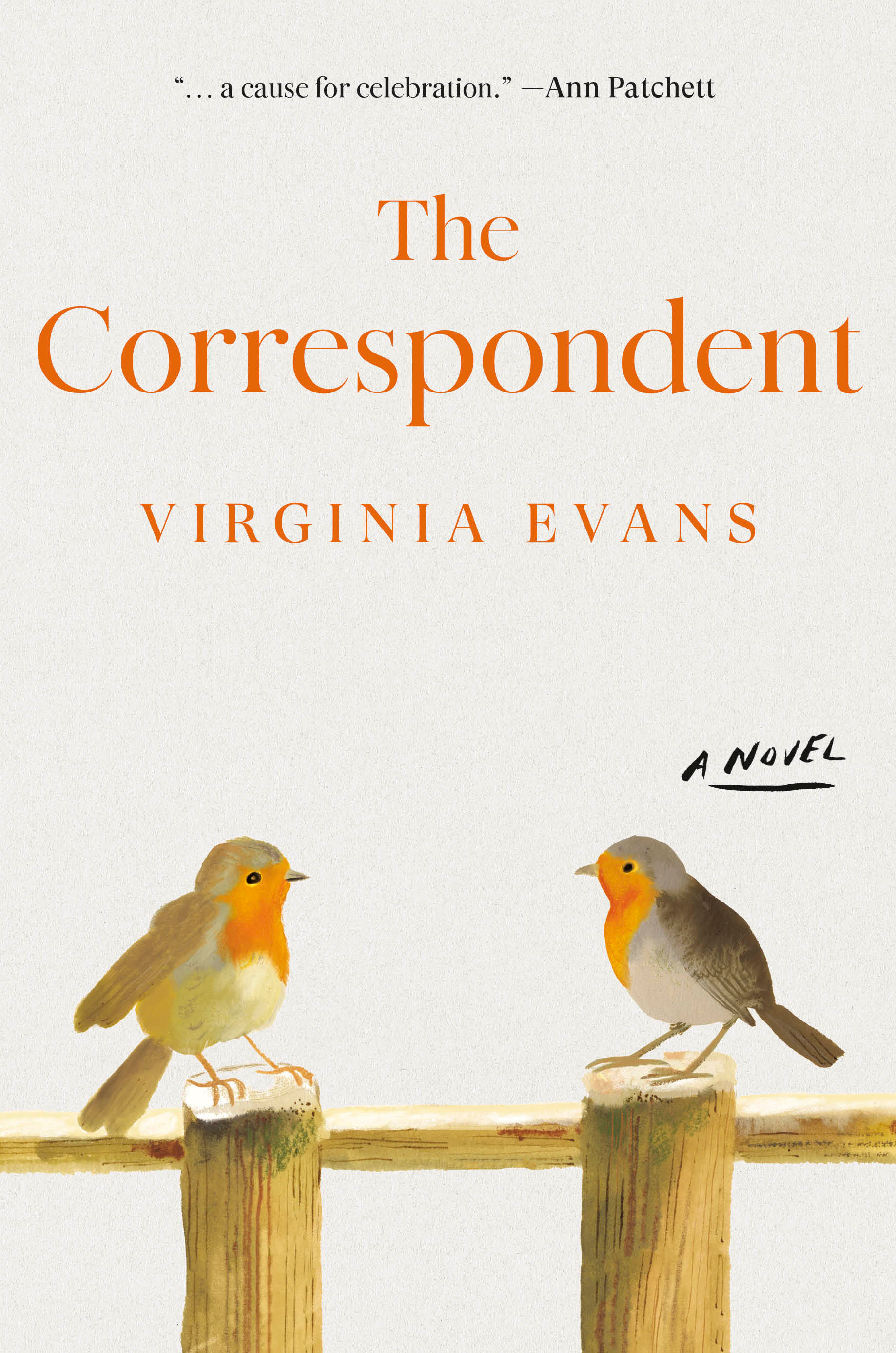
I absolutely love reading epistolary novels. They make me want to write letters again. Real letters. We live in such an “instant” time where, at the click of a button, we can communicate with no pondering, no pause to clarify our thoughts, no attempt to communicate not just effectively but beautifully.
Years ago, I was lucky enough to read letters my grandfather wrote to a young woman who would just happen to become my grandmother. They were simple but heartfelt, and I truly felt like I got to know a grandfather I had never met, a man who existed before he was ever a “grandfather” to me. I think we have become a people where, unless we feel we have something important or riveting to say, we say nothing at all. And yet what we should be doing, what people like my grandfather, did so naturally in the past, is simply share the simplicity of their everyday lives. Little things: the simple goings-on of the day, what you ate for dinner, what books you’re reading, or something as unassuming as the weather.
I lived in Glasgow for a portion of a year, many, many years ago, back when the only internet you could access was at the local internet café where I had pay by the hour. So I wrote letters the old fashioned way to everyone and anyone in my address book: old university friends, my little nieces who were too young to read, previous colleagues, just to tell them about my everyday life living in Scotland. And I received a plethora of mail in return, sometimes twice a day (the Royal Mail was absolutely magnificent). It is a practice I miss deeply.
All this to say: I absolutely loved The Correspondent.
Our main character is 73-year-old Sybil Van Antwerp, a retired law clerk for a celebrated judge. Sybil has always written letters, first to her best friend Rosalie, whom she met at summer camp as a young girl, and eventually to an ever-growing constellation of recipients: her brother Felix, living in France; her children; her neighbour Mr. Lubeck; various authors she admired, among them Joan Didion and Ann Patchett; a university dean; and others. Her mailing list expands across a lifetime, and we come to understand not only her ritual for letter-writing (she has specific days and times set aside, and spends about an hour crafting each letter, a discipline we learn about through her friendship with a young student who becomes enchanted by the practice) but her motivation as well.
Woven through the novel is something more tender and more sorrowful: through letters, we learn that Sybil is losing her eyesight, and we come to know the heartbreak and tragedy that has quietly shaped her life. And throughout all of her correspondence Sybil has been writing to someone she never names. In these letters, we meet a different Sybil entirely, unguarded, reflective, sharing her most personal feelings and regrets. These letters are written never to be sent.
The Correspondent is a beautifully crafted love letter to the art of letter-writing itself. It is also a novel about identity and grief, and the preciousness of relationships and the ways we choose, or fail, to communicate across a life. By the end, I desperately wanted to receive a letter from Sybil myself. It is a quick read, and an easy one to fall into and stay until finished.
by Tananarive Due
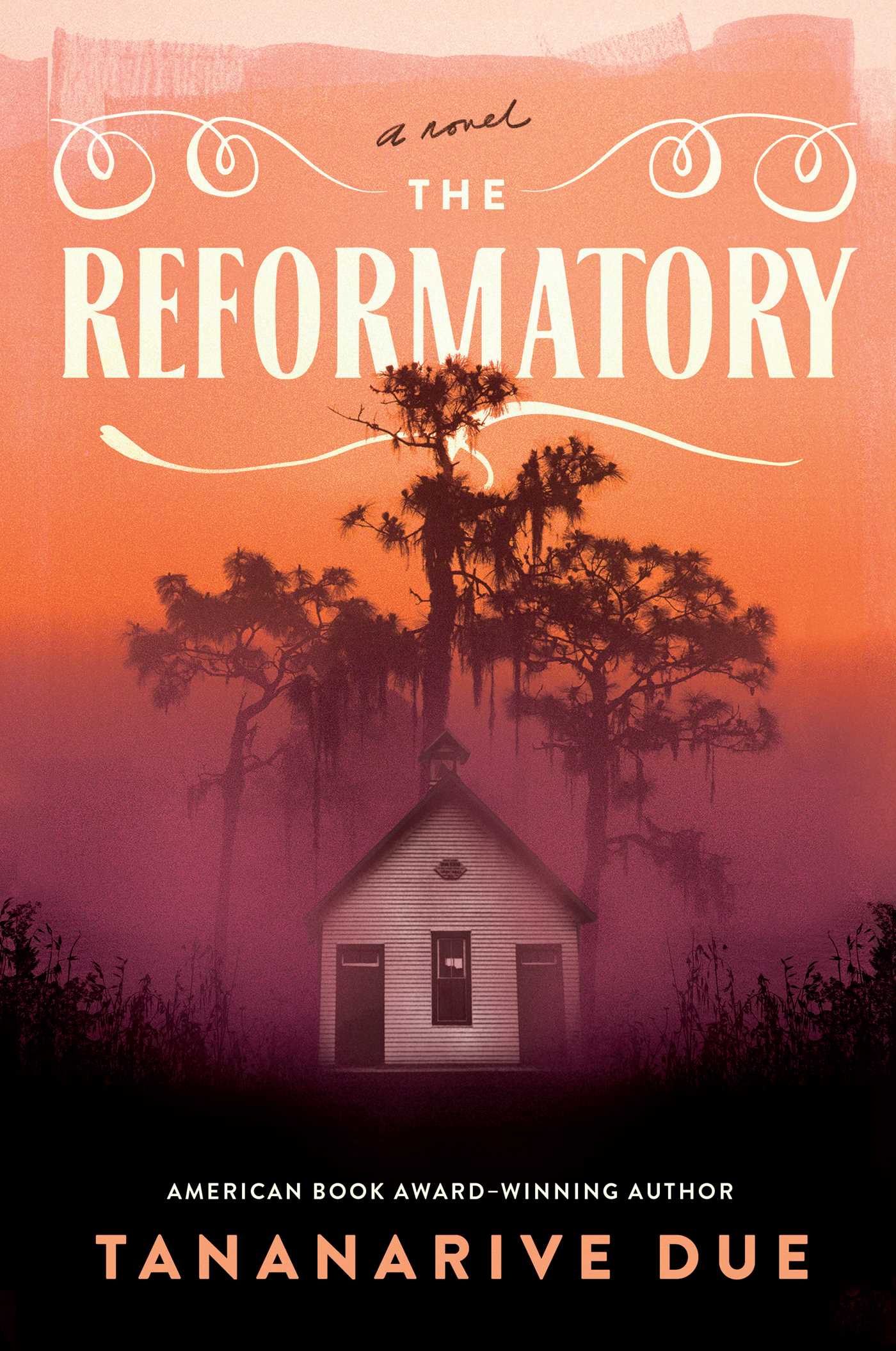
Set in 1950s Florida, The Reformatory follows twelve-year-old Robbie Stephens, who is sent to the segregated Gracetown School for Boys after defending his sister Gloria from the unwanted advances of Lyle McCormick. But Robbie’s sentencing isn’t just punishment for that act. It’s a trap. His father, Robert Stephens, is a Black man falsely accused of raping a white woman who has fled to Chicago. A union organizer with enemies in powerful places, Robert is being lured back through the incarceration of his own son.
We soon learn that Robbie is spirit sensitive. He sees ghosts, or “haints,” and this gift is both a blessing and a curse. A blessing because he feels the presence of his mother, a comfort that helps him endure the atrocities he faces. A curse because he also sees the ghosts of boys who came before him, those who died violently at the hands of the evil, psychopathic Warden Haddock, by fire, by beating, by every manner of physical and emotional harm imaginable, all desperate to avoid being sent to the “Shed.”
Meanwhile, Gloria is fighting on the outside to secure the legal help her brother desperately needs. Alongside Ms. Lottie, the woman tasked with caring for Robbie and Gloria after the death of their mother and a Warrior Queen if there ever was one, she races to get Robbie released before it’s too late.
The Reformatory is classified as a literary, historical, and horror novel. And while you might assume the horror comes from its supernatural elements, make no mistake. The true horror here is entirely human. It is the vile and calculated evil of those who use their power to torture children and discriminate against people whose skin is a different colour than their own. The ghosts are almost beside the point.
Trigger warnings: physical and sexual abuse, blood and violence.