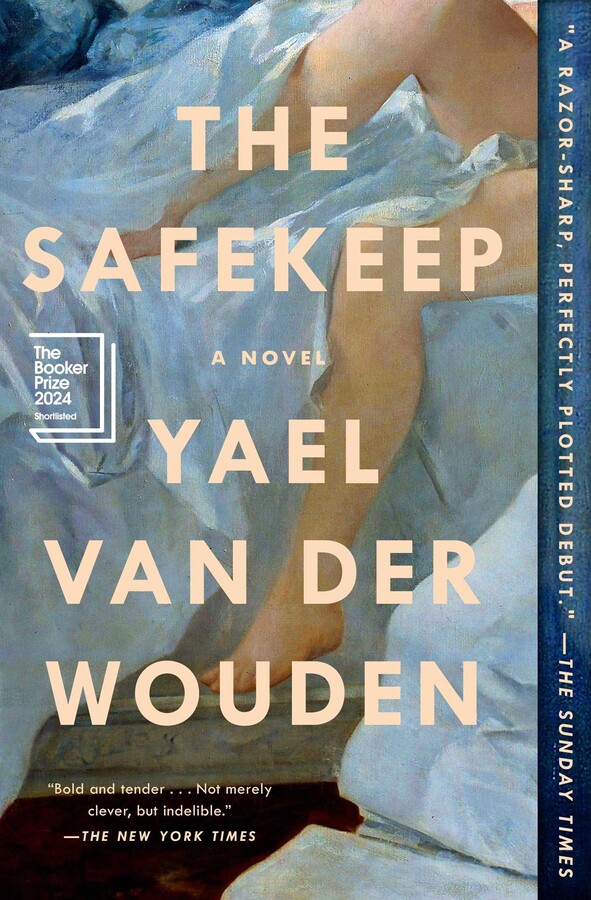
The Safekeep

by Yael Van Der Wouden

The Safekeep is a novel that explores themes of pain, loss, isolation, identity, and love. Set in the aftermath of World War II, the protagonist, Isabel, leads a life marked by routine and emotional detachment. Although she maintains a relationship with her two brothers—Hendrick, to whom she is close, and Louis, whom she finds irritating—her social circle is limited. Isabel continues to live in her childhood home following her mother’s death, with few connections beyond her aunt, uncle Karel, and Johan, a persistent suitor whom she entertains out of obligation. Her days are consumed by managing the household, particularly through meticulous inventory of its possessions. She fixates on counting the spoons daily to ensure nothing is missing. The house serves as her sanctuary and sole companion, yet it ultimately belongs to her eldest brother, Louis.

Isabel seems cold and rigid. When Louis brings his mistress, Rose, to live at the house for a month while he is away, Isabel is incensed, recoiling from any attempt at friendship from Rose, and especially affronted when Louis says Rose can sleep in their dead mother’s room.

Isabel’s life can be divided into two parts: before Rose and after. Rose becomes the catalyst for various revelations about Isabel’s history, relationships, and sexuality. The novel’s first third focuses on Isabel’s character and her daily routines, illustrating her lonely existence and posing the question of whether it is by choice. The second third explores Rose through her journal entries, as read by Isabel, while the last third examines the consequences of decisions made and the insights gained about oneself and others.

The novel is skillfully crafted. Its sensual scenes are neither gratuitous nor exploitative, and the unfolding love story is both poignant and ultimately hopeful.

The Devil in Oxford

Jess Armstrong

The Devil in Oxford is the third novel in the Ruby Vaughn Mystery series. Full disclosure, I have not read the first two. The novel can be read as a stand alone, however as I read, I couldn’t help but feel as though I would have enjoyed it more if I knew some of the backstory that was referenced such as how did she and her love interest Ruen meet, her history with the solicitor, how did she come about living with Mr. Owen (my favourite character by the way.
Ruby Vaughn is a “disgraced heiress” who has a penchant for attracting both the supernatural and mystery. Armstrong, through her characterization of Ruby, both indirectly and directly, successfully portrays her as a strong-willed, intelligent, and precocious woman who wonderfully does not “know her place”. Ruby lives with an eccentric, charming old man, their housekeeper, Mrs Penrose, and, of course, a cat. Mr Owen owns a rare book shop where he and Ruby work… a rare book shop, my dream location (and my dream job, if I’m being honest), so this fact may have contributed to my affection for the book.
The novel starts with Ruby playing tennis with her good friend Leona, during which she notices Leona acting peculiar. When called out, Leona skirts the issue. Ruby then returns home to find that Mr Owen has procured tickets to an intriguing exhibition of “curious” oddities and artefacts. Where, of course, a bloody crime ensues, Ruby’s love interest arrives, and Lenore may or may not be a suspect. Poor Ruby has a lot to navigate in this novel: her personal life, solving a crime, and discovering the true character of the people most important to her… thank goodness she has her cat, Fialla, as support.

I really liked this novel. I liked Ruby; she was spunky, stubborn, and confident when it came to solving mysteries, but not so confident in her personal life… like most of us. I loved Mr Owen and his grandfatherly nature. I especially loved the setting; as soon as you mention a rare book store in an academic setting, I’m hooked. I did, however, miss not being “present” to witness the spark that set fire to the slow burn that is the central romance.  So I’m definitely going to seek out and read the first two. 

Thank you to Netgalley and Random House for the Copy

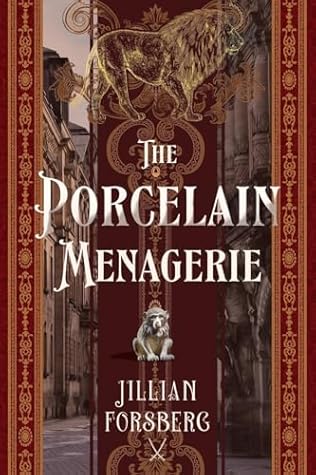
The Porcelain Menagerie

by Jillian Forsberg

Full transparency, it took me a while to actually get “in” to his novel, but the sense of the extent of the research once I started reading, and the extensive research was impressive enough for me to stick with it. 

The novel unfolds across two timelines. It opens in 1718, introducing Johann Kandler, his brother, and their preacher father. The narrative catalyst occurs when Johann and his brother encounter a merchant—whom I interpreted as a Santa Claus figure—whose horse requires a new shoe. This merchant possesses a plethora of porcelain sculptures, objects unfamiliar to the boys. Both are captivated, and after the merchant departs, he leaves behind the horseshoe, a talisman that inspires Johann to pursue craftsmanship. Over time, following his brother’s death, Johann apprentices with Master Benjamin Thomae, a skilled metalsmith and stonemason. Johann’s exceptional talent soon attracts the attention of King Augustus of Poland, who commissions him to create a menagerie of precious creatures for the royal court.

The second storyline occurs 20 years prior to Johann’s investiture. This secondary story is that of Turkish Handmaiden Fatima, soon to be the King’s mistress, replacing his “favourite” Mistress Maria. Fatima is not happy with her opportunity in the court. She recognizes the king as someone selfish, cruel, and not at all loved by his people. To help her pass the days, she becomes involved in the menagerie of animals the king has collected over the years, a menagerie that is soon to be immortalized in porcelain.

Throughout the years, Johann becomes close to the King’s rejected mistress, Maria, and her daughter, Katharina, who seem to be walking on porcelain themselves to avoid displeasing the king’s high demands.

I somewhat enjoyed this novel. Jillian Forsberg conducts extensive research and then successfully creates living, complex, dynamic characters around it. She does an effective job of showing us how obsession can corrupt and how those with limited power must manipulate their reality to survive.

Although certain sections felt slow-paced, I was able to follow the plot throughout. This novel is well-suited for readers interested in meticulously researched historical fiction.

Thank you to Netgalley and History Through Fiction for the Copy

Poetry is Not a Luxury

So, I like poetry, but I don’t gravitate to it. Maybe it’s because I wasn’t really exposed to a lot of it growing up, not even in High School. The closest I came to appreciating poetry was through song lyrics, which, of course, are poems in and of themselves. Actually, it was my High School students who helped make me appreciate contemporary poems. Most of my students LOVED poetry, and then I felt like I was short-changing them because I didn’t have a lot of “go-to” poetry books for them to read. I wish I had this anthology. Poetry is Not a Luxury possesses a plethora of poetry from poets, both alive and dead, of various cultures. Handily enough, the anthology is organised around seasons, starting with Summer, Autumn, Winter and then Spring.

I thought I’d share my favourite from each season: Summer: Summer Idea by Kate Baer

Autumn: Passage by Victoria Chang

Winter: (I have 2) Watching My Friend Pretend Her Heart Is Not Breaking by Rosemerry Wahtola Trommer and Perfect Song by Heather Christie

Spring: (2 here as well) I need a Poem by Kyla Jameison and Miracles by Brenda Shaugnessy

This anthology is a perfect addition to any junior or senior high classroom. Naturally, some poems will be more suitable for specific grades. 

A beautiful anthology with thematically relevant themes that make poetry accessible to those of us who aren’t inclined to read verse. 

If you are interested in the anthology, you can find some of the poems @PoetryIsNotaLuxury on Instagram.

Thank you to Atria Press and Netgalley for the Copy.

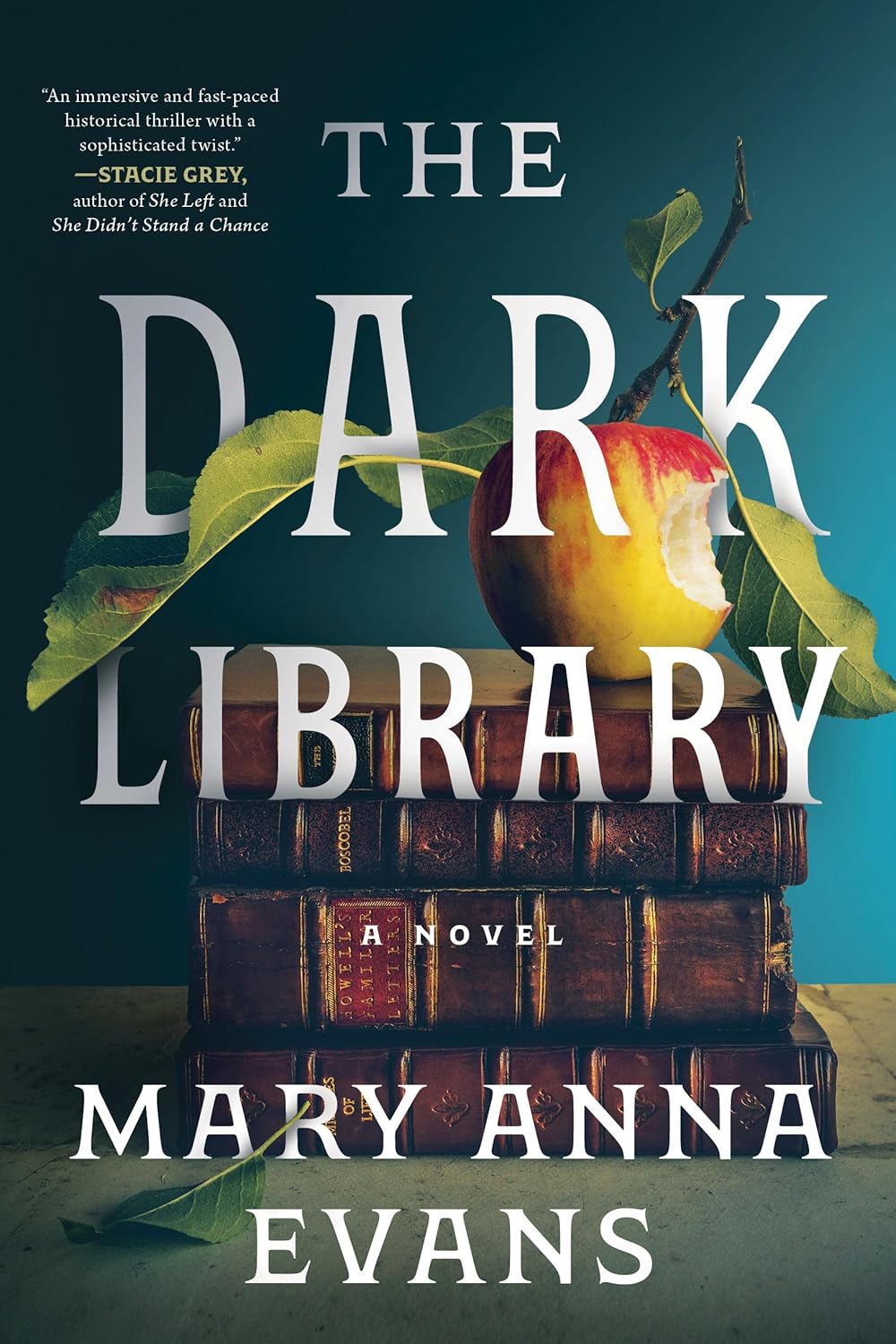
The Dark Library

by Mary Anne Evans

Don’t you absolutely love the cover of this novel?

Our setting is in the University town of Bentham on Hudson, right in the middle of the Second World War. Our initiating incident is the apparent suicide of  Dean Jamison, who jumps from a tower at the university. Coincidentally, it is immediately after he meets with Estella (or E as she prefers to be called). Obviously, his death appears suspicious,  I mean, to those who worked closely with him, he didn’t seem depressed or desperate, condescending and patriarchal, sure, but if anything, overly controlling. Our protagonist, E, is naturally stunned by the dean’s sudden death. Still, it’s not like she’ll miss him, even though he was a colleague and ‘friend’ of her late father (himself a professor) he was never supportive of E’s position as professor of literature, for example, not giving her the title of professor,(because she was only holding the position until the ‘rightful’ instructors returned from war), and relegating her to the smallest, most obscure office on campus. Luckily, E’s closest friends also work at the university, Margorie and Leontine.

So Dean Jamison’s death immediately creates suspense, because if it, secrets are revealed and we soon learn that E’s father is entwined in treacherous political dealings. Which is somewhat surprising to E It’s not like she adored her father. E lives a rather solitary life with only the family’s housekeeper Annie as “family”. Before her post as professor, Estella had led a somewhat everyday life as a High School teacher until she was summoned home by Annie because her mother had disappeared and her father had taken ill.

The Dark Library is quite a little mystery. It is deftly written in that one of the central mysteries is solved about halfway through the novel (a rather central mystery in that it serves in developing E’s character and furthering the secondary plot). The second mystery that serves to answer all of our unanswered questions. 

A mystery, a romance, with tinges of historical content, this novel is a wonderful addition to your summer TBR list. It also makes for an engaging addition to any High School library. Thank you to Poisoned Pen Press and Netgalley for the copy.

Girls

Annet Schaap

I love the retelling of fairytales. Authors like Gregory Maguire and Angela Carter have successfully retold classic tales to make them commentaries on character, history and the social condition…just like original fairy tales were constructed to scare children to follow the straight and narrow. Annet Schaap’s short story collection Girls is one that I would put in league with Maguire and Carter.
Girls is a retelling of various fairytales, concentrating on girls and women in our society. The female characters are not princesses; instead, they are modern young women who face the same issues our female characters of old face: finding a husband, societal isolation, predatorial males, appearance, and abandonment. These characters, however, do not have handsome princes or fairy godmothers to rescue them. They have to rely on their own experience and grit to survive and make decisions for themselves independent of societal norms. Unlike classical fairytales, these stories don’t necessarily end with a “happy ever after”. Instead, they end realistically, if not melancholy, but always with our female protagonist, the designer of her fate.
This collection possesses a tonne of educational possibilities, making it a perfect anthology for study in grades 8-12, depending on which tale you choose to study. It could provide a rich analysis of the format as a mentor text, comparing and contrasting themes between traditional and modern retelling. Like conventional fairy tales, it offers ample opportunities for discussing symbolism and metaphor in-depth, enriching the student’s understanding of literary devices and their application in modern literature. 

Thank you to Netgalley and Pushkin Press for the Copy.

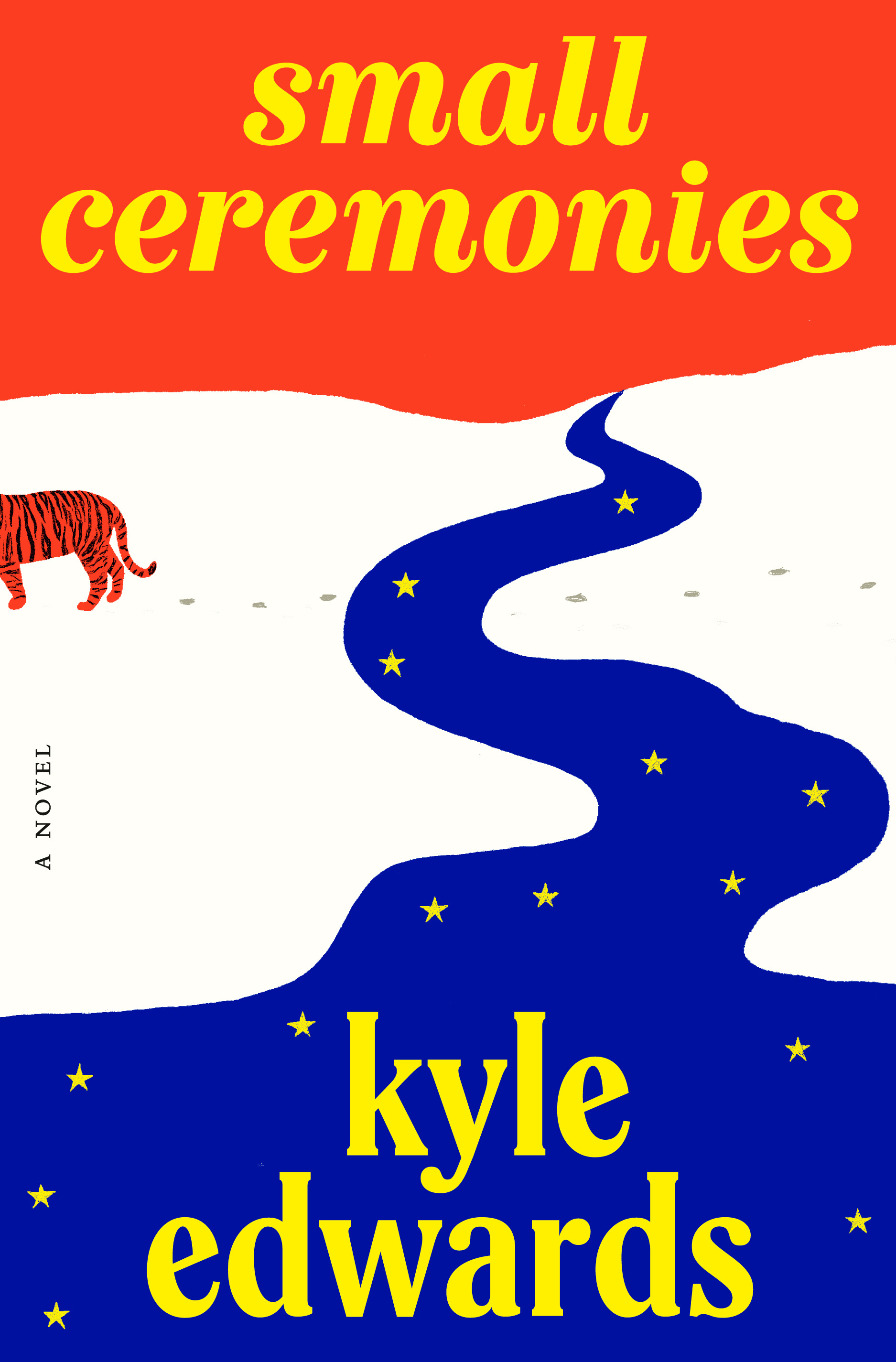
Small Ceremonies

Kyle Edwards

Although this novel has multiple narrators, the story centres around two characters; Tommy Shields and Clinton Whiteway. Tommy and Clinton, like many of us, play for the St. Croix Tigers, an inner-city hockey team in Winnipeg. The Tigers haven’t won a game in so long they are rumoured to be cursed. The novel follows Tommy and Clinton as they navigate their final year of high school and what their future may entail. Both characters have tremendous obstacles to face, whether it be a mentally ill mother or a convict brother intent on recruiting his younger brother for the drug trade. 

Edwards centres his novel around hockey and the Tigers’ degree of success. At the end of each section, we get a chapter in italics written from the point of view of a hockey commentator. Each of these nail-biting chapters presents the Tigers’ potential gains and heartbreaking losses, symbolic of the gains and losses of our two main characters.

The accuracy of detail in Edwards’s writing is astonishing. He brilliantly describes “small town” (even though it’s Winnipeg) hockey culture, from the locker room to the history of the Zamboni driver to the make-up of the fans in the bleachers. Edwards is also gifted in creating nostalgia, meeting your childhood best friend, for example, and playing marbles on the playground.

This novel humorously yet heartbreakingly describes the Indigenous experience in Canada, and the reader really does hold both Tommy and Clinton close to their hearts as we follow them on their journey of self-discovery.

It is a wonderful and effective mentor text, not only for the themes of coming of age, identity and place, overcoming trauma, racism, and friendship, but also brilliantly written. Edwards’s writing would be very effective for teaching descriptive writing, character development, setting, developing the setting as a character in itself, organizing a story atmosphere and tone, and dialect.

Trigger warnings: childhood trauma, intergenerational abuse, mental health, substance abuse, racism. 

Sunrise On the Reaping

by Suzanne Collins

Years ago, I was a fan of the Hunger Games series, and I read the first book aloud to my ninth-grade class. They naturally loved it. I was delighted to find out that Collins has now written a prequel from Haymitch’s point of view. 

Written in first person, we, the reader, get to know Haymitch personally. The novel unfolds on Haymitch’s 16th birthday, the day of the Reaping. Despite his numerous entries to secure food and supplies for his family, Haymitch has avoided being chosen. We delve into the intricacies of the Haymitch family, his ties with the Everdeen family, his fears, his wit, and most importantly, his love for Lenore Dove.

As we all know, Haymitch is, in fact, chosen to represent District 12 for the Hungar Games, even though the circumstances under which he is chosen are questionable. 

Of course, the novel’s main action occurs in the Arena for the Hunger Games. Due to specific meetings and acquaintances, Haymitch’s task in the Arena isn’t just to survive; it is to sabotage the Game in the hopes of bringing down the Hunger Games and, ultimately, President Snow.

This novel, in line with the Hunger Games series, is intense and fast-paced. I found it intriguing to unravel the layers of Haymitch’s character and understand the roots of his eventual struggles with substance abuse. Suzanne Collins’ incorporation of verses from Edgar Alan Poe’s poem “The Raven” creates a perfect opportunity for teachers to discuss patterns and connections between the two pieces of literature. The poem’s verses beautifully mirror Haymitch’s feelings towards Lenore and his trauma in the Games, particularly in the final chapter.

Collins also employs nursery rhymes and the lyrics from The Hanging Tree to help support themes.

Trigger warnings: extreme brutality, murder and death.

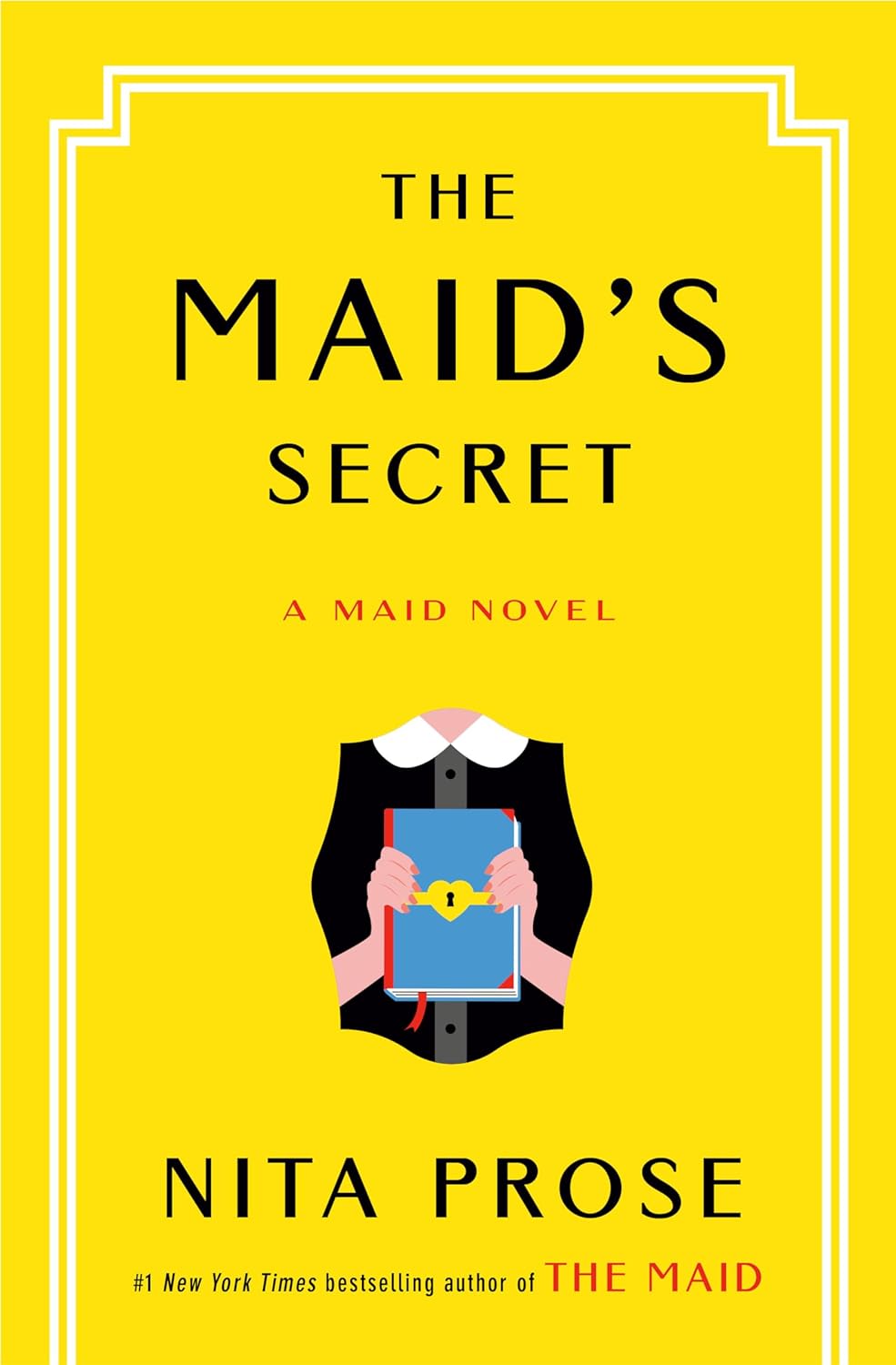
The Maid’s Secret

by Nita Prose

Oh, how excited I am to be immersed again in the world of Molly the Maid. Molly is one of the most charming, engaging protagonists I’ve ever met. I desperately needed to catch up with her and her adventures. Thankfully, Nita Prose has graced us with another Molly the Maid novel, which is slightly different from the first two; in this third novel, we get to know Molly’s Gran Flora more intimately through Gran’s journals. Gran’s journal is a series of letters to her granddaughter charting her life as a young girl and ending with her on her deathbed. The reader quickly learns that Gran’s life is nothing like we suspected. Growing up in a family of wealth, Gran/Flora wanted for nought, but with this wealth came social obligations that Flora fought against. Flora was a bit of a rebel; she wanted to go to university instead of finishing school, choose her love (gasp!), and not be obliged to marry someone her parents deemed suitable. 

Gran’s diary holds not only the purpose of telling her granddaughter about her family history but also clues to the mysterious Faberge egg of Gran’s that just so happens to be in Molly’s possession. An egg that, for most of her life, Molly perceived as a mere trinket of no worth, but with the surprise appraisal from thMollly’srown and Beagle” (an Antiques Roadshow-esque event scheduled at the Regency Grand), she discovers that it is worth millions and she is thrust into the spotlight.

Just like the previous two books, this one is also a mystery—one that involves a great heist, the theft of the Faberge Egg! Molly and our friends Juan, Mr. Preston, and Angela, to name a few(because they really are our friends by now), all play a crucial role in solving the case. Their unique skills and perspectives add depth to the story, making the audience feel like they are part of the team. And with all this sleuthing, Molly has to plan her wedding!  

Nita Prose has a unique way of weaving the past and the present in a way that is engaging and easy to follow, with absolutely no errors in continuity. The book is written in alternating chapters of Gran/Flora’s journal and the present-day Molly adventure. This narrative structure adds depth to the characters and keeps the reader engaged. One could easily just read Flora’s chapters as a book in itself. 

Although my favourite chapters were those with Molly and the gang attempting to solve a crime, I did enjoy being immersed in Gran’s world and getting a fuller understanding of her backstory and what made her such a remarkable mentor for Molly. 

Thank you to Netgalley and Penguin Random House for the copy!

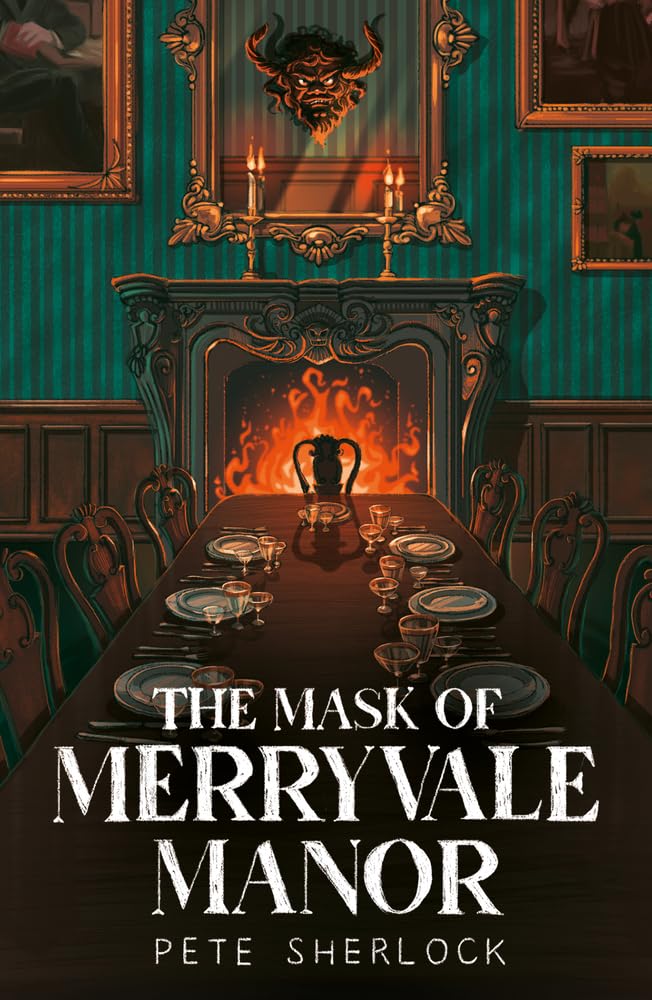
The Mask of Merryvale Manor

by Pete Sherlock

The Mask of Merryvale Manor is an entertaining and sometimes unsettling mystery. The novel begins on a dark and sultry evening at Natasha Merryvales’s wedding. Natasha and Ben have escaped the wedding party in an attempt to spend time alone together…the only problem is that Ben isn’t the groom; in fact, he is Natasha’s cousin. If this doesn’t complicate matters enough, whilst walking along the bank of the lake, they stumble upon a corpse, half buried in the water. Not only is this discovery shocking to all, but a few family members coincidentally recognise the shoe. They can, therefore, identify the corpse. But there is a dark secret surrounding the dead woman that someone in the family is privy to, and it is so condemning that it could lead someone to murder.

The plot of this novel is engaging enough, although a few segments are rather slow. Ben’s character is also quite interesting. Still, the story is written from his perspective. It is a first-person narrative, so the reader is left wondering exactly how reliable he is. 

I really appreciate the author’s writing skills and story ideas. Still, I did figure out the “guilty party(ies)” (no spoilers) well before the end of the novel.

It’s definitely worth a recommendation.

…plus I think the cover is cool!

Thank you to Fairlight Books and Netgalley for the copy!

Shred Sisters

By Betsy Lerner

I come from a family of sisters, so naturally, at times, I gravitate towards novels that present a sister dynamic. Shred Sisters by Betsy Lerner is one such novel.

Sisters Olivia and Amy are polar opposites of one another. Olivia is magnetic and confident, whereas Amy is inconspicuous and awkward. When they are younger, there is no love lost between the sisters because Olivia isn’t the most loving of older sisters; on top of often mercilessly bullying Amy, she makes high-risk decisions which result in behaviour and consequences that threaten to rip the family apart.

I liked this novel well enough. When Olivia and Amy were younger, I could feel empathy for both, each dealing with the reality of their lives and not being happy with it. However, once the women got older, I lost a bit of empathy for Amy as she began to make decisions that aren’t “high risk” to her physical well-being but rather, well, for lack of a better term, stupid and selfish. My allegiance to each sister changes.

This novel successfully presents how mental illness can affect a family. How heartbreaking it can be to consider disowning a loved one because their destructive behaviour potentially creates an undue hardship on you, especially in a time and place where the support system for mental illness is severely lacking. Can you love a sister enough to keep her in your life even though she damages your success, happiness and mental well-being? Or do you love yourself enough to let her go?

Thank you to Netgalley and Grove Press for the copy,

Sweet Fury

by Sarah Bischoff

I REALLY enjoyed this book. It was the soap-operatic suspenseful novel I needed to get me out of a minor reading slump. Told from various points of view, the reader soon realizes they cannot trust any narrator.

Lila Crayne is beautiful and brilliant. She is THE most sought-after actress of the moment. She has everything she could have ever wished for: beauty, fame, a handsome famous actor as a fiance and now the role of a lifetime. Lila and her husband are producing a feminist version of F. Scott Fitzgerald’s “Tender is the Night” (a rendition I would love to read in real life). For Lila to fully envelope her character, she seeks therapy under the care of Johna Gabriel, who coincidentally has an infatuation with F. Scott Fitzgerald. The story is told in the third person narrative with chapters in first person under the guise of Jonah’s private patient notes on Lila and Lila’s journal. Soon, forbidden attractions occur, secrets are revealed, and half-truths are believed, culminating in a shocking act of violence. 

I enjoyed this novel’s pace, plot, and finding very few characters with redeeming characteristics. Now, I want to go out and read Fitzgerald’s Tender is the Night.

Thank you to Netgalley and Simon and Schuster for the free copy

A Sorceress Coes To Call

by T Kingfisher

I immediately knew I would love this book because Kingfisher is a tried and true author. A Sorceress Comes to Call is a take on the fairytale The Goose Girl. So, If you’re a fan of Kingfisher and fairytale retelling, this book is perfect for you. 

14-year-old Corderlia’s mother, Evangeline, takes cohesive control to a new level. You see, Evangeline is secretly a sorceress whose “gift”, if you could call it that, is to place an “obedience” spell on anyone she chooses. This spell causes a person to do Evangeline’s bidding while being conscious that what they are saying and how they are acting is not of their doing…like being a marionette on a string. When Evangeline’s “benefactor” cuts off all monetary support, she sets off to town to find a wealthy suitor who will support the life she desires. 

Meanwhile, a woman by the name of Hester wakes up one morning with a sense of dread. She knows some ill fate is about to settle on her house, and sure enough, she is right when “doom” arrives in the form of a beautiful woman bent on seducing Hester’s brother Samuel. Even though Hester is focused on figuring out Evangeline’s motives, she is empathetic towards Cordelia, and it soon becomes evident that Cordelia is terrified of her mother, fueling Hester’s premonition. 

I REALLY enjoyed this book. It’s an entertaining fantasy with just the right amount of suspense and violence. I especially liked Hester’s character; her practicality, humour, and sense of sarcasm made her my favourite.

Thank you to Tor Publishing and Netgalley for the copy.