link here: lainkandspine
for the love of story.

link here: lainkandspine
by Emily Ruskovich

This collection is made up of five short stories, all connected by the same haunting, quietly devastating voice.
The first story, Victor’s Room, follows Rebecca, a young mother who moves to a remote farmhouse where her husband spent his childhood. The story is told from her perspective as she wonders how she ended up there. She looks back on meeting her husband at university, where he taught and she was a student, and remembers their relationship, marriage, and the birth of their daughters. Over time, Rebecca realizes that many of her life choices were not truly her own, and she starts to see that her husband is not who he claimed to be. He tells her about growing up in the house, his childhood, and the death of his brother Victor, in a room that Rebecca later chooses as a sanctuary for herself. Reading this story made me feel uneasy; the relationship between Rebecca and her husband is very one-sided and manipulative.
The second story, Owl, follows a young man whose wife is shot by some neighbourhood boys who mistake her for an owl. Their relationship is already strained, so when she later disappears, he suspects either the boys are involved or that something from her past has finally caught up with her. I found this story heartbreaking and incredibly sad, with characters who feel like nothing more than victims of circumstance.
The third story, Round Lake, centers on a young woman who, after learning the truth about a key event in her life, starts to question everything, especially the life she has built around her memories. There were moments in this story I found incredibly easy to identify with. As I was reading, I kept thinking, I have totally responded this way, and this is exactly what I would have done.
Petty Creek Road is the one story I couldn’t quite identify with. It follows two older brothers who, because of circumstances in life, move in with each other and become the best of friends. When Butch, the younger brother, is tragically killed, his brother Will has to come to terms with his loneliness, the relationship he has with his son, and a gift he has denied possessing until now.
The final story, Nightjar, is about a young girl, Tess, who has to look after her little brother Rory during summer vacation. While doing so, she experiences something miraculous that gives her a sense of purpose and peace in her otherwise lonely and isolated life. The relationship between the young girl and her brother is incredibly realistic, sometimes funny and very heartbreaking.
Emily Ruskovich is a talented writer. Her stories draw you in with their beauty, and her writing is rich with description and metaphor. She is one of the best writers I have read.
Every story in this book will be suitable for High School study.
Thank you to NetGalley and Random House for the copy.
by Sally Hepworth
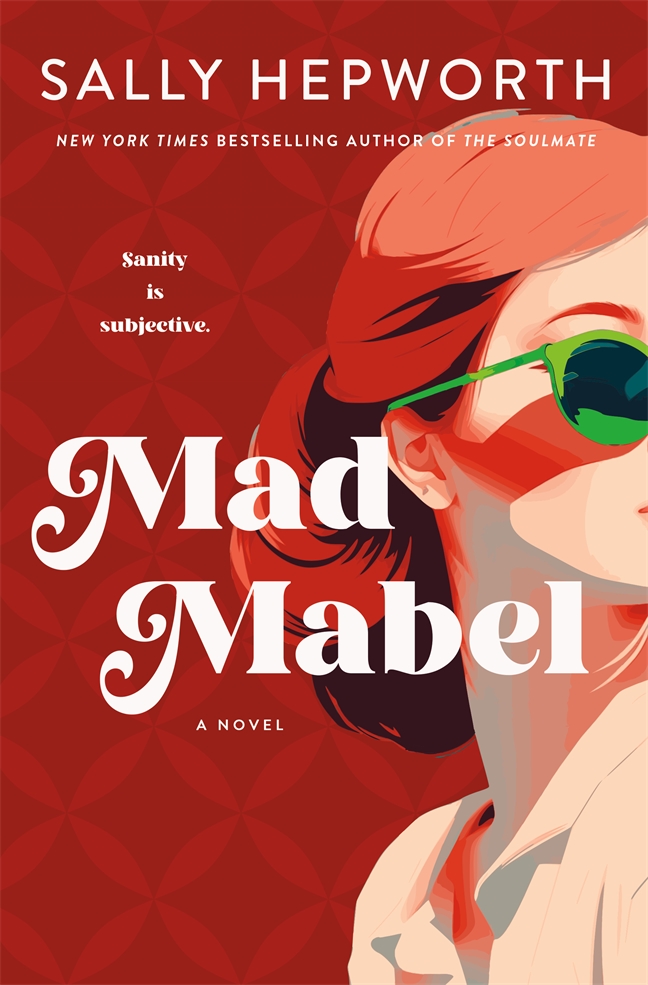
Well, I was pleasantly surprised to be so engulfed by this novel; I read it in one day. It was the perfect book for sitting on my balcony, sipping a beverage and reading until the sun set, and where I live that isn’t until 10:30 in the evening.
The first two sentences of the prologue are one of the BEST I’ve read in a while: “It’s interesting to note that there are two groups of people who are rarely, if ever, suspected of murder. These groups are elderly women and little girls. We meet Elsie Mabel Fitzpatrick who is 81 years old. Elsie and her bosom friend Daphne are chit-chatting about the neighbours, an eclectic group of people who all will take part in the story in varying degrees. It seems no one in the neighbourhood has seen or heard from their ninety-three-year-old neighbour Ishann, and to add to their concern, his packages of shipped vitamins are beginning to pile up on the doorstep, and his chihuahua Nugget has been yapping nonstop for a couple of days. Elsie takes it upon herself to check on him and crawls over the fence to see Ishan lying dead on the floor through the glass. The police are called, and they soon find out that Elsie is also “Mad Mabel,” a notorious murderer sent to prison when she was only 15 for killing…someone (no spoilers), so of course, being the person to discover the dead body and because of her history, she is not ruled out as a suspect.
The novel then skips back in time to give Mabel’s back story, where we learn who her parents are, what type of childhood she had and, of course, her possible motivations for murder. Chapters are labelled “Then” and “Now,” and Hepworth does an excellent job of only giving us the time frame in Mabel’s life that fits with the events happening in the “now”. As readers, we move from not knowing the true character of this murderer to actually befriending her. The Mabel of “Now” is strong and spunky, but the Mabel of “then” is a young, emotionally damaged girl who is abused by almost every aspect of society. As readers, we eventually learn that there could be several potential murder “victims,” but Hepworth is successful at not making it entirely predictable.
If you’re looking for an engaging story with an intriguing and somewhat funny protagonist, then you will love this novel. It does pull on your heartstrings with its treatment of Mabel.
Trigger warnings for child sexual, physical, and mental abuse, as well as violent scenes and domestic abuse. The story is not graphic, but the subject matter is sensitive—five stars, one of my favourites of the summer.
by Christopher Buehlman
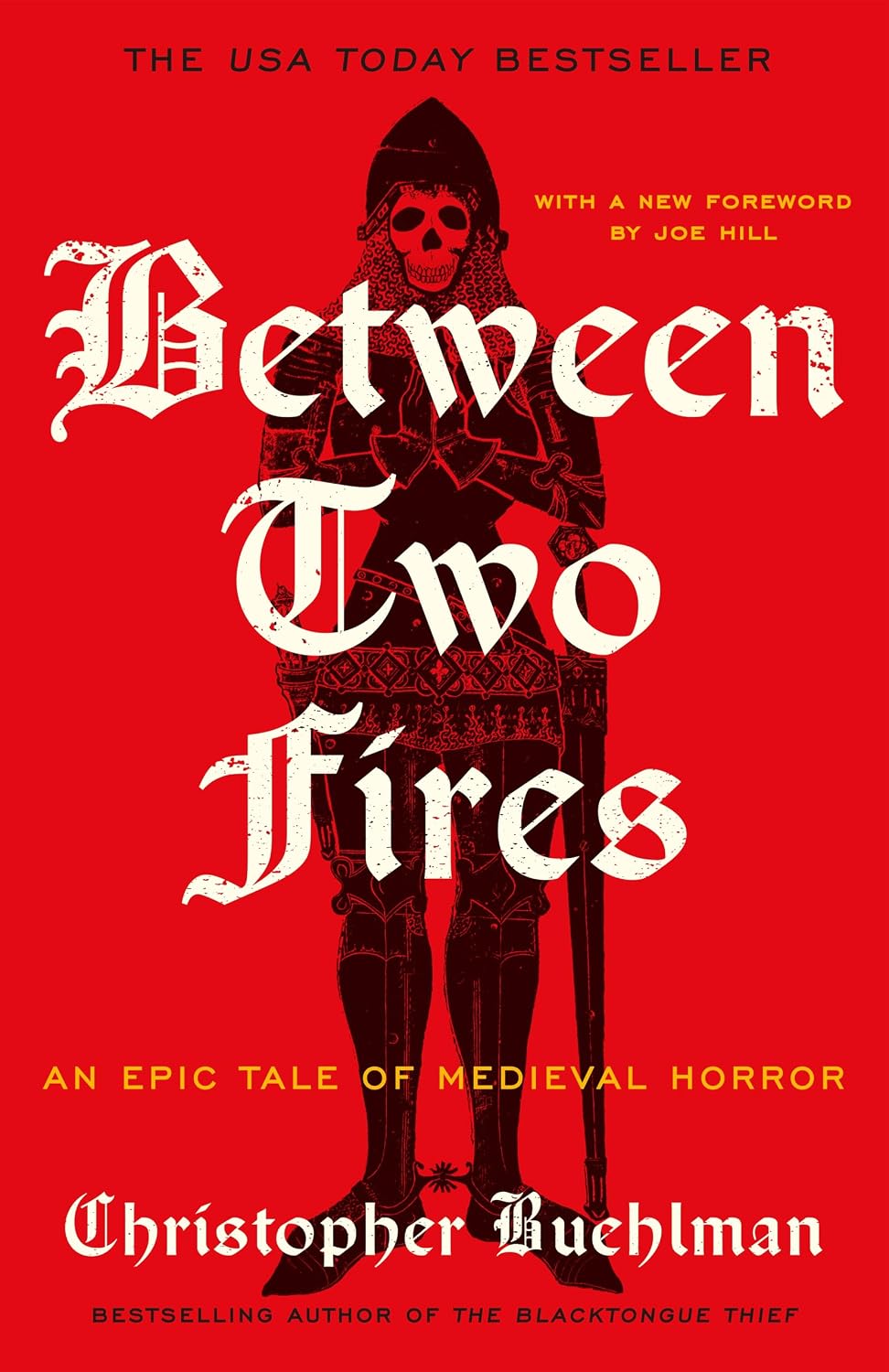
Fallen angels are preparing for battle. Lucifer and his minions have chosen medieval France as their battlefield, and what better way to recruit humans to their cause than by challenging their faith with the plague. It’s 1348, and our main character, Thomas, a disgraced knight, has already had a crisis of faith. After suffering betrayal by his brothers in battle and by his wife, he has taken to the life of a brigand. Thomas has committed crimes both legal and moral that he would rather forget, but hey, it’s the time of the plague, and survival is being used as an excuse for sinful behaviour by everyone. Everyone, that is, but a young girl named Delphine.
When Thomas meets Delphine, he feels inexplicably protective of her because she seems to epitomize innocence and good. And Delphine is indeed different. She is visited by angels and set on a quest to journey to Paris to “find” something and take it to Avignon, and she persuades Thomas to accompany her. Along the way, they encounter a plethora of evil in the form of monsters, demons, and the walking dead. They also encounter some good, one person in particular being important to their journey: Fr. Matthieu, a kind yet imperfect monk who brings some jovility and warmth to the trio.
We, the readers, know that these three are going to face an evil in Avignon that will build into a holy war, one where everyone feels as though God has abandoned them.
I really REALLY liked this novel. I listened to the audio, narrated by Steve West, and his narration was powerful. It almost reads as a morality play. Naturally, themes of forgiveness, redemption, crisis of faith, the duality of mankind, good and evil, and the corruption of religious and political institutions are developed, among others. The development of Thomas’s character is powerful to see, as he responds to the challenges he encounters, albeit mostly supernatural, in a very human and realistic manner.
It is a horror novel that is VERY atmospheric and features graphic violence, but I think that no matter who you are, you will like the ending.
by Archer Sullivan
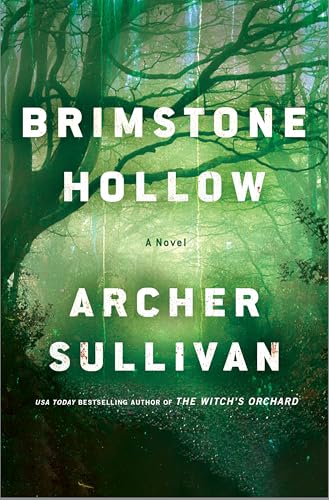
Brimstone Hollow is the second book in Archer Sullivan’s Annie Gore series. Annie is a spunky, independent private investigator we first met in The Witch’s Orchard. Sullivan has again written a Southern Gothic-esque mystery filled with interesting characters, a fast-paced plot, and an engaging protagonist. This time, Annie is approached by a young mother who wants to know how her estranged father, a “snake handling” preacher named Ezra King, died. The case takes Annie to a small Appalachian town, where she meets an assortment of townsfolk — some who followed the preacher, and some who didn’t. With help from the Chief of Police, Annie uncovers more than just murder: an entire underworld of criminal activity.
I expected to enjoy this novel, and I did. It’s a great palette cleanser if you’ve been steeping in heavy literary fiction — a quick, plot-driven read with a very likable main character. Sullivan also has a knack for slipping in a twist or two to keep things from getting predictable.
Thank you to Minotaur Books and NetGalley for the copy. Brimstone Hollow will be available for purchase August 11th.
by T. Kingfisher
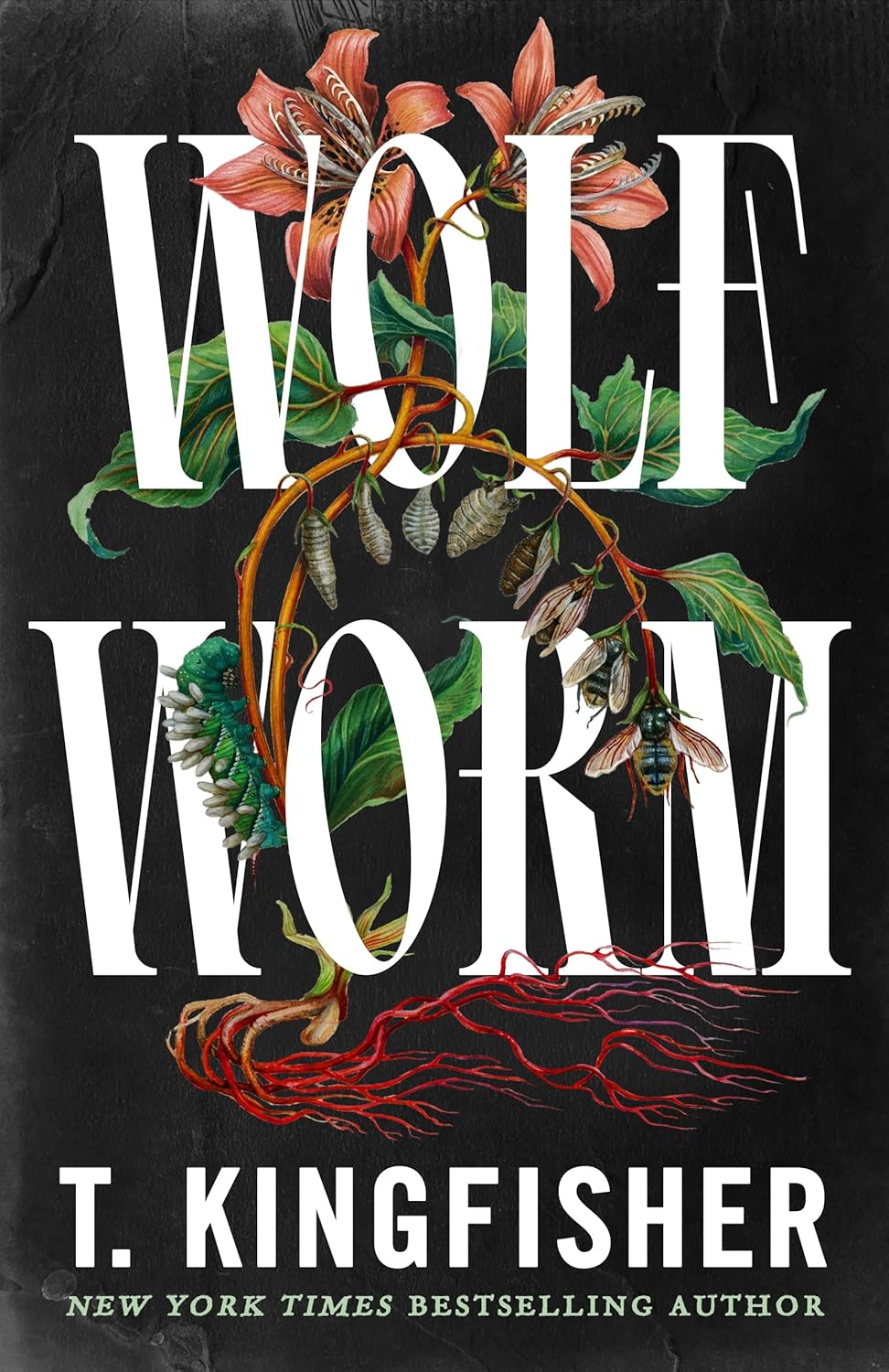
Since the death of her father, Sonia Wilson has had to put aside her beloved profession of being a scientific illustrator and become an art teacher. With only a few friends and an oppressive headmistress, she seeks employment elsewhere…but there aren’t a lot of positions available, because she is, after all, a woman in the late 1800s. So when the reclusive scientist Dr. Hadler hires her to illustrate his work of bugs, worms and squiggly, squirming critters, she willingly obliges.
After trekking through the woods with creepy Mr. Phelps, who offered to chaperone her and narrate the nightmarish folktales of devils and blood thieves you would meet in the woods, she arrives at Dr. Hadler’s North Carolina mansion….wonderfully creepy, atmospheric.
Sonia soon realizes that the doctor’s work is rather odd and that the artist before her disappeared under mysterious circumstances, compounded by the fact that the animals in the area are behaving rather creepily, she begins to regret her decision to work. Also, what is with the creepy shed on the property, a place that the doctor brings live chickens and keeps under lock and key?
The story is narrated by Sonia, whose voice is so personable and funny (which is wonderfully juxtaposed against the creepy atmosphere). I really wanted to be her friend and, over a bottle of wine, hear all about her experience. Just a heads up, if you don’t like bugs and blood, this novel may not be for you. Kingfisher is quite graphic in her descriptions.
Except for a few parts that seemed somewhat redundant (especially when Sonia is questioning the reality of a horror she saw), the novel is humorous, suspenseful, and everything I expected from the author.
…oh, and I absolutely loved the Kents.
This is an great Southern Gothic to add to you audio book list.
I listened to the audio of this novel. Mary Robinette Kowal is the narrator, and she is absolutely wonderful. She is very effective with voices, accents, and intonation of emotion. I would definitely listen to other audiobooks she narrates.
Thank you to MacMillan Audio and NetGalley for the copies.
You’ll be able to buy Wolf Worm at the end of May.
If you’ve never heard of Mona Awad, I need you to stop what you’re doing and pay attention, because I’m about to send you down a rabbit hole you will not regret.
I’ve only read three of Mona Awad’s works, and all three can be classified as dark academia my favourite genre. Canadian author Mona Awad has quite theimagination. She writes novels that read like fevered dreams, especially for those of us who have a history of viewing ourselves as insecure, anxious, and at times with self-doubt.
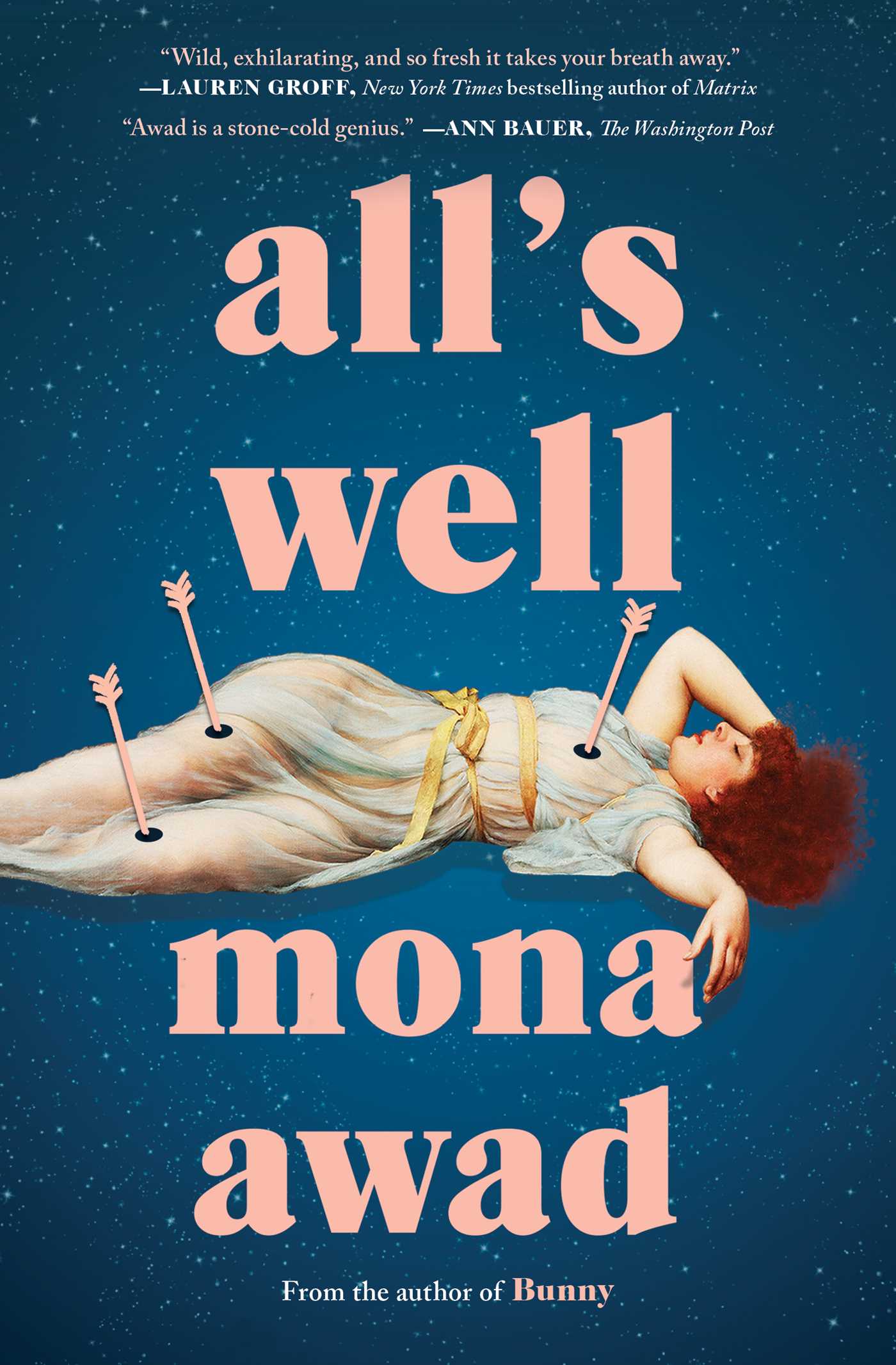
My first experience with Awad was her novel All’s Well. Honestly, I bought,this novel, because I thought the cover was beautiful, and because it was a reference to Shakespeare’s play. Miranda Fitch is a college drama teacher who is bound and determined to produce Shakespeare’s All’s Well That Ends Well, mostly because she wants to relive a time in her life when she was at the height of her acting career, playing the lead role of Helen. Her students, however, are equally bound and determined to perform Macbeth — a play that Miranda holds directly responsible for her debilitating chronic pain. When she meets three strange men at a bar (men who symbolize the three witches of Macbeth) Miranda engages in the most bizarre conversations. Soon after, the physical and emotional pain she carries begins to transfer onto the people she dislikes, and Miranda starts to feel a dark, intoxicating sense of power at the expense of others.
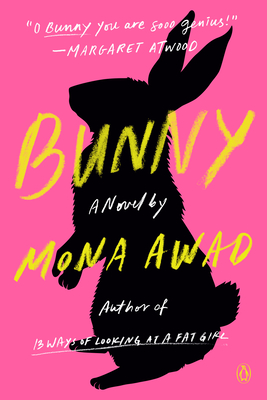
Now, Bunny. Bunny is the most wild of novels. Samantha McKey is part of a creative writing cohort at an Ivy League university. The entire story is told from her point of view, but we glean through her narrative (and she is an extremely unreliable narrator) that she is a loner. She views herself as superior to the others in her cohort, referring to them as “the Bunnies.” Soon, however, she is invited to join the Bunnies’ “Smut Salon” — a gathering where they meet to discuss their work. But the Smut Salon goes far beyond discussion. Soon the Bunnies are kidnapping, killing, and conducting all sorts of experiments to create. There are hints woven throughout that Samantha may be mentally ill, and that the world of the Bunnies and the Smut Salon is entirely a creation of her own mind.
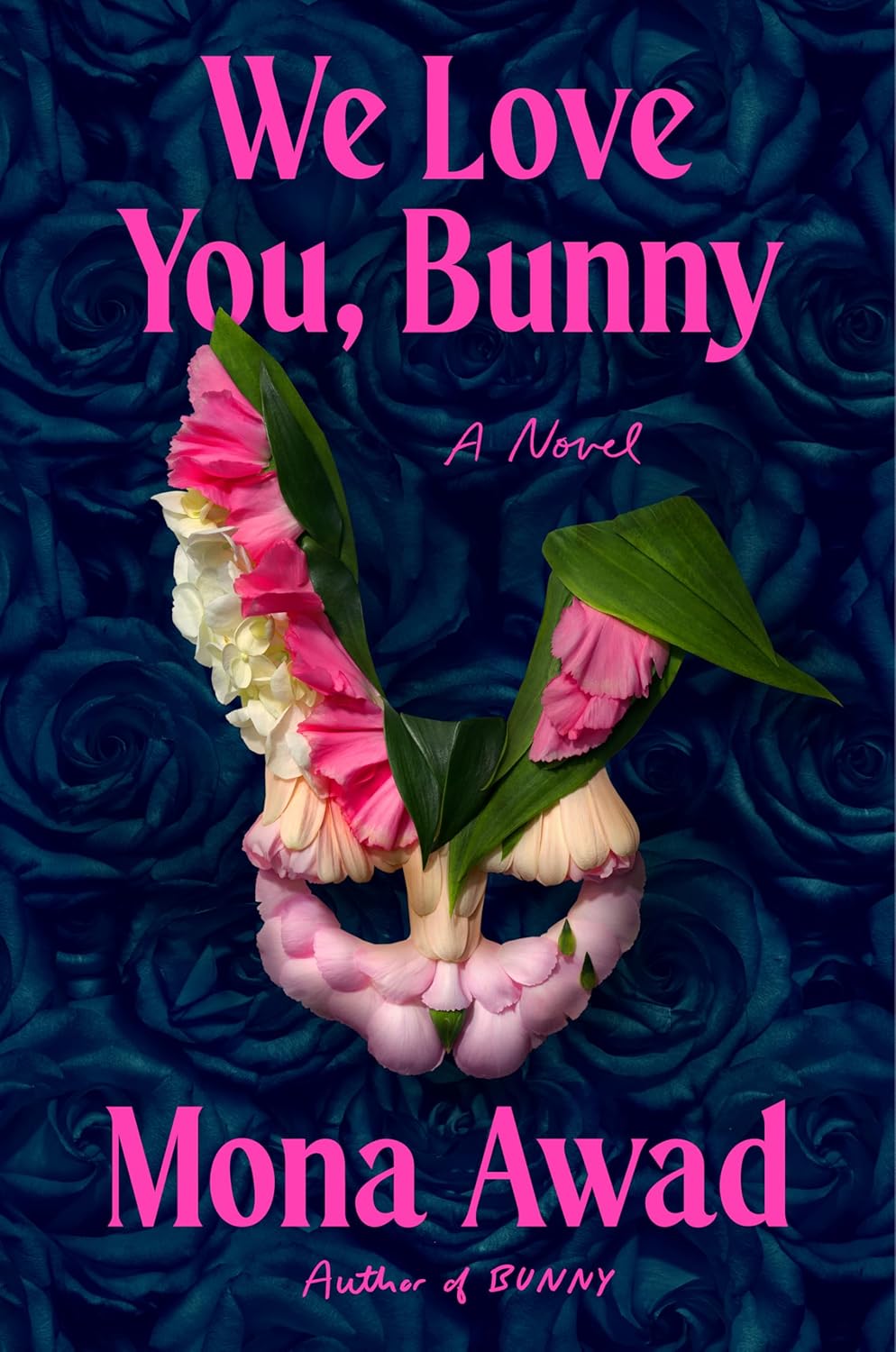
The sequel to “Bunny:” “We Love You, Bunny,” made me rethink every interpretation of “Bunny” I ever had. It’s written from the various points of view of the Bunnies themselves …they finally get to tell their side of the story. It seems Samantha, our protagonist and narrator from “Bunny” has written a bestselling novel about, of all things, the Bunnies themselves. And they are not happy. Why? because they are not exactly written in the most flattering light. They kidnap Samantha and tie her up in the same attic where they once held their Smut Salon and conducted their gruesome creative experiments. In fact, the axe is still there — and it’s often picked up like a talking stick by the various narrators.
Where Bunny felt to me like a story about identity, creativity, and what one will sacrifice in order to create both an identity and a piece of art, We Love You, Bunny is more about on the creative process itself. It presents such questions as who owns a piece of art, what constitutes plagiarism, and what makes a creative work credible. Both novels, I believe, require a second reading and a long conversation in order to peel back all the layers
:Mona Awad is not for everyone but if you are someone who loves stories that blur the line between reality and imagination, that make you question everything you think you know about a character, and that stay with you long after you’ve closed the book she just might be exactly for you. I would love to know if any of you have read her work, and what you thought. As always, happy reading.
by Yael Van Der Wouden
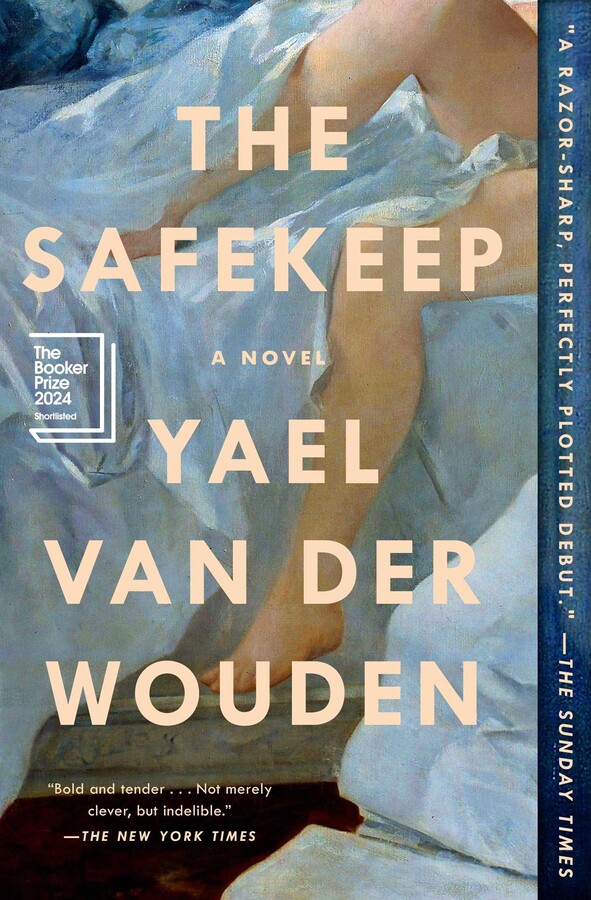
The Safekeep is a novel that explores themes of pain, loss, isolation, identity, and love. Set in the aftermath of World War II, the protagonist, Isabel, leads a life marked by routine and emotional detachment. Although she maintains a relationship with her two brothers—Hendrick, to whom she is close, and Louis, whom she finds irritating—her social circle is limited. Isabel continues to live in her childhood home following her mother’s death, with few connections beyond her aunt, uncle Karel, and Johan, a persistent suitor whom she entertains out of obligation. Her days are consumed by managing the household, particularly through meticulous inventory of its possessions. She fixates on counting the spoons daily to ensure nothing is missing. The house serves as her sanctuary and sole companion, yet it ultimately belongs to her eldest brother, Louis.
Isabel seems cold and rigid. When Louis brings his mistress, Rose, to live at the house for a month while he is away, Isabel is incensed, recoiling from any attempt at friendship from Rose, and especially affronted when Louis says Rose can sleep in their dead mother’s room.
Isabel’s life can be divided into two parts: before Rose and after. Rose becomes the catalyst for various revelations about Isabel’s history, relationships, and sexuality. The novel’s first third focuses on Isabel’s character and her daily routines, illustrating her lonely existence and posing the question of whether it is by choice. The second third explores Rose through her journal entries, as read by Isabel, while the last third examines the consequences of decisions made and the insights gained about oneself and others.
The novel is skillfully crafted. Its sensual scenes are neither gratuitous nor exploitative, and the unfolding love story is both poignant and ultimately hopeful.
Jess Armstrong

The Devil in Oxford is the third novel in the Ruby Vaughn Mystery series. Full disclosure, I have not read the first two. The novel can be read as a stand alone, however as I read, I couldn’t help but feel as though I would have enjoyed it more if I knew some of the backstory that was referenced such as how did she and her love interest Ruen meet, her history with the solicitor, how did she come about living with Mr. Owen (my favourite character by the way.
Ruby Vaughn is a “disgraced heiress” who has a penchant for attracting both the supernatural and mystery. Armstrong, through her characterization of Ruby, both indirectly and directly, successfully portrays her as a strong-willed, intelligent, and precocious woman who wonderfully does not “know her place”. Ruby lives with an eccentric, charming old man, their housekeeper, Mrs Penrose, and, of course, a cat. Mr Owen owns a rare book shop where he and Ruby work… a rare book shop, my dream location (and my dream job, if I’m being honest), so this fact may have contributed to my affection for the book.
The novel starts with Ruby playing tennis with her good friend Leona, during which she notices Leona acting peculiar. When called out, Leona skirts the issue. Ruby then returns home to find that Mr Owen has procured tickets to an intriguing exhibition of “curious” oddities and artefacts. Where, of course, a bloody crime ensues, Ruby’s love interest arrives, and Lenore may or may not be a suspect. Poor Ruby has a lot to navigate in this novel: her personal life, solving a crime, and discovering the true character of the people most important to her… thank goodness she has her cat, Fialla, as support.
I really liked this novel. I liked Ruby; she was spunky, stubborn, and confident when it came to solving mysteries, but not so confident in her personal life… like most of us. I loved Mr Owen and his grandfatherly nature. I especially loved the setting; as soon as you mention a rare book store in an academic setting, I’m hooked. I did, however, miss not being “present” to witness the spark that set fire to the slow burn that is the central romance. So I’m definitely going to seek out and read the first two.
Thank you to Netgalley and Random House for the Copy
by Jillian Forsberg
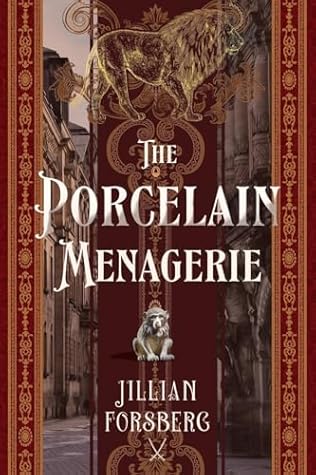
Full transparency, it took me a while to actually get “in” to his novel, but the sense of the extent of the research once I started reading, and the extensive research was impressive enough for me to stick with it.
The novel unfolds across two timelines. It opens in 1718, introducing Johann Kandler, his brother, and their preacher father. The narrative catalyst occurs when Johann and his brother encounter a merchant—whom I interpreted as a Santa Claus figure—whose horse requires a new shoe. This merchant possesses a plethora of porcelain sculptures, objects unfamiliar to the boys. Both are captivated, and after the merchant departs, he leaves behind the horseshoe, a talisman that inspires Johann to pursue craftsmanship. Over time, following his brother’s death, Johann apprentices with Master Benjamin Thomae, a skilled metalsmith and stonemason. Johann’s exceptional talent soon attracts the attention of King Augustus of Poland, who commissions him to create a menagerie of precious creatures for the royal court.
The second storyline occurs 20 years prior to Johann’s investiture. This secondary story is that of Turkish Handmaiden Fatima, soon to be the King’s mistress, replacing his “favourite” Mistress Maria. Fatima is not happy with her opportunity in the court. She recognizes the king as someone selfish, cruel, and not at all loved by his people. To help her pass the days, she becomes involved in the menagerie of animals the king has collected over the years, a menagerie that is soon to be immortalized in porcelain.
Throughout the years, Johann becomes close to the King’s rejected mistress, Maria, and her daughter, Katharina, who seem to be walking on porcelain themselves to avoid displeasing the king’s high demands.
I somewhat enjoyed this novel. Jillian Forsberg conducts extensive research and then successfully creates living, complex, dynamic characters around it. She does an effective job of showing us how obsession can corrupt and how those with limited power must manipulate their reality to survive.
Although certain sections felt slow-paced, I was able to follow the plot throughout. This novel is well-suited for readers interested in meticulously researched historical fiction.
Thank you to Netgalley and History Through Fiction for the Copy
So, I like poetry, but I don’t gravitate to it. Maybe it’s because I wasn’t really exposed to a lot of it growing up, not even in High School. The closest I came to appreciating poetry was through song lyrics, which, of course, are poems in and of themselves. Actually, it was my High School students who helped make me appreciate contemporary poems. Most of my students LOVED poetry, and then I felt like I was short-changing them because I didn’t have a lot of “go-to” poetry books for them to read. I wish I had this anthology. Poetry is Not a Luxury possesses a plethora of poetry from poets, both alive and dead, of various cultures. Handily enough, the anthology is organised around seasons, starting with Summer, Autumn, Winter and then Spring.

I thought I’d share my favourite from each season: Summer: Summer Idea by Kate Baer
Autumn: Passage by Victoria Chang
Winter: (I have 2) Watching My Friend Pretend Her Heart Is Not Breaking by Rosemerry Wahtola Trommer and Perfect Song by Heather Christie
Spring: (2 here as well) I need a Poem by Kyla Jameison and Miracles by Brenda Shaugnessy
This anthology is a perfect addition to any junior or senior high classroom. Naturally, some poems will be more suitable for specific grades.
A beautiful anthology with thematically relevant themes that make poetry accessible to those of us who aren’t inclined to read verse.
If you are interested in the anthology, you can find some of the poems @PoetryIsNotaLuxury on Instagram.
Thank you to Atria Press and Netgalley for the Copy.
by Mary Anne Evans
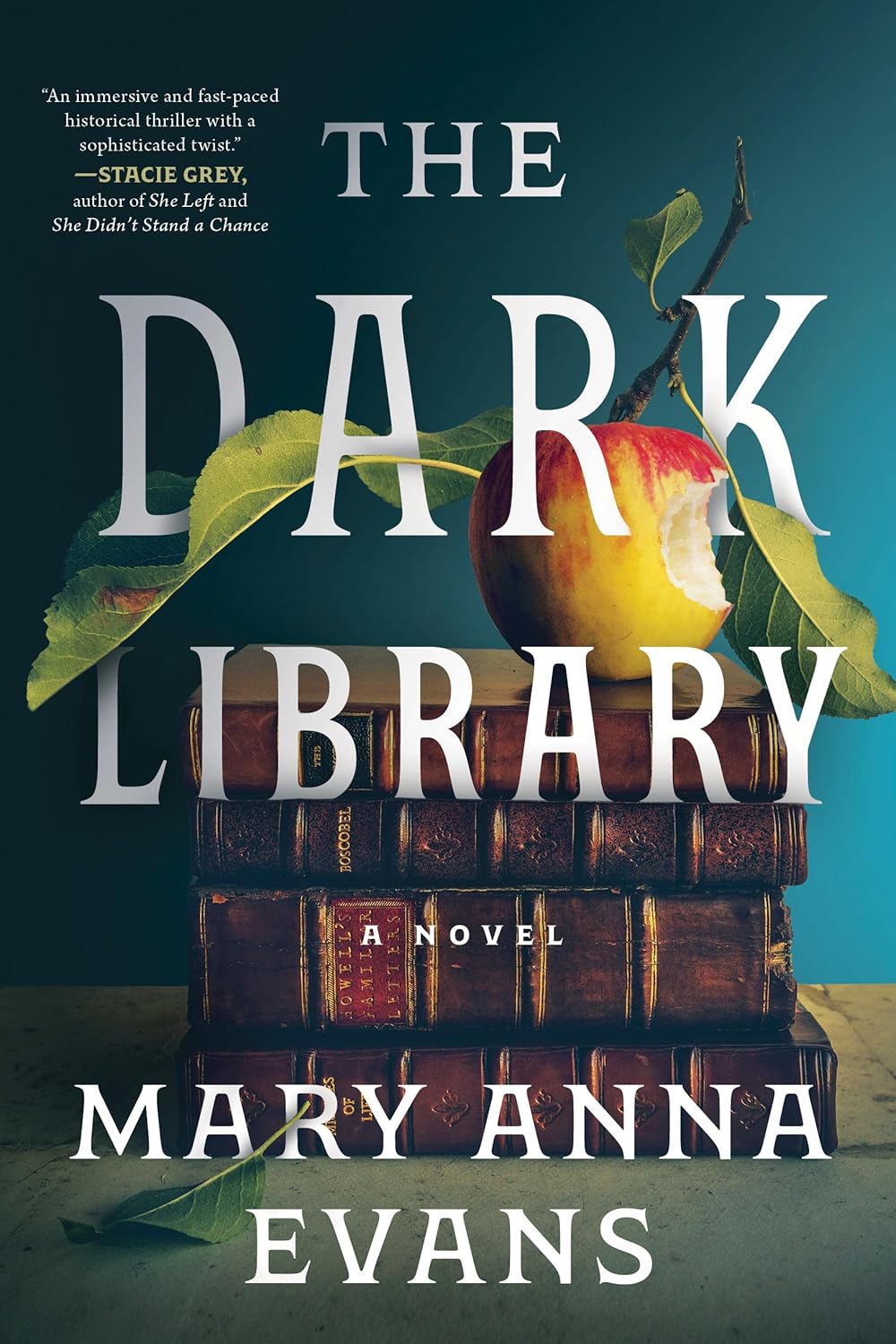
Don’t you absolutely love the cover of this novel?
Our setting is in the University town of Bentham on Hudson, right in the middle of the Second World War. Our initiating incident is the apparent suicide of Dean Jamison, who jumps from a tower at the university. Coincidentally, it is immediately after he meets with Estella (or E as she prefers to be called). Obviously, his death appears suspicious, I mean, to those who worked closely with him, he didn’t seem depressed or desperate, condescending and patriarchal, sure, but if anything, overly controlling. Our protagonist, E, is naturally stunned by the dean’s sudden death. Still, it’s not like she’ll miss him, even though he was a colleague and ‘friend’ of her late father (himself a professor) he was never supportive of E’s position as professor of literature, for example, not giving her the title of professor,(because she was only holding the position until the ‘rightful’ instructors returned from war), and relegating her to the smallest, most obscure office on campus. Luckily, E’s closest friends also work at the university, Margorie and Leontine.
So Dean Jamison’s death immediately creates suspense, because if it, secrets are revealed and we soon learn that E’s father is entwined in treacherous political dealings. Which is somewhat surprising to E It’s not like she adored her father. E lives a rather solitary life with only the family’s housekeeper Annie as “family”. Before her post as professor, Estella had led a somewhat everyday life as a High School teacher until she was summoned home by Annie because her mother had disappeared and her father had taken ill.
The Dark Library is quite a little mystery. It is deftly written in that one of the central mysteries is solved about halfway through the novel (a rather central mystery in that it serves in developing E’s character and furthering the secondary plot). The second mystery that serves to answer all of our unanswered questions.
A mystery, a romance, with tinges of historical content, this novel is a wonderful addition to your summer TBR list. It also makes for an engaging addition to any High School library. Thank you to Poisoned Pen Press and Netgalley for the copy.
Annet Schaap

I love the retelling of fairytales. Authors like Gregory Maguire and Angela Carter have successfully retold classic tales to make them commentaries on character, history and the social condition…just like original fairy tales were constructed to scare children to follow the straight and narrow. Annet Schaap’s short story collection Girls is one that I would put in league with Maguire and Carter.
Girls is a retelling of various fairytales, concentrating on girls and women in our society. The female characters are not princesses; instead, they are modern young women who face the same issues our female characters of old face: finding a husband, societal isolation, predatorial males, appearance, and abandonment. These characters, however, do not have handsome princes or fairy godmothers to rescue them. They have to rely on their own experience and grit to survive and make decisions for themselves independent of societal norms. Unlike classical fairytales, these stories don’t necessarily end with a “happy ever after”. Instead, they end realistically, if not melancholy, but always with our female protagonist, the designer of her fate.
This collection possesses a tonne of educational possibilities, making it a perfect anthology for study in grades 8-12, depending on which tale you choose to study. It could provide a rich analysis of the format as a mentor text, comparing and contrasting themes between traditional and modern retelling. Like conventional fairy tales, it offers ample opportunities for discussing symbolism and metaphor in-depth, enriching the student’s understanding of literary devices and their application in modern literature.
Thank you to Netgalley and Pushkin Press for the Copy.
 Ink And Spine