If you so choose to watch instead of read the review : )

for the love of story.
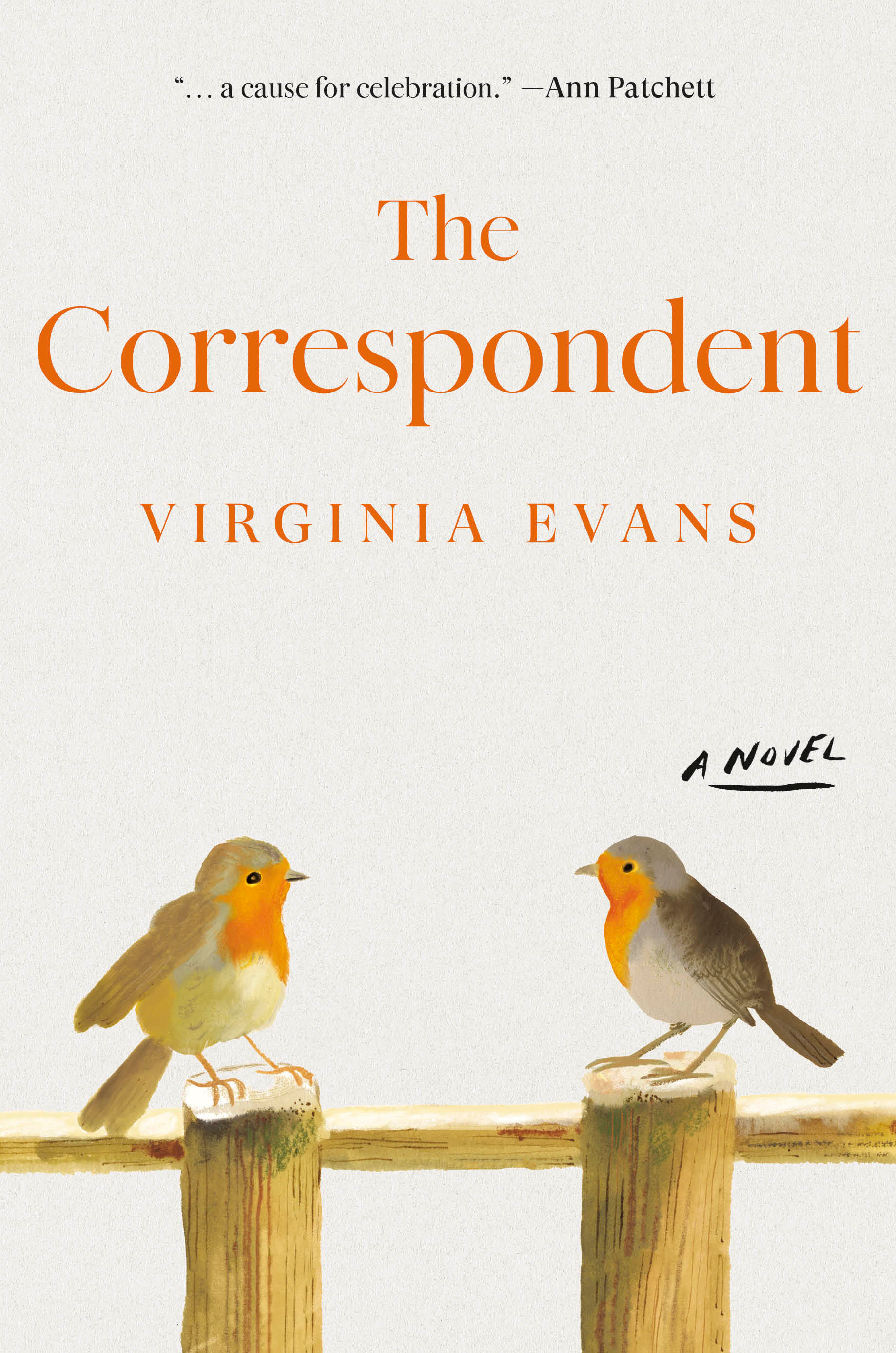
by Virginia Evans
I absolutely love reading epistolary novels. They make me want to write letters again. Real letters. We live in such an “instant” time where, at the click of a button, we can communicate with no pondering, no pause to clarify our thoughts, no attempt to communicate not just effectively but beautifully.
Years ago, I was lucky enough to read letters my grandfather wrote to a young woman who would just happen to become my grandmother. They were simple but heartfelt, and I truly felt like I got to know a grandfather I had never met, a man who existed before he was ever a “grandfather” to me. I think we have become a people where, unless we feel we have something important or riveting to say, we say nothing at all. And yet what we should be doing, what people like my grandfather, did so naturally in the past, is simply share the simplicity of their everyday lives. Little things: the simple goings-on of the day, what you ate for dinner, what books you’re reading, or something as unassuming as the weather.
I lived in Glasgow for a portion of a year, many, many years ago, back when the only internet you could access was at the local internet café where I had pay by the hour. So I wrote letters the old fashioned way to everyone and anyone in my address book: old university friends, my little nieces who were too young to read, previous colleagues, just to tell them about my everyday life living in Scotland. And I received a plethora of mail in return, sometimes twice a day (the Royal Mail was absolutely magnificent). It is a practice I miss deeply.
All this to say: I absolutely loved The Correspondent.
Our main character is 73-year-old Sybil Van Antwerp, a retired law clerk for a celebrated judge. Sybil has always written letters, first to her best friend Rosalie, whom she met at summer camp as a young girl, and eventually to an ever-growing constellation of recipients: her brother Felix, living in France; her children; her neighbour Mr. Lubeck; various authors she admired, among them Joan Didion and Ann Patchett; a university dean; and others. Her mailing list expands across a lifetime, and we come to understand not only her ritual for letter-writing (she has specific days and times set aside, and spends about an hour crafting each letter, a discipline we learn about through her friendship with a young student who becomes enchanted by the practice) but her motivation as well.
Woven through the novel is something more tender and more sorrowful: through letters, we learn that Sybil is losing her eyesight, and we come to know the heartbreak and tragedy that has quietly shaped her life. And throughout all of her correspondence Sybil has been writing to someone she never names. In these letters, we meet a different Sybil entirely, unguarded, reflective, sharing her most personal feelings and regrets. These letters are written never to be sent.
The Correspondent is a beautifully crafted love letter to the art of letter-writing itself. It is also a novel about identity and grief, and the preciousness of relationships and the ways we choose, or fail, to communicate across a life. By the end, I desperately wanted to receive a letter from Sybil myself. It is a quick read, and an easy one to fall into and stay until finished.
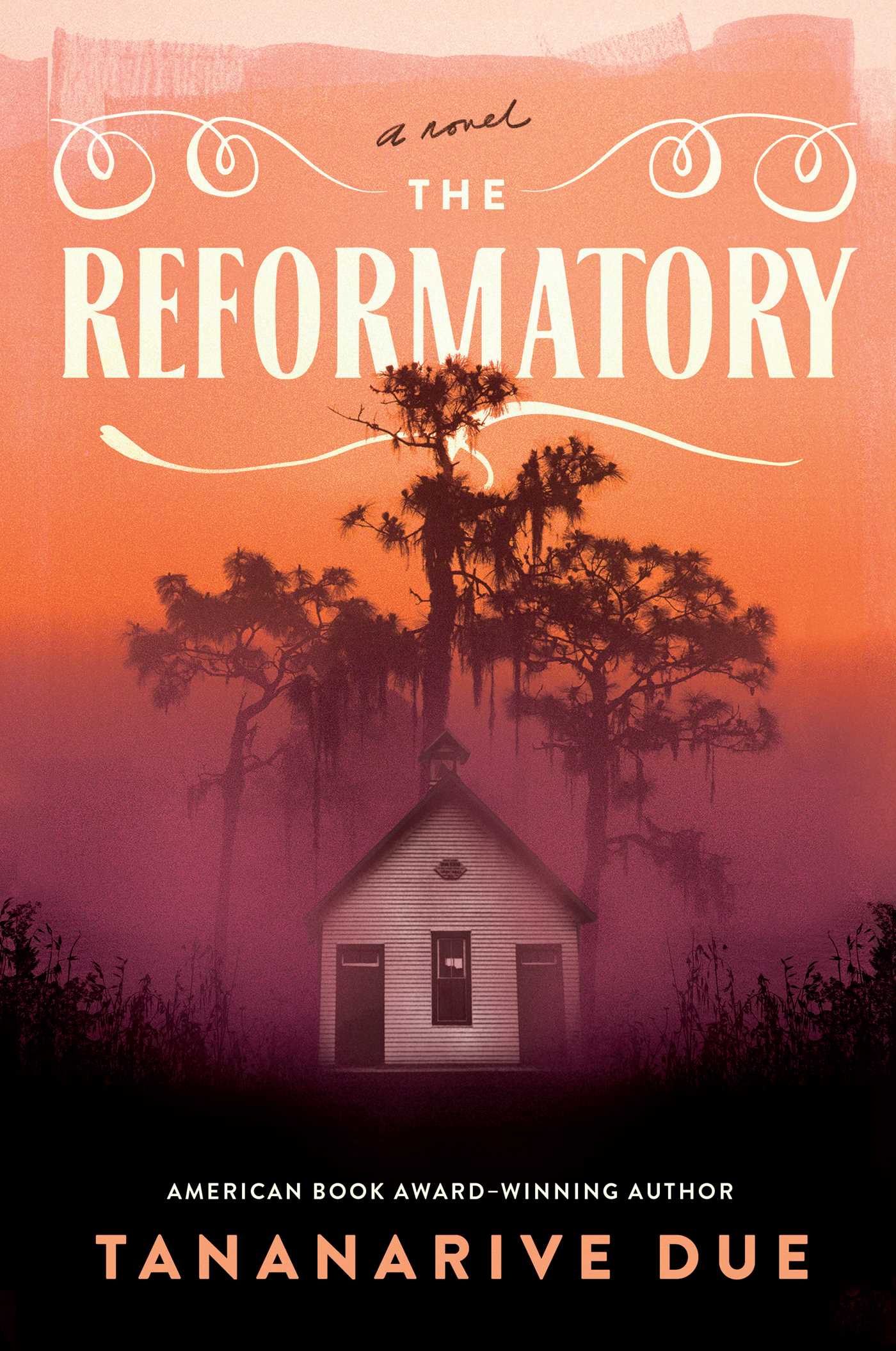
by Tananarive Due
Set in 1950s Florida, The Reformatory follows twelve-year-old Robbie Stephens, who is sent to the segregated Gracetown School for Boys after defending his sister Gloria from the unwanted advances of Lyle McCormick. But Robbie’s sentencing isn’t just punishment for that act. It’s a trap. His father, Robert Stephens, is a Black man falsely accused of raping a white woman who has fled to Chicago. A union organizer with enemies in powerful places, Robert is being lured back through the incarceration of his own son.
We soon learn that Robbie is spirit sensitive. He sees ghosts, or “haints,” and this gift is both a blessing and a curse. A blessing because he feels the presence of his mother, a comfort that helps him endure the atrocities he faces. A curse because he also sees the ghosts of boys who came before him, those who died violently at the hands of the evil, psychopathic Warden Haddock, by fire, by beating, by every manner of physical and emotional harm imaginable, all desperate to avoid being sent to the “Shed.”
Meanwhile, Gloria is fighting on the outside to secure the legal help her brother desperately needs. Alongside Ms. Lottie, the woman tasked with caring for Robbie and Gloria after the death of their mother and a Warrior Queen if there ever was one, she races to get Robbie released before it’s too late.
The Reformatory is classified as a literary, historical, and horror novel. And while you might assume the horror comes from its supernatural elements, make no mistake. The true horror here is entirely human. It is the vile and calculated evil of those who use their power to torture children and discriminate against people whose skin is a different colour than their own. The ghosts are almost beside the point.
Trigger warnings: physical and sexual abuse, blood and violence.
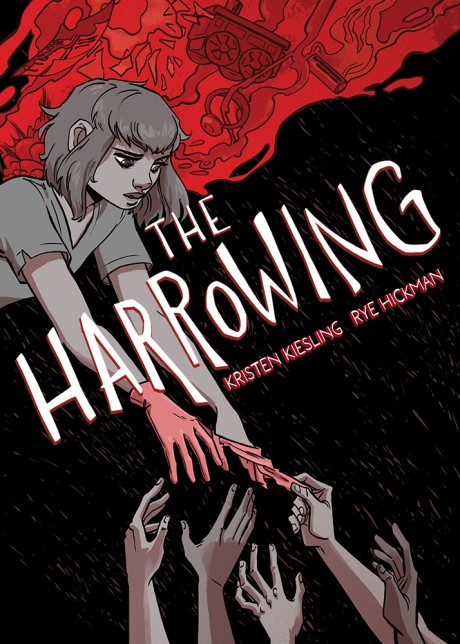
by Kristen Kiesling and Rye Hickman
The Harrowing
Kristen Kiesling Rye Hickman
Rowen Sterling is the daughter of worm farmers. You would think worm farming would be a rather mundane, banal job but unfortunately Rowen has had her share of trauma, not only did her mother die a violent death at the hands of another, her father has become distant and, she’s in her senior year of high school and has some important life decisions to make, like what college to attend, and if she is falling in love her her best friend Lucas. And just to compound these stresses, Rowen has been having disturbing dreams of murder and death. One night, Rowen is kidnapped and taken to a facility called Rosewood. Her father is behind her kidnapping and claims it’s for her own good. You see, Rowen is blessed/cursed with a gift; she can predict who will die and who will commit murders just by touching them. The trainers at Rosewood tell her that those with a red aura will commit a crime of passion, and those with a black aura are psychopaths. And that she and the other young people at Rosewood will be trained and tasked with going out into society to determine who is indeed an imminent criminal. Rowen is all for her involvement; her mother, after all, was murdered, and she would like to prevent the same trauma from happening to others. However, it’s not that simple. A load of ethical questions come into play, like how moral is it to imprison someone who hasn’t committed a crime yet? And, what if you sense an aura around someone you love?
I really enjoyed this graphic novel. Its premise was interesting, albeit a bit confusing at times (parts of the characters’ backstories seem ill-placed). The artwork is wonderful, coloured in white, black, and various shades of grey, with additions of red and pink. Colours and artistry that suit the subject matter very effectively.
The story is bloody and violent and definitely aimed at 15-18 year olds.
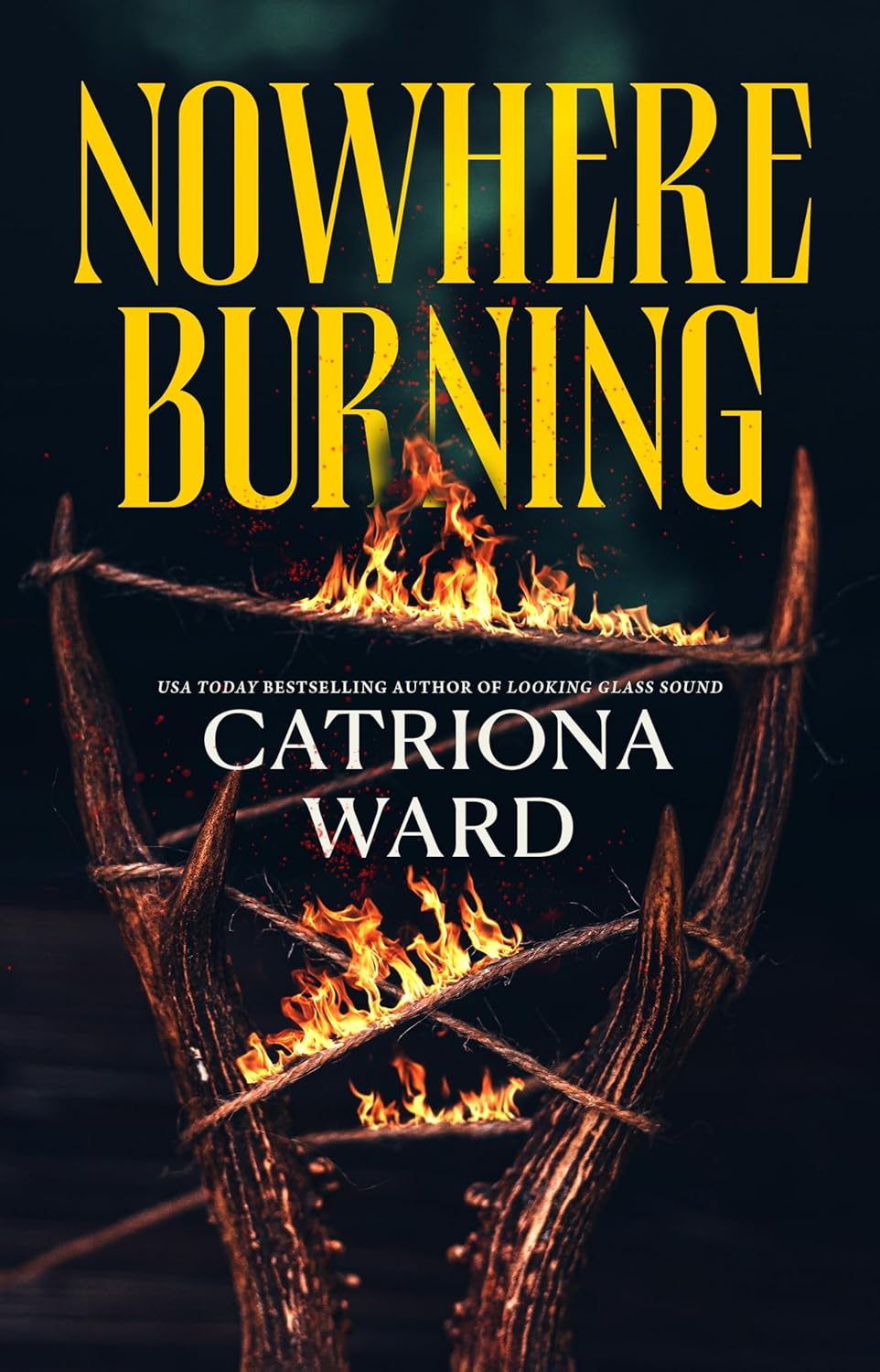
by Catriona Ward
Full disclosure, Catriona Ward’s writing is a favourite of mine; she could rewrite the ingredients of a cereal box, and I’d love it. So I was fully expecting to love this new novel of hers, and I did. Although it isn’t my favourite novel of hers, it was still a good, creepy, suspenseful, mystery, thriller, and horror novel.
The novel unfolds through multiple perspectives and timelines, with the estate of Nowhere serving as the central, unifying “character” of sorts.
Leif Winham, a renowned actor, retreats from a life of glamour to his secluded estate, Nowhere. He leads an isolated and enigmatic existence, prompting neighbors to view him as an eccentric recluse while remaining intrigued by both his lifestyle and the estate itself.
Tom, a documentarian, is driven to investigate Nowhere and the mythology that surrounds both the estate and its founder.
Riley, a young girl, experiences significant trauma after being orphaned and placed in the care of a cruel, abusive guardian referred to as ‘cousin.’ Both Riley and her younger brother suffer under this individual, ultimately compelling Riley to make the difficult decision to escape with her brother. The only refuge she can imagine is Nowhere, a place described to her by a girl named Noon, who visits her at night. Noon explains that Nowhere is a place ‘in the mountains under the stars where everyone gets love and respect,’ and provides Riley with written directions to this sanctuary for children like her can find a home.
I found each of these three perspectives equally enthralling, and when Ward expertly weaves the storyline together, the novel becomes an impressive, intricate piece of storytelling.
I really enjoyed this novel, as I knew I would. It is deeply suspenseful, and I found the characters well-developed and interesting. I wanted to know their motivations, their backstories, and eventually how their lives unfold.
Thank you to Netgalley and Tor Publishing for the book
Nowhere Burning will be available February 24th.
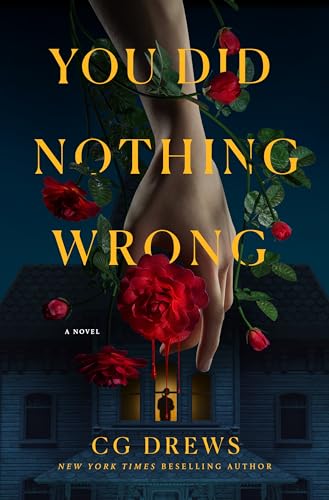
by CG Drews
Elodie leaves her life as a single mother in Australia to join Bren in the United States. Bren appears to be the ideal husband: he is handsome, a reliable provider, and willing to help raise her autistic son, Jude. Elodie is also pregnant, which makes her feel she finally has the foundation to start anew with her family. However, she remains uncertain about the old family home where Bren has relocated them. The house is in a constant state of renovation, and Jude dislikes it, claiming he can hear the walls talking. As Jude’s behavior deteriorates, Elodie fears her seemingly perfect life may unravel, particularly if Bren discovers her secret—a secret that could jeopardize her happiness or even her safety. Yet, Bren harbors secrets as well. The central question becomes: whose secrets pose the greater threat?
Just a heads up—the ending is completely wild and unpredictable.
Well, this was a creepy book. I found some parts predictable, and I was more than frustrated with some of the choices Elodie makes, but CG Drews seems to masterfully write a psychological thriller that will make me read more of her works.
I also listened to this novel, and truth be told, I found the audio version even creepier. In fact, Saskia Maaleveld’s voice absolutely sent shivers down my spine. I had to listen to it in the bright sunlight of a walk and not in the dark of my bedroom at night. which is a testament to how well Saskia Maarleveld conveys character and atmosphere.
If you like psychological horror, then this is the book for you.
Trigger warnings: abuse, child abuse, physical abuse, violence, eating disorders, blood, psychological abuse, and gore.
Thank you to Netgalley and S. Martin’s press for the copy.
You Did Nothing Wrong will be out March 17th.
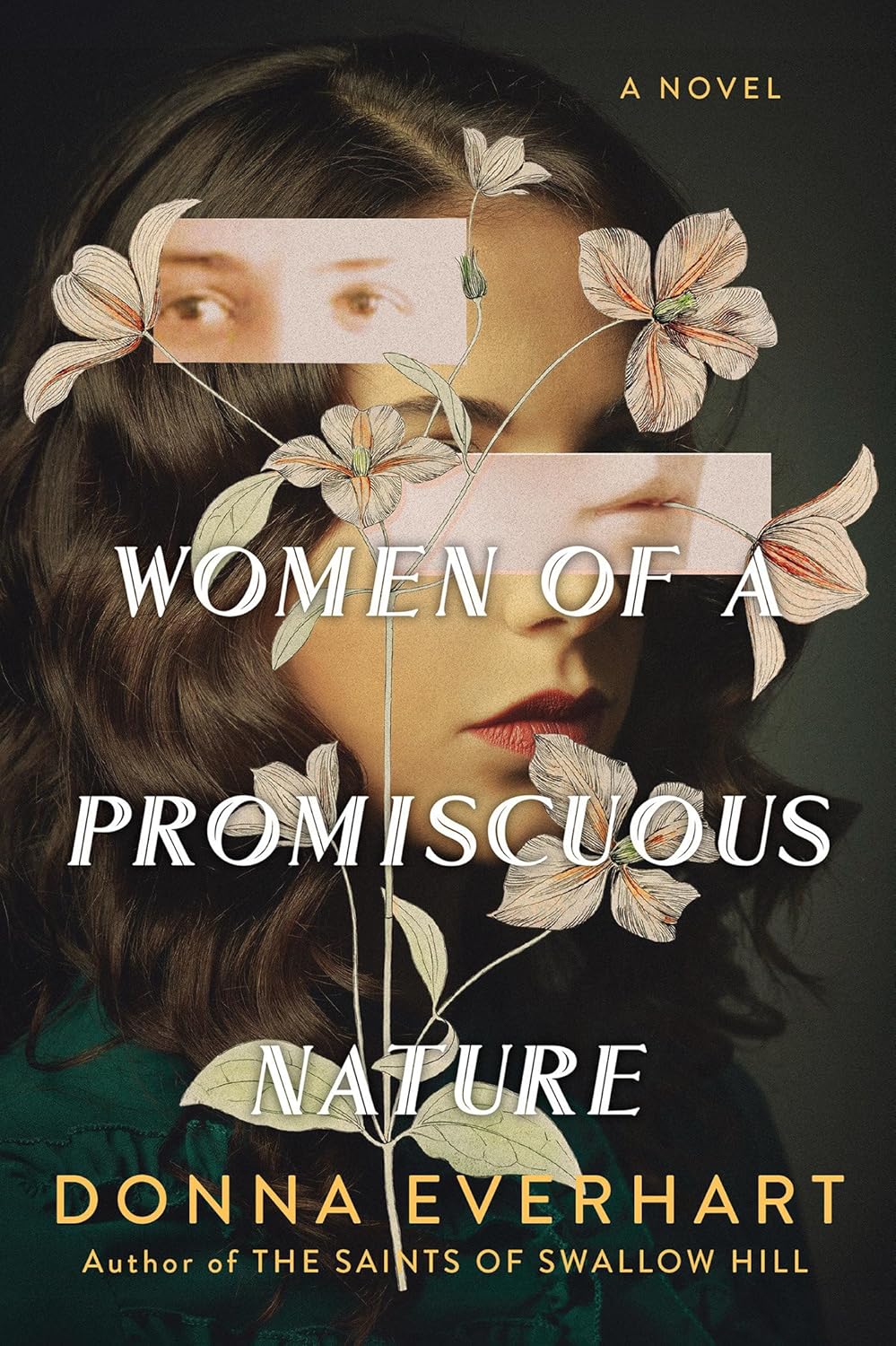
by Donna Everhart
Hey, so apparently in 1918, men who were drafted into the army were succumbing to venereal diseases, and it was all the fault of women ( insert look of incredible annoyance here). In fact here is the quote “What the Secretary of War and the Secretary of the navy are hereby authorized and directed to adopt measures for the purpose of assisting the various States in caring for civilian persons whose detention, isolation, quarantine or commitment to institutions may be found necessary for the protection of the military and naval forced of the United States agains veneral Disease” from the Chamberlain – Khan Act of 1918.
Here’s another quote from Trials of Nina McCall: Sex, Surveillance and the Decades-Long Government Plan to Imprison ‘Promiscuous’ Women by Scott Stern: “It is the philosophy they helped to cement: that women and promiscuous people are dangerous and morally inferior and that they need to be stopped, locked up, and reformed.” Seriously. This information is provided by the author at the beginning of the novel…just to get your anger primed.
This novel discusses this time in American history, and I was outraged every second I was reading it.
Our main characters are 24-year-old Ruth, who was forcefully detained by the sheriff and endured a humiliating internal exam by a doctor who proclaimed that she had a venereal disease…all for walking alone to work at the cafe one morning. But hey, she was pretty and alone, so that made her promiscuous and a threat to mean right?
Then there’s Stella, just 15, pregnant by her own father, and her parents are the ones who turn her in. She gets sterilized and locked away, because apparently, she’s a threat too.
And don’t get me started on the other women who were forcefully detained for owning their own business, being mentally ill, or hey, you’re just too darned pretty to be single, so you pose a threat.
All of these women are institutionalized at the State Industrial Farm Colony for Women run by a woman by the name of Dorthoy Baker…a woman with a far more interesting past than the women she houses. Baker runs her institution using questionable measures. Her charges are punished for not enthusiastically embracing their rehabilitation .
To say I enjoyed reading this novel would not be suitable; I was, however, incredibly drawn in by its subject matter, themes and writing. Women of a Promiscuous Nature would make an engaging addition to book clubs. I would also recommend it as an independent study for high school classes; its writing style is accessible, as is its subject matter.
Thank you to Kensington Press and Netgalley for the copy.
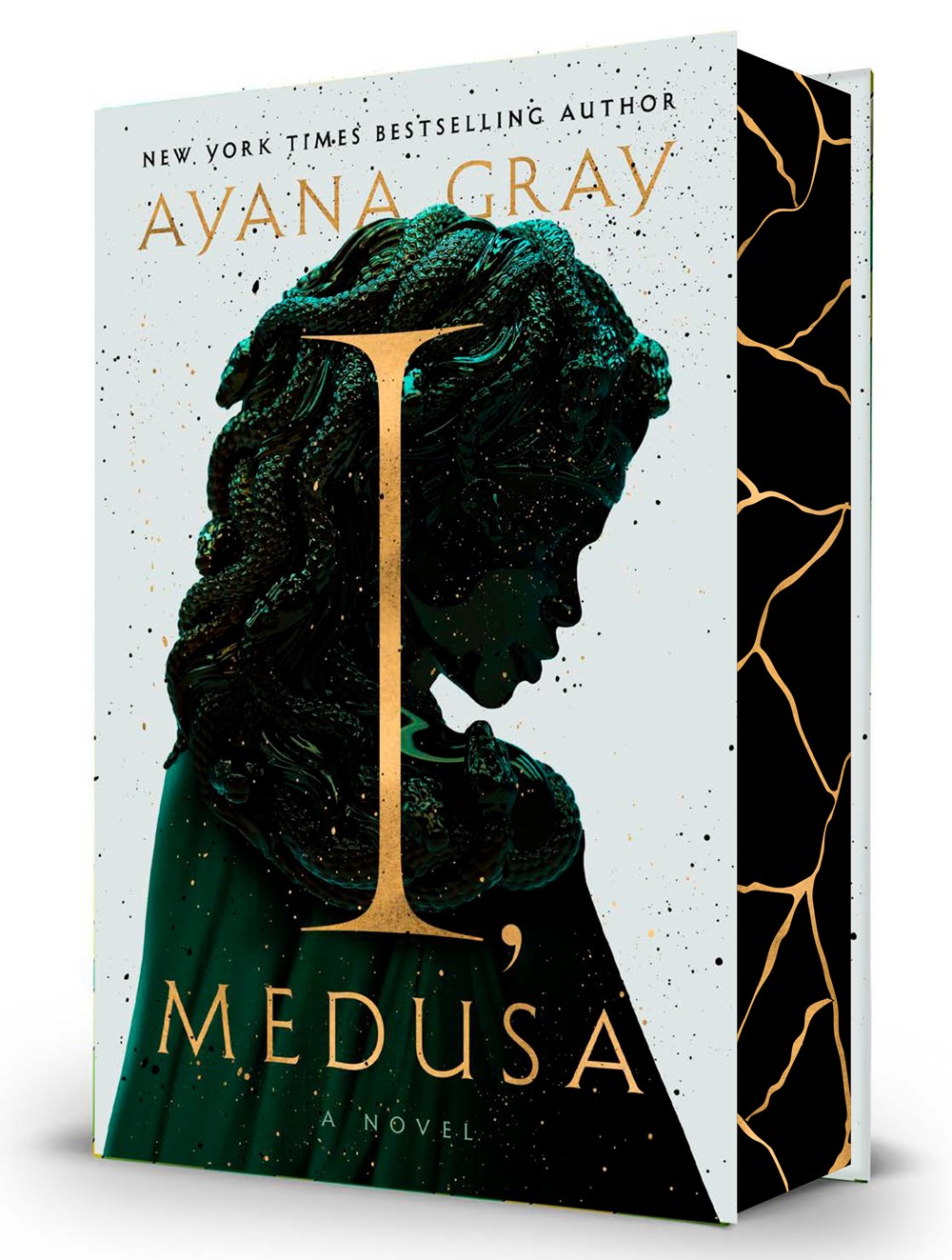
by Ayana Gray
“ He is wealthy and popular…he will not be punished. Meanwhile, the girls here are prey.” (I Medusa).
I Medusa turned out to be an unexpected surprise. The novel unfolds over a year. Medusa, or Meddy, is 17 and preparing with her sisters for a spring feast. Unlike her sisters—Euryale and Stheno, both goddesses—Meddy is mortal. Her parents, gods of the Sea Court but not Olympians, still resent their lesser status. Meddy feels powerless compared to her family but possesses intellect, courage, and a strong sense of justice. She is sensitive to injustices in the court, including discrimination and mistreatment of women and children. These qualities attract Athena, who invites Medusa to be her acolyte in Athens, where, as myth suggests, chaos soon follows.
Ayana Grey does an incredible job in humanising Medusa as a 17-year-old girl. From her infatuation with Posidon and her inability to recognise the fact that he is grooming her for his own sexual conquest (she is constantly making excuses for his behaviour, attempting to convince herself that he sees her as special and that his love for her is different from the “love” he has for his wife, Amphitrite, or his mistresses). In fact, we, the readers, can’t help but yell at her in her naivety… However, her way of thinking seems very age-appropriate.
Medusa is characterized as a young woman we can’t help but love, even though her choices frustrate us. Gray reminds us of her age and that her choices stem from her parents’ poor upbringing—for example, she has no idea what sex is and is confused by her body’s response to seeing Poseidon with a sea nymph during her spring feast. She is often ruled by her heart rather than her mind. Her pursuit of justice turns violent, first with her fists, then with the power her curse gives her.
*spoiler warning*
I was so brokenhearted at the end, even though it was no surprise. Meddy goes to sleep with hope and optimism in her heart. Dreaming of her future where she can use her curse in a way to benefit others, just to meet her demise before the sun rises. We get to know Meddy intimately; she is characterised as an empathetic, sweet young woman, even after she is cursed. She is a victim of those in power, not a monstrous villain as most myths portray her.
Ayana Grey uses her narrative to discuss the nature of rape culture and the issue of men in power getting away with exploiting young women … two issues that we are facing today. It would make an amazing book club pick or novel for study, as it offers a plethora of points of discussion.
Thank you to Random House and Netgalley for the copy
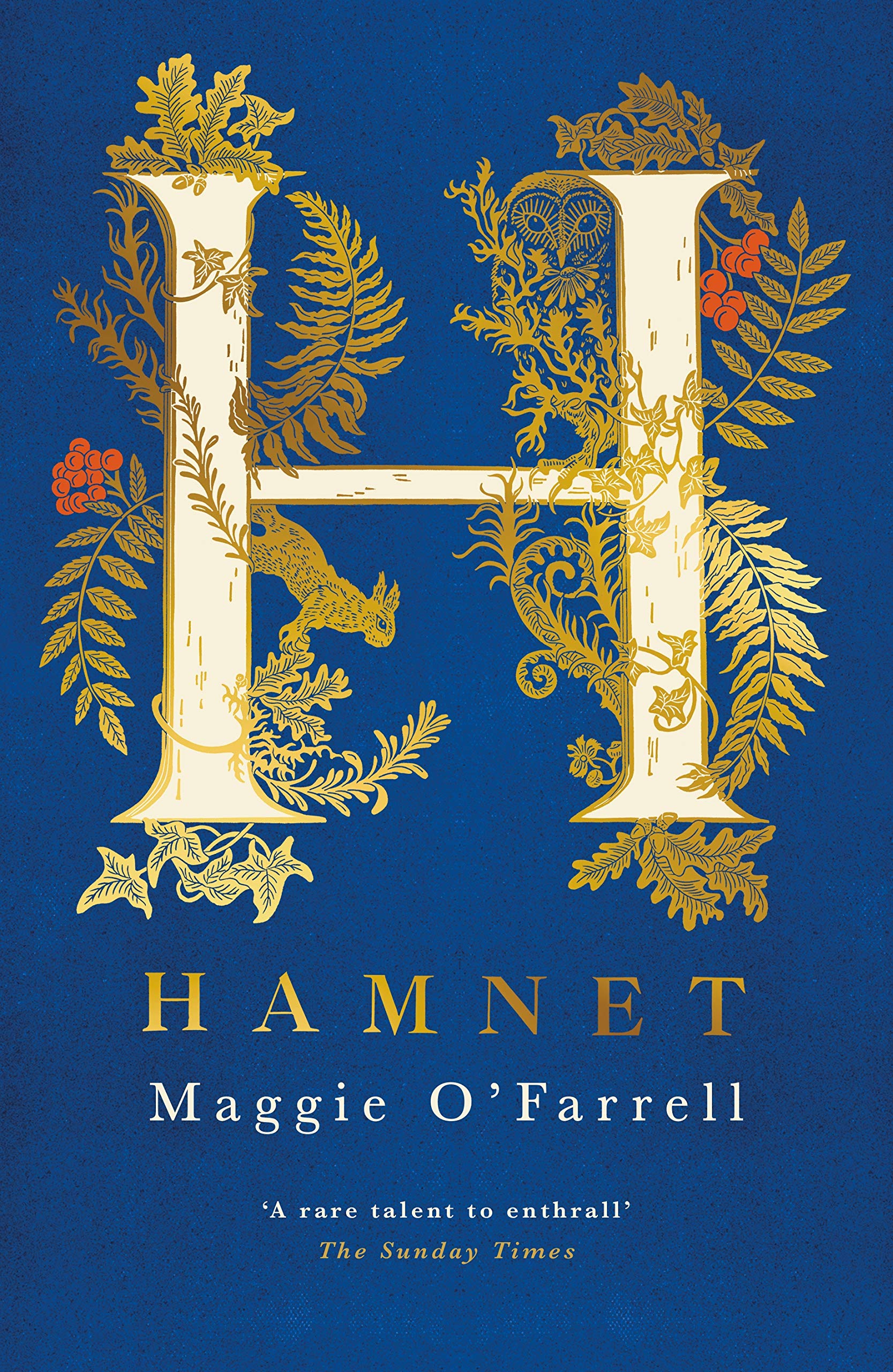
by Maggie O’Farrell
I love Shakespeare and loved teaching his works. When I taught Hamlet, I also explored Shakespeare’s life and the play’s historical background with my students.
Because of this, my review is personal and shaped by my love for Shakespeare and his famous play.
The novel begins as we meet Hamnet, the son of William and Agnes. He is desperately looking for an adult to help his twin sister, Judith, who has suddenly become very ill. We see the story through Hamnet’s eyes—his worry for Judith, his confusion when he can’t find help, and the pain he feels from his grandfather’s abuse.
I loved this book. The main character is Shakespeare’s wife, Agnes. (Shakespeare’s real wife was named Anne, but that detail doesn’t matter here.) Agnes has become one of my favorite female characters in literature. We first meet her as a young girl, witnessing her mother’s traumatic death during childbirth. Her mother was gentle, mystical, and almost otherworldly. Later, we learn about Agnes’s abuse by her stepmother, who always knew that Agnes’s mother was her husband’s true love. Like her mother, Agnes is a healer, a bee whisperer, and sensitive to the spirit world. Because of this, both her stepmother and the townspeople see her as odd and unmarriageable.
But when a young man arrives to tutor her brothers and takes a particular interest in her, she cannot help but recognize that beneath him, his hidden mind and a soul that is unlike any she’s known.
Spoiler alert!
We find out that poor little Judith has the plague, and Agnes uses every bit of learning she has gleaned over the years to cure her child. In the meantime, William, who is off with his players entertaining audiences with his plays, is sent. The attention is focused on Judith; all the while, we should be concerned about young Hamnet. Young Hamlet is the sweetest son/brother, selfless, smart, and incredibly brave. We, the readers, are indeed heartbroken over his death.
The novel then explores the grief of Agnes and William. Agnes’s deep heartbreak stands out, especially since we have followed her life so closely throughout the story.
I am bewitched by O’Farrell’s writing. Its lyrical style is enchanting and impactful. She brilliantly varies timelines and various character points of view to keep the reader mesmerized with the story and empathetic towards her characters.
I would definitely use this novel as a mentor text and as a literary study for my students.
by Amy Cooper
Season of Fear was the perfect book to start my new year. An easy, fast-paced read that was hugely entertaining and at times poignant in theme.
Ilse lives with her mother and sister in Heulensee, a small village surrounded by the forest Hexenwald, a forest filled with bloodthirsty beasts like the Nachzehrer, a vampiric creature, and the enormous serpents Lindurum. In order to stave off the beasts of Hexenwald, the women, just the woman, have to feed the “Saint of Fear” their terror. The more authentic and terrifying their screams, the more satiated the Saint will be. But not before it devours a woman or two.
Heulensee is a village that follows several religious practices that are detrimental to women. They are the ones who have to feed the Saint. They are the ones who must undergo a rite at 18, during which they must visit the Saint’s lair and survive the night to placate not only the monster but also the preacher.
Unfortunately, Ilse has a problem. She does not feel fear. She feels sadness, anger, and a plethora of other emotions, but she does not feel fear, a fact that angers the Saint, who then threatens her that if she does not express adequate fear, it will devour her sister Dorthea. So Ilse is then banished to Hexenwald in order to find a way to defeat the Saint and save her sister. On her journey, Ilse learns about herself, the origins of the Saint, and a way to use her absence of fear to protect herself and those she loves.
I really enjoyed this novel; it reads like a traditional fairy tale, complete with folk-eating beasts and lessons to be learned.
Thank you to Little Brown and Co. and Netgalley for the copy.
by Rebecca Ross
Wild Reverence is a slow-burning Romantacy story. For most of the book, we are schooled in a world of Gods, Goddesses, and Mortals. We have the Immortals of the Under Realm and the Immortals of the Skyward Realm, and poor Matilda’s parentage includes both… which leaves a young girl struggling with a sense of identity and belonging. When tragedy occurs in her Under Realm home, she is forced to leave and find solace in Skyward, but will she be accepted?
In the meantime, Matilda has met the boy of her dreams, Vincent, the only problem is she can only meet him in his dreams, oh, and he’s a mortal. For a chunk of this novel, Matilda’s and Vincent’s story is secondary; they “grow up,” each finding their place in the world (or, in Matilda’s case, her worlds), and each coming face to face with their newfound powers and the discovery of their weaknesses. Each faces betrayals and moments of weakness, but in these moments, each learns who they truly are and what potential they have to save the ones they love, unless, of course, it is contrary to what the fates allow.
So I’m not a huge fan of Romantacy, and I’ve never read anything by Rebecca Ross. I picked up Divine Rivals once and carried it around the bookstore, but didn’t end up buying it, and I am beginning to rue that day. Not that you need to read the Divine Rival books to fully enjoy Wild Reverence. I really admire Ross’s writing. It is really quite beautiful. Her prose is vivid, and the plot unravels like a movie in my imagination.
A perfect Christmas read AND a perfect gift for those in your life who are fans of Romantacy.
Thank you to St Martin’s Press and Netgalley for the copy.
by Nichelle Giraldes
This book is a creepy hybrid where young women go missing and the community comes together to track down their kidnapper, or worse yet a serial killer and a supernatural science fiction novel (I’d reference a novel in particular but then I would be hugely spoiling the plot).
The novel starts with Lia Gregg returning home to her mother, Elizabeth, and her sister, Evie, to their little house in the woods. Her father is there too, but he seems disengaged from his family and, well, is basically disengaged from the entire plot, to be honest. Lia has experienced a breakup with her boyfriend, and she’s feeling a little lost. Soon after her arrival, Evie and her friend Maddie are hanging out in the backyard when Maddie disappears. Maddie’s disappearance immediately causes concern because, for years now, young girls have been mysteriously disappearing from the area.
Soon, we, the readers, come across a chapter written from a different point of view. We are suddenly experiencing an alternative plot from the viewpoint of a very confused girl. Could she be Maddie? Could she be another one of the numerous girls who have gone missing? All we know is that she is absolutely clueless about who and where she is. All she knows is that there is this woman named “Mother” who is caring for her.
I was really entertained by this novel. It is a puzzle, and as soon as I started putting together the pieces, when all of a sudden a picture started forming, I couldn’t wait to see what the picture looked like in its entirety.
I would have a problem with the science-fiction/supernatural element of this novel, but Giraldes skillfully weaves it into her storyline.
A great book to add to your Christmas reading list!!
Thank you to Poisoned Pen Press and Netgalley for the copy.
Jess Armstrong
The Devil in Oxford is the third novel in the Ruby Vaughn Mystery series. Full disclosure, I have not read the first two. The novel can be read as a stand alone, however as I read, I couldn’t help but feel as though I would have enjoyed it more if I knew some of the backstory that was referenced such as how did she and her love interest Ruen meet, her history with the solicitor, how did she come about living with Mr. Owen (my favourite character by the way.
Ruby Vaughn is a “disgraced heiress” who has a penchant for attracting both the supernatural and mystery. Armstrong, through her characterization of Ruby, both indirectly and directly, successfully portrays her as a strong-willed, intelligent, and precocious woman who wonderfully does not “know her place”. Ruby lives with an eccentric, charming old man, their housekeeper, Mrs Penrose, and, of course, a cat. Mr Owen owns a rare book shop where he and Ruby work… a rare book shop, my dream location (and my dream job, if I’m being honest), so this fact may have contributed to my affection for the book.
The novel starts with Ruby playing tennis with her good friend Leona, during which she notices Leona acting peculiar. When called out, Leona skirts the issue. Ruby then returns home to find that Mr Owen has procured tickets to an intriguing exhibition of “curious” oddities and artefacts. Where, of course, a bloody crime ensues, Ruby’s love interest arrives, and Lenore may or may not be a suspect. Poor Ruby has a lot to navigate in this novel: her personal life, solving a crime, and discovering the true character of the people most important to her… thank goodness she has her cat, Fialla, as support.
I really liked this novel. I liked Ruby; she was spunky, stubborn, and confident when it came to solving mysteries, but not so confident in her personal life… like most of us. I loved Mr Owen and his grandfatherly nature. I especially loved the setting; as soon as you mention a rare book store in an academic setting, I’m hooked. I did, however, miss not being “present” to witness the spark that set fire to the slow burn that is the central romance. So I’m definitely going to seek out and read the first two.
Thank you to Netgalley and Random House for the Copy