link here: lainkandspine
for the love of story.

link here: lainkandspine
by Emily Ruskovich

This collection is made up of five short stories, all connected by the same haunting, quietly devastating voice.
The first story, Victor’s Room, follows Rebecca, a young mother who moves to a remote farmhouse where her husband spent his childhood. The story is told from her perspective as she wonders how she ended up there. She looks back on meeting her husband at university, where he taught and she was a student, and remembers their relationship, marriage, and the birth of their daughters. Over time, Rebecca realizes that many of her life choices were not truly her own, and she starts to see that her husband is not who he claimed to be. He tells her about growing up in the house, his childhood, and the death of his brother Victor, in a room that Rebecca later chooses as a sanctuary for herself. Reading this story made me feel uneasy; the relationship between Rebecca and her husband is very one-sided and manipulative.
The second story, Owl, follows a young man whose wife is shot by some neighbourhood boys who mistake her for an owl. Their relationship is already strained, so when she later disappears, he suspects either the boys are involved or that something from her past has finally caught up with her. I found this story heartbreaking and incredibly sad, with characters who feel like nothing more than victims of circumstance.
The third story, Round Lake, centers on a young woman who, after learning the truth about a key event in her life, starts to question everything, especially the life she has built around her memories. There were moments in this story I found incredibly easy to identify with. As I was reading, I kept thinking, I have totally responded this way, and this is exactly what I would have done.
Petty Creek Road is the one story I couldn’t quite identify with. It follows two older brothers who, because of circumstances in life, move in with each other and become the best of friends. When Butch, the younger brother, is tragically killed, his brother Will has to come to terms with his loneliness, the relationship he has with his son, and a gift he has denied possessing until now.
The final story, Nightjar, is about a young girl, Tess, who has to look after her little brother Rory during summer vacation. While doing so, she experiences something miraculous that gives her a sense of purpose and peace in her otherwise lonely and isolated life. The relationship between the young girl and her brother is incredibly realistic, sometimes funny and very heartbreaking.
Emily Ruskovich is a talented writer. Her stories draw you in with their beauty, and her writing is rich with description and metaphor. She is one of the best writers I have read.
Every story in this book will be suitable for High School study.
Thank you to NetGalley and Random House for the copy.
by Veronia Roth
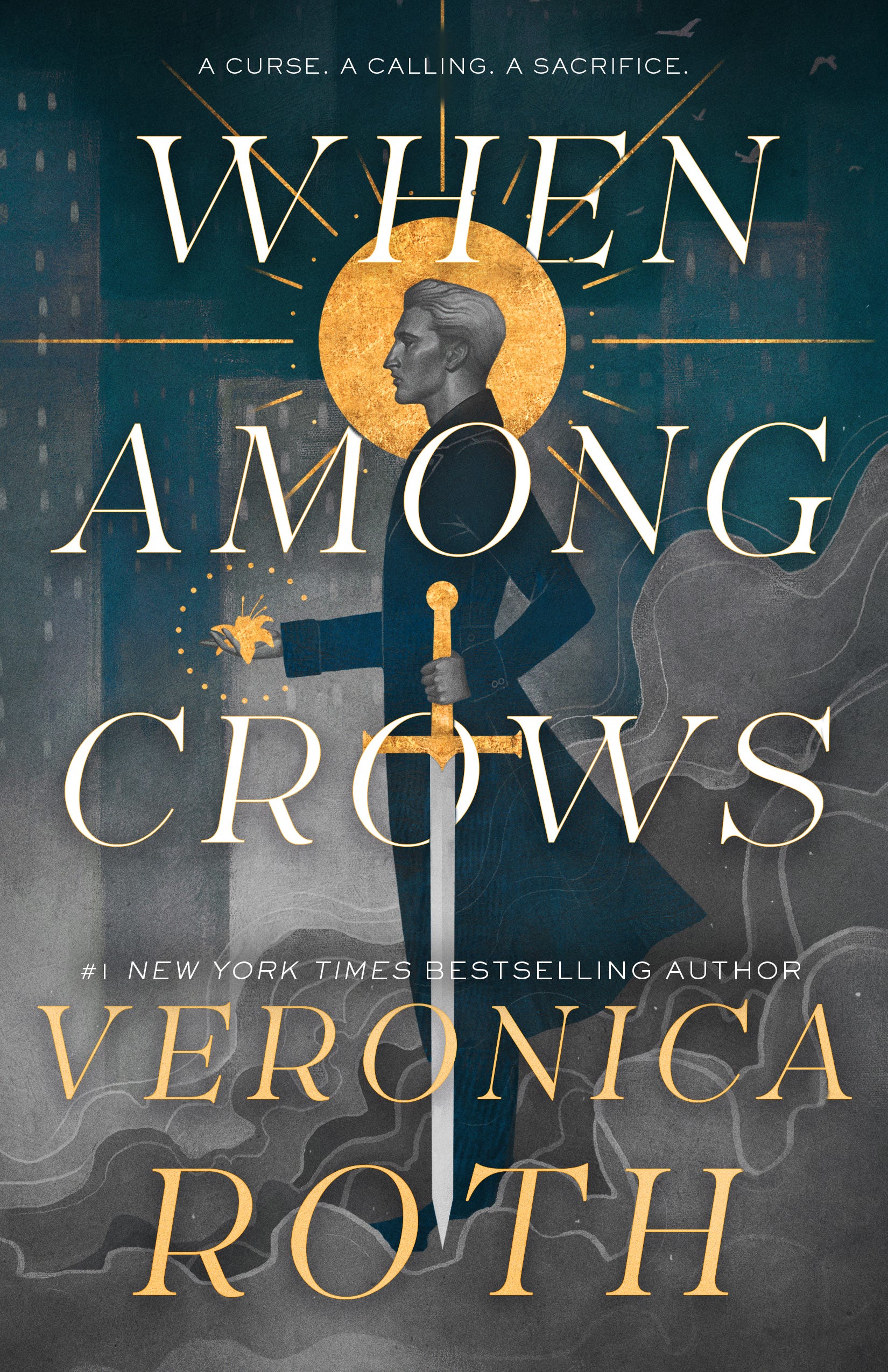
Curse Bearer Series #1
When Among Crows is a short novel, more of a novela really, that is steeped in Polish Folklore. The juxtaposition of European folklore against a contemporary American setting makes for an interesting story, to say the least.
Dymtr comes from a family whose calling is to slay monsters. Think “Grim” from the TV series; unfortunately, he has to sacrifice half his soul to be a monster slayer. At the very beginning of the novel, Dymtr is tasked with finding the infamous Baba Yaga and, well, slaying her. We get a bit of Dymtr’s backstory: how his Grandmother (Bubcia) trained him, and his first kill being a striga, even though she seemed so “normal.” Dymtr travels to Chicago to find Baba Yaga and, along the way, meets Ala, a monster herself, but not by choice; her family was cursed, and with the death of her aunt and cousin, the curse bounced to the next living relative, her. Ala is a Zmora, a night “demon” who feeds off fear. They also meet up with Nikko, a male Strzga, another Slavic creature in human form who feeds off anger and can turn himself into an owl, who it seems may fall in love with Dymtr, which, of course, will complicate things.
In the novel, our main character, Dymtr, has to reconcile with the “sins” of his past and decide how to move forward: should he retain his identity and fulfill the obligations of the family legacy, or will he move forward with a renewed sense of righteousness?
This novel was a great palate cleanser. It was a quick, easy read between heavier books—a wonderful escapist novel using Slavic folklore, always a favourite.
Thank you to Tor Publishing and Netgalley for the copy.
by Charlotte Wood
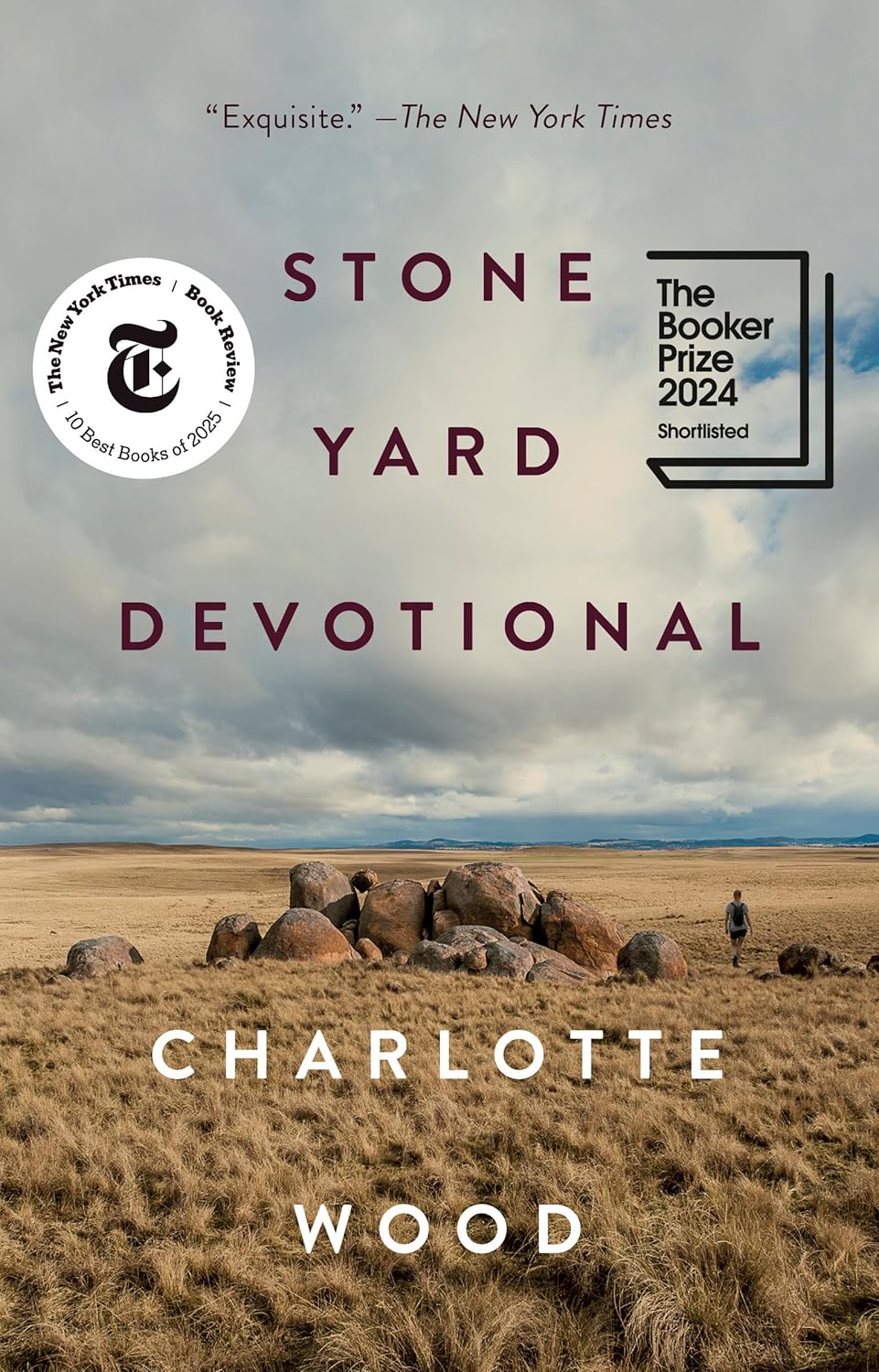
I’m not entirely sure why I picked up Stone Yard Devotional. I think it had something to do with a book podcast I came across, where the host mentioned it was the kind of book you read slowly, pausing to sit with what the words on the page are really trying to say. Not so much the telling of a story, but the meditation surrounding the narrator’s contemplation.
Our narrator walks away from her life running a “Threatened Species Rescue Center,” feeling it is essentially pointless. The world is going to hell in a handcart (my interpretation), and she retreats to a religious community of nuns. Not out of faith, but because “nothing is asked of [her], nothing expected” (pg. 18). From there, she turns inward, revisiting the events she believes shaped the woman she has become. As she settles into convent life, she begins to reflect on her upbringing, and particularly on her complicated relationship with her mother. Then three life-altering events unfold: a plague of mice, described in genuinely horrifying detail as the narrator and the nuns scramble to contain the infestation; the discovery of the remains of a nun who once belonged to their community, whose death appears to involve criminal circumstances; and the arrival of another nun, someone our narrator has crossed paths with before.
This is a deeply human novel. The examination of our narrator’s inner life is genuine, frustrating, and at times confusing, but through it all, it is rooted entirely in her truth.
Charlotte Wood’s writing is simple yet beautiful. There were several moments where I had to stop and just sit with her prose. For example: “Crossing the grass I made a clean track of footprints, deep green on the white spread of the lawn. It returned me to my childhood, to the sense of secret authority, imprinting one’s presence into a place with those clear, sharp prints. I exist” (pg. 39).
And: “I’m used to it now, the waiting. An incomplete, unhurried emergence of understanding, sitting with questions that are sometimes never answered” (pg. 69). The discussions you could spark from contemplating either of those passages alone would be well worth the read.
Stone Yard Devotional is a novel that can be finished in a relatively short time, yet its complexity and themes run deep. That combination of accessible length with rich, layered content makes it an ideal pick for book clubs and high school independent novel studies alike.
by Johanna van Veen
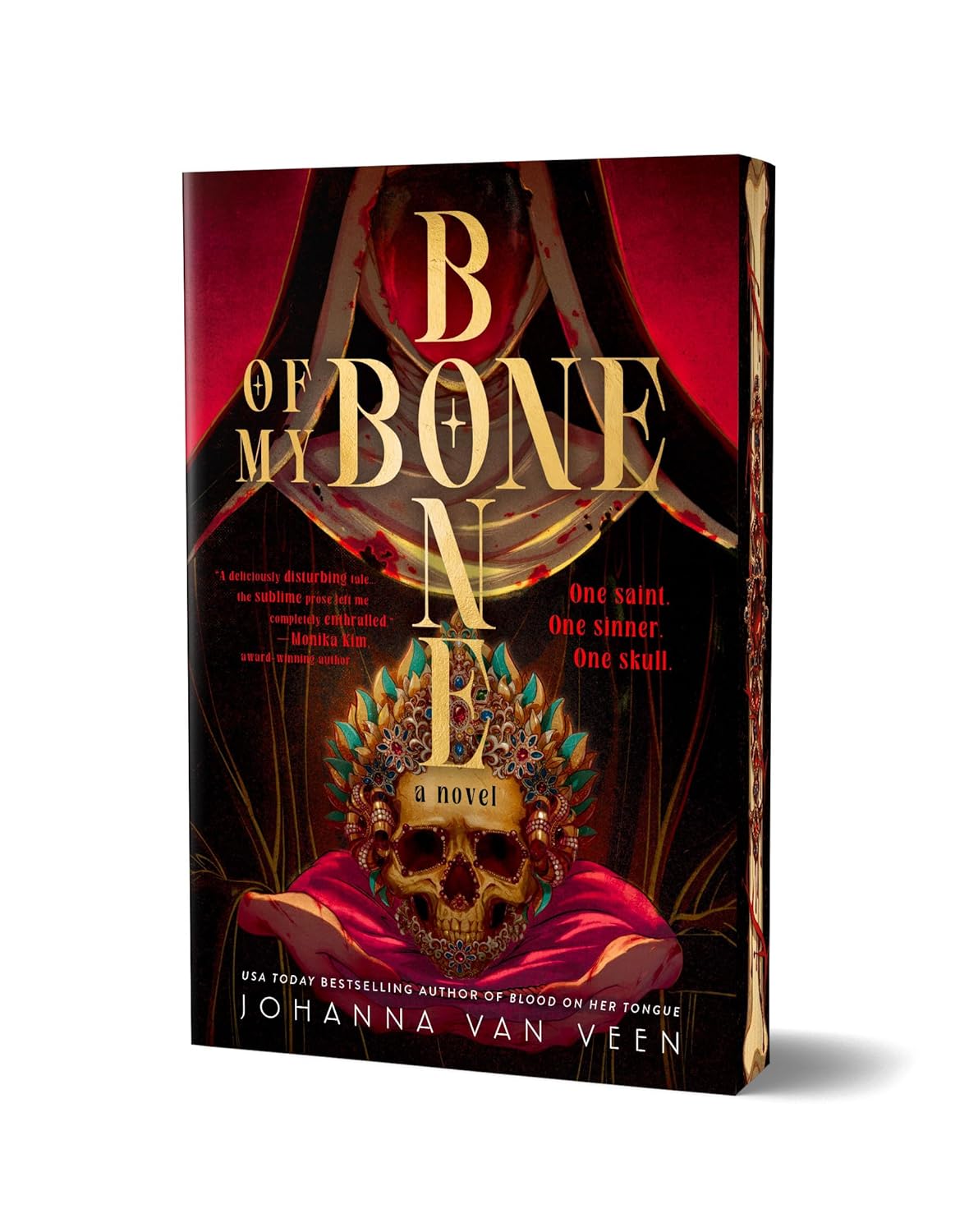
Johanna Van Veen has quickly become one of my favourite authors, so when the opportunity to review her newest novel, Bone of My Bone, landed in my lap, I absolutely jumped out of my skin. An image that is more appropriate than you might think.
Bone of My Bone follows two women thrown together by the chaos of war. Sister Ursula is a young nun who has fled her convent to escape an invading horde of soldiers, carrying with her a tremendous weight of guilt for having abandoned her fellow sisters. Elsebeth is a brave, scrappy peasant girl who is running from the very same army. Their paths cross at a pivotal moment: just as Sister Ursula is about to be violated, Elsebeth steps in and saves her. From there, the two decide to travel together, and it isn’t long before their journey takes a fateful turn.
Along the way, they encounter a dying man in possession of something extraordinary: a holy relic, the skull of a saint. Legend holds that if the skull is reunited with the rest of the saint’s remains, the one who does so will be granted a wish. Naturally, Ursula and Elsebeth take the skull and set off to do exactly that, though each woman is driven by her own deeply personal reasons. Standing in their way is a necromancer who is stalking them across the countryside, desperate to claim the relic for himself.
This novel is such an entertaining read. It weaves together elements of German folklore, atmospheric dread, body horror, and a genuinely lovely love story. Van Veen’s writing is both gruesome and vivid, in description and in theme. She doesn’t shy away from the inhumanity of war, the selfishness of those who wage it, and the particular brutality that women are subjected to in the midst of it. And yet, through all of that darkness, something tender takes root. The romance between Ursula and Elsebeth is soft and authentic, and it earns every moment.
Set in Bavaria during the Thirty Years’ War, this one is an absolute must read if you love sapphic romances, folk horror, and stories that don’t flinch from the ugliness of history while still finding beauty within it.
Thank you to Poisoned Pen Press and NetGalley for the copy.
By Matt Haig
The second book in the Midnight World series
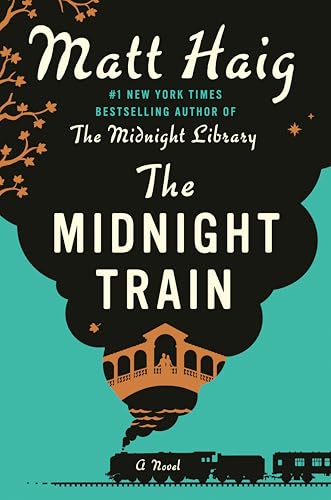
If you liked The Midnight Library, you will like The Midnight Train.
Eighty-one-year-old Wilber Budd has just finished his piano lesson when he receives a phone call from his past. Maggie, the love of his life, his ex-wife, whom he hasn’t spoken to in years, a lifetime really. She called because she had dreamed of him, after all these years, and just wanted to hear his voice. Wilber is filled with joy, though his joy is tinged with guilt. After the call, Wilber finds the last letter his wife wrote him, which ends with: “I love you, Wilber, but I am also leaving you. I don’t know where the past hides, but I will meet you there.” He feels responsible for the dissolution of their marriage, and he has missed Maggie tremendously. Wilber then has what we believe to be a heart attack.
When he “dies,” he finds himself on a train with a lady from his past. Mrs Agnes Deborah Amaryllis Bagdale of Bagdale’s Bookshop, where Wilber used to visit as a child. Agnes is Wilber’s spirit guide of sorts, there to guide him through his life. The train will stop at various points in Wilber’s life, where he must get off and relive pivotal moments that shaped him into the man he was when he died. But there are rules Wilber must follow on this journey: he must get off the train, he must not be seen or interact with his younger self, and he must not be there when his “past” self falls asleep.
As Wilber journeys through his memories, the urge to break the rules grows stronger. Each forgotten moment tugs at his heart, wishful for a chance to rewrite the past, especially his story with Maggie. Readers are swept into Wilber’s struggle, feeling the raw ache of longing and the bittersweet weight of choices. We, too, are compelled to reflect on our own regrets and treasured moments.
This novel is an inviting, heartfelt read, gentle yet stirring. Matt Haig’s writing wraps the reader in warmth, exploring the quiet beauty and pain of love, regret, and the persistence of hope amid personal loss.
Thank you to HarperCollins and NetGalley for the copy.
by Douglas Stuart
John of John is the third book of Stuart’s I’ve read, and it’s just as poignant, just as beautifully written as the first two.
Our protagonist, John Callum (Cal), is a young gay man struggling in life, moving from couch to couch, sneaking food, and having one-night stands. During their weekly phone calls, Cal’s father, John, says that Grandma Ella has taken ill and urges him to return home. Cal hesitates, feeling like a failure and dreading his return to the small Scottish Hebrides town where being a young gay man is far from ideal.
Cal returns home with his long, brightly dyed hair and androgynous appearance, exposing himself to his father’s verbal and physical abuse. We wonder if John’s violence stems from his wife’s departure and remarriage, Grandma Ella’s ownership of the property, or his own struggles as a Presbyterian minister, burdened by church rules and secrets his son’s presence brings to light.
Douglas Stuart’s stories overflow with theme and emotion. He crafts characters whose heartache, confusion, and love resonate universally, and captures the honest, heartbreaking bond of father and son. The novel explores identity, lineage, and the tension between pleasing parents and seeking one’s own path.
A beautiful novel, just as I expected. I will always be a Douglas Stuart fan.
Thank you to Grove Press and Netgalley for the copy.
written by Leah Rowan.
Narrated by Natalie Noudas and Tawny Platis
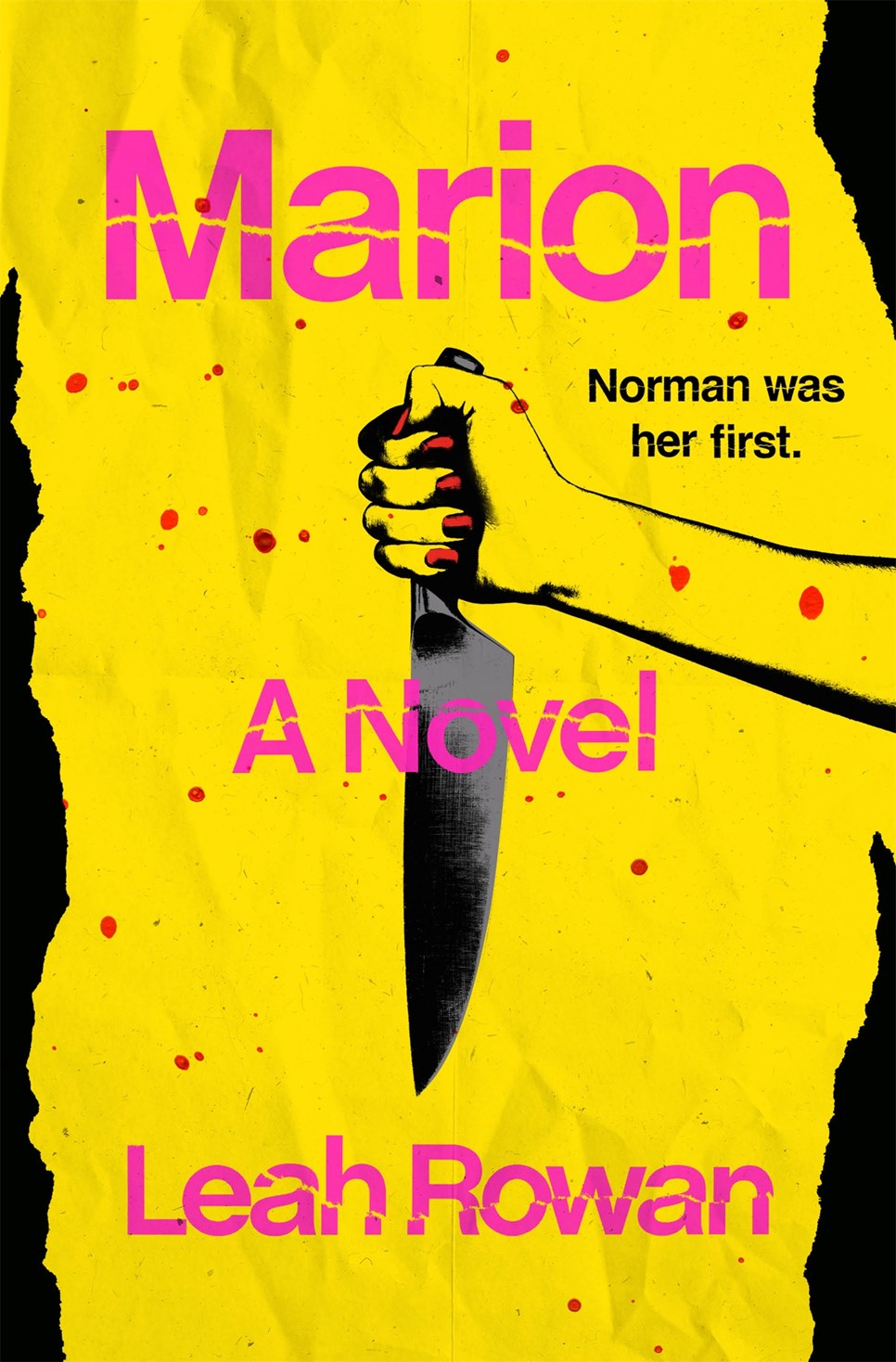
I both read and listened to this novel, and I quite liked both experiences.
Remember the black and white movie, Psycho? Noman Bates being the quintessential creepy mass murderer with huge mommy issues? Remember the shower scene? The visuals, along with the music sound effects, have become infamous in movie culture. Now, imagine if, as soon as that shower curtain is open, Marion incapacitates Norman by strategically kneeing him in a sensitive place, taking control of the situation and stabbing him in self-defence. In this twist, it’s Norman who dies! Marion, on the other hand, now faces a myriad of problems: what to do with the body, what to do with the $100,000 she just conveniently has in her possession, and how to help her sister, who is sporting a black eye from her husband’s abuse and has gone silent.
With all this chaos, can Marion (not her real name) clean up the catastrophic mess she’s in without getting caught—or killing anyone else?
Meanwhile, there’s Hannah, a young private investigator striving to succeed despite her parents’ lack of support. They insist she attend law school and refuse to fund her PI career. Before quitting, Hannah takes on one last case: a missing woman last seen near the Billings Hotel, run by Norman.
I really liked the dual viewpoints. We experience Marion and the aftermath of her choices, while also following Hannah, who serves as a character foil for Marion.
Thematically, it’s about women’s fury and the consequences of fighting back in a manipulative society. The writing is easy to read. Some plot twists are predictable, but overall, it’s entertaining.
The audiobook was wonderfully narrated. Noudas and Platis possess the perfect voices for Marion and Hannah, respectively. The intonation, emotion and phrasing added a wonderfully suspenseful atmosphere to the novel.
Thank you to Netgalley, St. Martin’s Press, and Macmillan Audio for the copies.
by Melissa De La Cruz
Sibylline is an “Ivy League” school of magic, yes, think Hogwarts, except instead of getting a letter in the mail granting admission, potential students must apply, and if they aren’t children of alumni, their chances of admittance are minuscule.
Raven, Atticus, and Dorian are close friends who all share the dream of studying at Sibylinne, where they’d access ancient grimoires, renowned professors, and abundant spell-making resources. Yet, they’re denied admission, which is confusing, given their magical talents.
Although profoundly disappointed, the trio will not be deterred and decide to gain access to the college the only way they can: by applying for employment as research assistants, associate librarians, and archivists… jobs that would take time away from study if they were students.
Soon, the friends discover that there is more to the school than they anticipated; some dark force is working to destroy the literal foundation of the school. And to compound this danger, students are mysteriously disappearing and dying.
Raven, Atticus, and Dorian work together to learn as much as they can about magic in general to strengthen their gifts and ultimately discover the dark force threatening the institution’s existence.
Now take this premise and add the complication of romance. Raven is in love with Atticus, Atticus is in love with Dorian, and Dorian is in love with Raven…. Talk about the Bermuda of all love triangles. There are glimmers of “spice” and one VERY “spicy” scene.
This novel was enjoyable during my drive to the mountains. The plot is straightforward, and the characters are uncomplicated. While the premise shows promise, it isn’t fully realized. However, the story and characters kept my interest until the end, making it time well spent. I am interested in reading the next Sibylline book when it is published.
Thank you to Penguin Young Readers and Netgalley for the copy
by Daniel Kraus
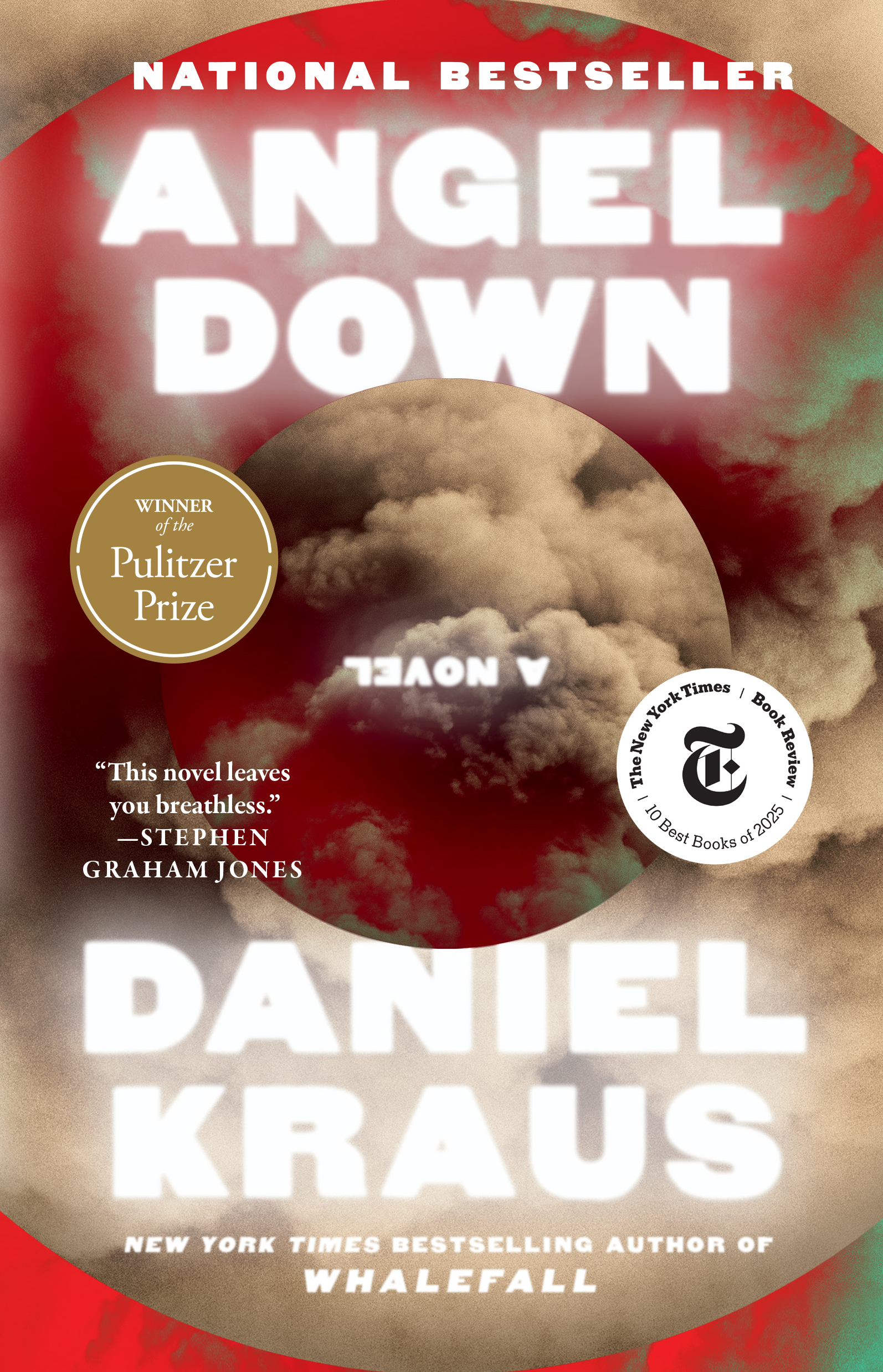
I read Daniel Kraus’s Whale Fall years ago and absolutely loved the story, writing style, and themes, so when I learned of Angel Fall, I immediately bought it. Well, I had to order it because no bookstore near me carried it. But it sat on my bookshelf for months, and when I heard it had just won this year’s Pulitzer Prize, I decided it was now the time to read it. And you know what? My copy has a plethora of sticky tabs and annotations throughout. It’s not a quick read, or at least it wasn’t for me. There were so many profound themes, beautiful phrases, and places in the text that I want to revisit in the future.
The novel is set in France during World War I and follows Cyril Bagger, the son of a bishop whose personality is such that he is somewhat of a con artist, let’s just say he’s not fighting in the war for the sake of freedom. Despite his ideology, or lack thereof, Cyril serves as a Private First Class in the army, with the official duty of a grave digger. Early in the story, Cyril and four other soldiers are sent to investigate mysterious shrieks coming from the trenches because, as they are told, “the army does not leave a man behind” (pg. 41).
When Cyril and Arno, a fourteen-year-old soldier who lied about his age to enlist, attempt to cross No Man’s Land, they discover an angel trapped in barbed wire. They free her and carry her to safety. The angel has a mysterious quality—her radiant appearance is veiled under a cloak, and anyone who sees her perceives their deepest desire: for some, she appears as a missing loved one to others, a path to fortune. The soldiers who accompanied Cyril want to possess the angel for their own gain, but Cyril does not. The angel tells him, “You are the only one to ask nothing of me” (pg. 189).
The novel is a heavy read. Not that it’s sloggy or difficult, but it is very visceral in its depiction of war and prompts the reader to search their own heart for a personal understanding of humanity, especially during a time of conflict. It is also written as a continuous sentence (although I did find punctuation a very few times). In fact, Kraus writes, “like the carnage won’t ever end, it’s a sentence in a book careening without periods, gasping with too many commas, a sentence that, once begun, can’t ever be stopped, a sentence doomed to loop back in on itself to form a terrible black wheel that, sooner or later. Will drag each and every person to their grave” (pg 6). And the writing style does, indeed, create a tone of unending dread with the feeling of horrific monotony. The novel is also rich in symbols: the angel, the novel The Count of Monte Cristo, and the Bible, just to name a few. It is a novel worthy of the Pulitzer as it is a sobering story of not only the physical and psychological horrors of war, but also the potential moral ambiguity that comes with killing for an ideal. It is a discussion of theology, philosophy, morality, politics, and history. It is also, in a way, an examination of conscience…so yes, as I said, it is heavy.
Because of Kraus’s beautiful writing and the thought-provoking themes, Angel Down lingered in my mind for weeks after I finished reading, making it one of my most memorable books of the year thus far.
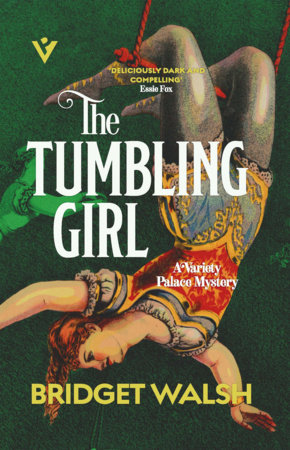
I love a good Victorian mystery. Minnie Ward and Albert Easterbrook are the protagonists. Minnie is a writer at the Palace, a circus-like playhouse featuring magic, acrobats, songs, and animal acts. One day, Rose, a “tumbling girl” and headline performer, disappears. Soon, it becomes clear she was brutally murdered, yet the police insist it is suicide, dismissing her as a woman of “questionable” reputation. Certain Rose would never kill herself; Minnie and Rose’s mother, Ada, hire former policeman-turned-private investigator Albert Easterbrook to prove it was not suicide.
As the plot progresses, we get drawn into the world of private men’s clubs, corrupt politicians, and a string of “Stanhopes” (I had to look it up) that possess clues to the crime. We also learn that young women are anxious about walking alone because of the notorious “hairpin” killer who has yet to be apprehended.
I really enjoyed Minnie, a modern woman during suppression. Her bravery, intelligence, and humour make her an engaging protagonist. I also love her interactions with Mr. Easterhouse—could there be a spark?
The novel introduces several suspects. Even though Rose’s killer becomes somewhat obvious midway, there is a twist I didn’t anticipate.
Absolutely a cozy mystery to add to your TBR list. To my delight, it’s designed as a series, so I can revisit Minnie and Albert in future installments.
Thank you, Pushkin Press and Netgalley, for the copy.
by Chole Michelle Howarth

I love any novel set in Ireland. I often thought of myself as part Irish, but according to Ancestry, I’m only 2% Irish…give or take 10%. Nevertheless, I have a love for the people, the country and the culture. That said, I naturally gravitated to Sunburn when a copy became available.
The novel starts “ Now is the time between birth and slaughter. Another Summer has arrived. I spend my days waiting for something to happen. Something glorious, even something tragic. Nothing ever happens.” (pg 1). Now, if it doesn’t exactly capture every teenager’s mindset at the beginning of summer, I don’t know what does.
Sunburn takes place approximately 30 years ago in the small Irish town of Crossmore. Lucy is our main protagonist, a young girl struggling with her identity, and she comments, “Recently I have really wanted to figure out who I am” (Howarth). This novel is about Lucy figuring out who she is. what her heart wants, what her family and friends expect from her, and what society expects from her. She has a best friend, Martin, a neighbour with whom she grew up, and the unspoken expectation that their friendship will turn into something romantic. In fact, Lucy is beginning to notice that Martin’s interest in her is shifting from mere camaraderie to something more romantic. In the meantime, Lucy finds herself drawn to her classmate Susanna, an attraction that confuses her and complicates her life, as she is at a time when she must make life-altering decisions. Will she stay and live a life with what is familiar, her town, her friends and family, making a life for herself similar to her mother? Or will she follow her heart, which means leaving the life she has lived thus far?
Howarth is masterful at capturing the mindset of a teenager experiencing not merely teenage angst, but the struggle to acknowledge the truth behind her identity.
Howarth’s prose is absolutely beautiful and thought-provoking. Some examples: “ I can’t stand being on the outside of what everyone else is feeling.”Sometimes knowing someone for a long time is the only reason you’d be friends with them. It isn’t much of a bond, and still it is unbreakable” “ Even at my small age, I understood that there were limits to love, and I felt sure that one day people would run out of love for me,” Lucy loves Martin in her own way he “makes her feel grounded” and this line absolutely broke me “ when he leaves, I watch from the back door as he disappears down the garden, out into the dark road, taking the last of today’s goodness with him.”
A beautiful novel with a discussion-generating plot and themes, all wrapped in beautiful prose.
A perfect novel to use in High School classrooms, either as a mentor text showing the effectiveness of character voice and the impact of first-person narrative, or as an independent novel study.
Thank you to Melville House and Netgalley for the copy.
by Laura Purcell
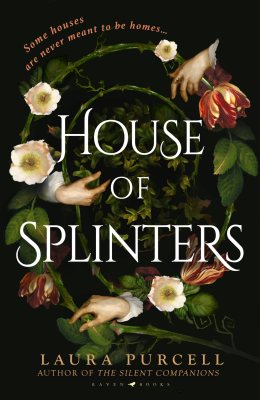
Laura Purcell is one of my favourite authors when it comes to Gothic Victorian literature. I am always riveted by her storytelling; it is incredibly atmospheric with regard to the creep factor. House of Splinters is a prequel to her acclaimed “The Silent Companions”. Truth be told, I enjoyed House of Splinters a wee bit more.
In this novel, we return to the creepy Bridge estate. After the death of her father-in-law, Belinda and her husband, Wilfred, arrive for the funeral and to claim their inheritance. Soon after their arrival, Belinda encounters one of the silent companions: two-dimensional, life-sized wooden figures that resemble deceased family members and appear unexpectedly throughout the house.
With unsettling memories of her last stay (after the birth of her son Freddie), a very pregnant Belinda is already on edge, so with the appearance of the “silent companions” and Freddie’s peculiar behaviour, Belinda gives birth, almost losing her own life and the life of her baby daughter.
As the novel progresses, Belinda learns of the dark history surrounding the Bridge, including murder and witchcraft. A history that her husband does not want to discuss. However, with the arrival of a brother-in-law, Nathan, whom she knew very little about, and the increasingly disturbing behaviour of her son, and bizarre noises, Belinda begins to wonder if she is losing her mind. Thankfully, she finds comfort in her newly acquainted brother-in-law, who confirms her misgivings about the home.
House of Splinters was everything I was expecting—quick, engaging, and riddled with suspense.
Thank you to Netgalley and Blackstone Publishing for the copy

