Stone Yard Devotional

by Charlotte Wood

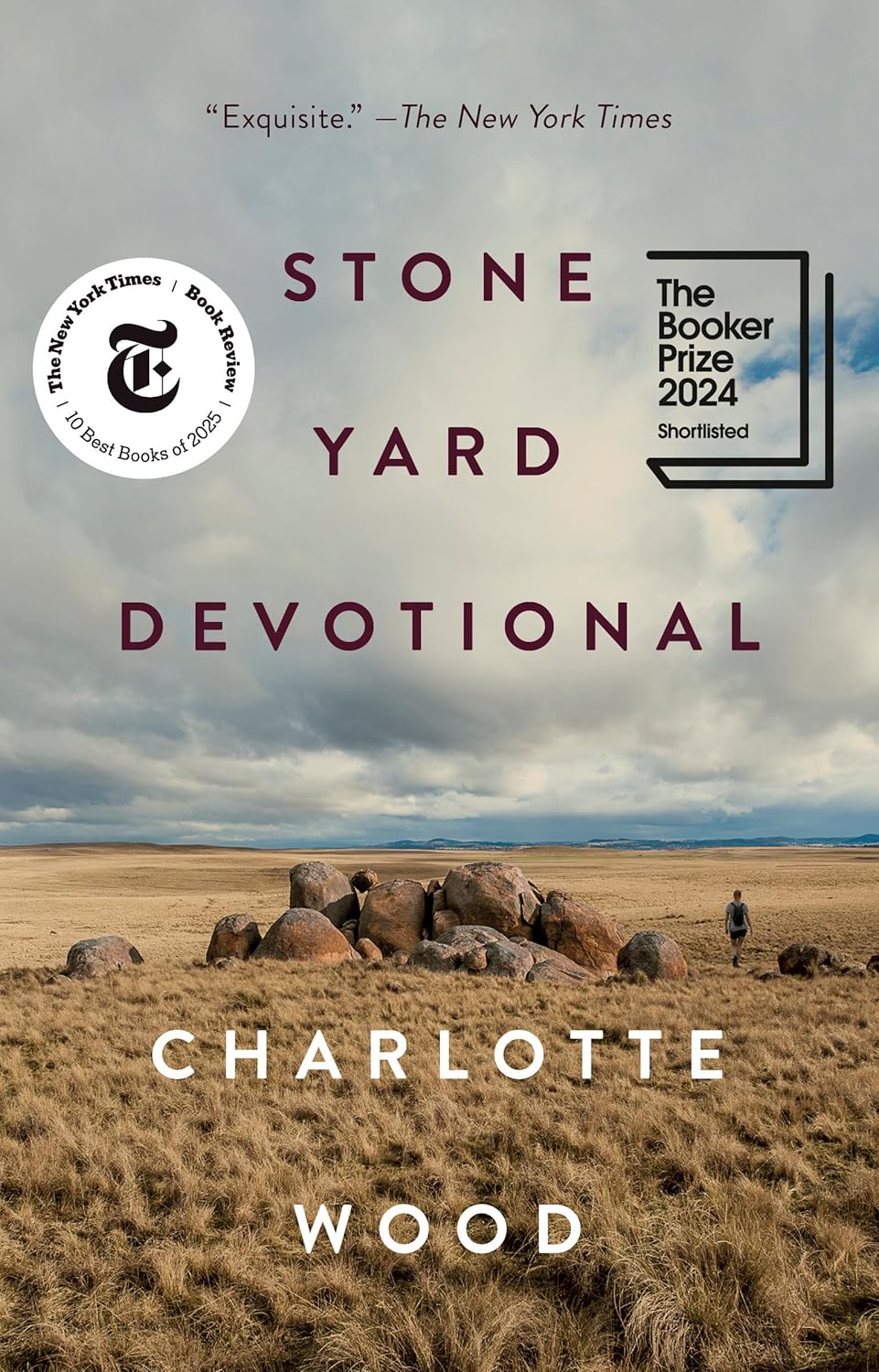
I’m not entirely sure why I picked up Stone Yard Devotional. I think it had something to do with a book podcast I came across, where the host mentioned it was the kind of book you read slowly, pausing to sit with what the words on the page are really trying to say. Not so much the telling of a story, but the meditation surrounding the narrator’s contemplation.

Our narrator walks away from her life running a “Threatened Species Rescue Center,” feeling it is essentially pointless. The world is going to hell in a handcart (my interpretation), and she retreats to a religious community of nuns. Not out of faith, but because “nothing is asked of [her], nothing expected” (pg. 18). From there, she turns inward, revisiting the events she believes shaped the woman she has become. As she settles into convent life, she begins to reflect on her upbringing, and particularly on her complicated relationship with her mother. Then three life-altering events unfold: a plague of mice, described in genuinely horrifying detail as the narrator and the nuns scramble to contain the infestation; the discovery of the remains of a nun who once belonged to their community, whose death appears to involve criminal circumstances; and the arrival of another nun, someone our narrator has crossed paths with before.

This is a deeply human novel. The examination of our narrator’s inner life is genuine, frustrating, and at times confusing, but through it all, it is rooted entirely in her truth.

Charlotte Wood’s writing is simple yet beautiful. There were several moments where I had to stop and just sit with her prose. For example: “Crossing the grass I made a clean track of footprints, deep green on the white spread of the lawn. It returned me to my childhood, to the sense of secret authority, imprinting one’s presence into a place with those clear, sharp prints. I exist” (pg. 39).

And: “I’m used to it now, the waiting. An incomplete, unhurried emergence of understanding, sitting with questions that are sometimes never answered” (pg. 69). The discussions you could spark from contemplating either of those passages alone would be well worth the read.

Stone Yard Devotional is a novel that can be finished in a relatively short time, yet its complexity and themes run deep. That combination of accessible length with rich, layered content makes it an ideal pick for book clubs and high school independent novel studies alike.

Bone of my Bone

by Johanna van Veen

Johanna Van Veen has quickly become one of my favourite authors, so when the opportunity to review her newest novel, Bone of My Bone, landed in my lap, I absolutely jumped out of my skin. An image that is more appropriate than you might think.

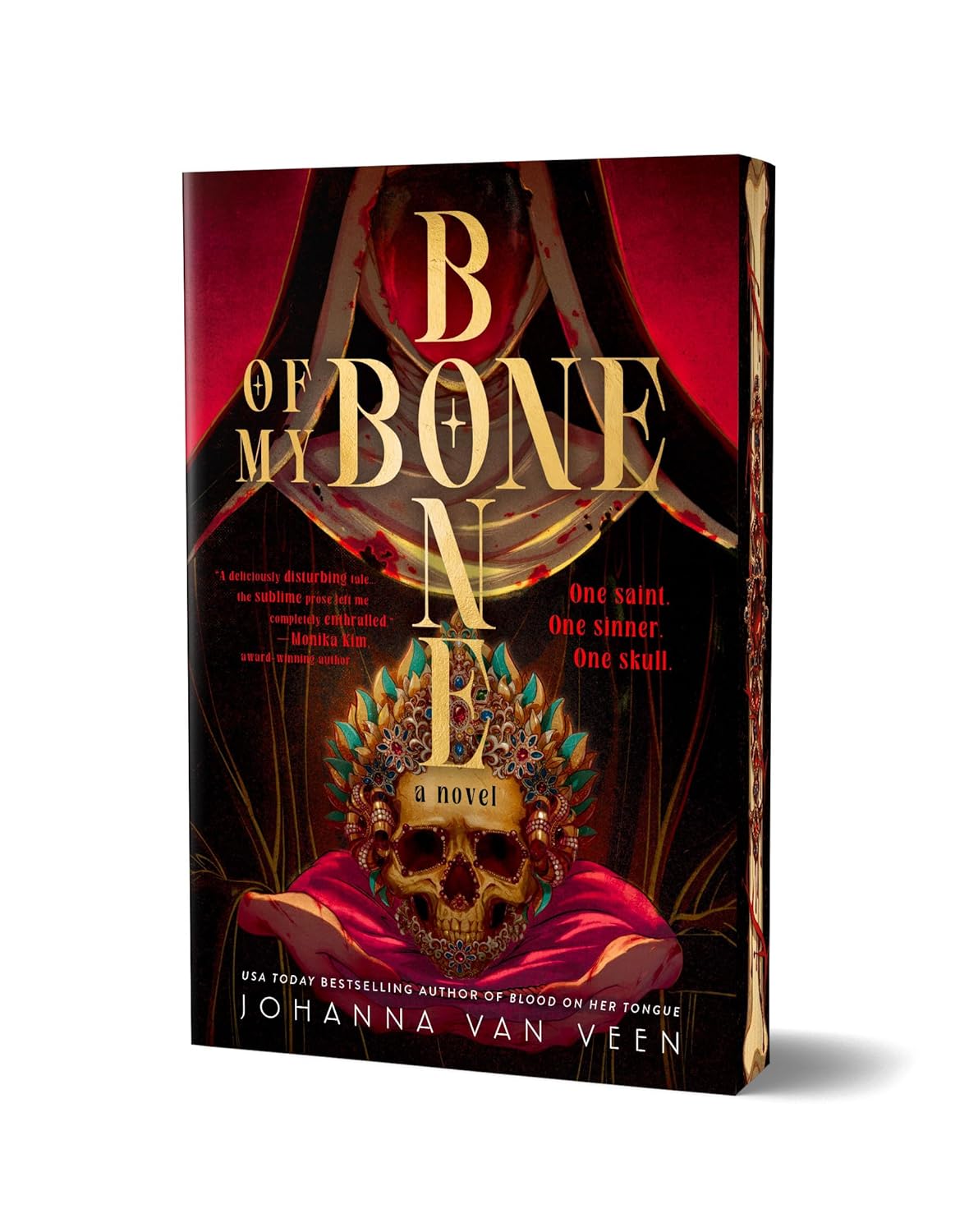
Bone of My Bone follows two women thrown together by the chaos of war. Sister Ursula is a young nun who has fled her convent to escape an invading horde of soldiers, carrying with her a tremendous weight of guilt for having abandoned her fellow sisters. Elsebeth is a brave, scrappy peasant girl who is running from the very same army. Their paths cross at a pivotal moment: just as Sister Ursula is about to be violated, Elsebeth steps in and saves her. From there, the two decide to travel together, and it isn’t long before their journey takes a fateful turn.

Along the way, they encounter a dying man in possession of something extraordinary: a holy relic, the skull of a saint. Legend holds that if the skull is reunited with the rest of the saint’s remains, the one who does so will be granted a wish. Naturally, Ursula and Elsebeth take the skull and set off to do exactly that, though each woman is driven by her own deeply personal reasons. Standing in their way is a necromancer who is stalking them across the countryside, desperate to claim the relic for himself.

This novel is such an entertaining read. It weaves together elements of German folklore, atmospheric dread, body horror, and a genuinely lovely love story. Van Veen’s writing is both gruesome and vivid, in description and in theme. She doesn’t shy away from the inhumanity of war, the selfishness of those who wage it, and the particular brutality that women are subjected to in the midst of it. And yet, through all of that darkness, something tender takes root. The romance between Ursula and Elsebeth is soft and authentic, and it earns every moment.

Set in Bavaria during the Thirty Years’ War, this one is an absolute must read if you love sapphic romances, folk horror, and stories that don’t flinch from the ugliness of history while still finding beauty within it.

Thank you to Poisoned Pen Press and NetGalley for the copy.

The Midnight Train

By Matt Haig

The second book in the Midnight World series

If you liked The Midnight Library, you will like The Midnight Train.

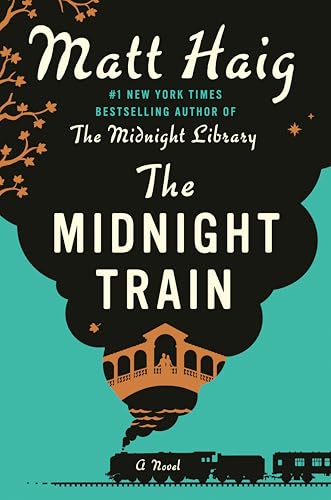
Eighty-one-year-old Wilber Budd has just finished his piano lesson when he receives a phone call from his past. Maggie, the love of his life, his ex-wife, whom he hasn’t spoken to in years, a lifetime really. She called because she had dreamed of him, after all these years, and just wanted to hear his voice. Wilber is filled with joy, though his joy is tinged with guilt. After the call, Wilber finds the last letter his wife wrote him, which ends with: “I love you, Wilber, but I am also leaving you. I don’t know where the past hides, but I will meet you there.” He feels responsible for the dissolution of their marriage, and he has missed Maggie tremendously. Wilber then has what we believe to be a heart attack.

When he “dies,” he finds himself on a train with a lady from his past. Mrs Agnes Deborah Amaryllis Bagdale of Bagdale’s Bookshop, where Wilber used to visit as a child. Agnes is Wilber’s spirit guide of sorts, there to guide him through his life. The train will stop at various points in Wilber’s life, where he must get off and relive pivotal moments that shaped him into the man he was when he died. But there are rules Wilber must follow on this journey: he must get off the train, he must not be seen or interact with his younger self, and he must not be there when his “past” self falls asleep.

As Wilber journeys through his memories, the urge to break the rules grows stronger. Each forgotten moment tugs at his heart, wishful for a chance to rewrite the past, especially his story with Maggie. Readers are swept into Wilber’s struggle, feeling the raw ache of longing and the bittersweet weight of choices. We, too, are compelled to reflect on our own regrets and treasured moments.

This novel is an inviting, heartfelt read, gentle yet stirring. Matt Haig’s writing wraps the reader in warmth, exploring the quiet beauty and pain of love, regret, and the persistence of hope amid personal loss.

Thank you to HarperCollins and NetGalley for the copy.

Sibylline

by Melissa De La Cruz

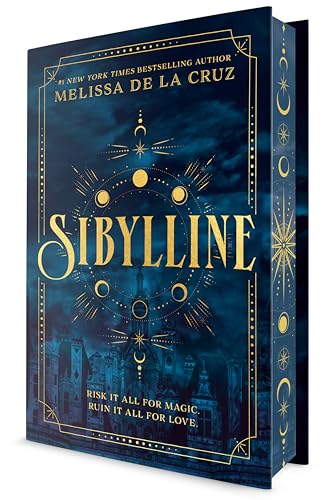
Sibylline is an “Ivy League” school of magic, yes, think Hogwarts, except instead of getting a letter in the mail granting admission, potential students must apply, and if they aren’t children of alumni, their chances of admittance are minuscule.

Raven, Atticus, and Dorian are close friends who all share the dream of studying at Sibylinne, where they’d access ancient grimoires, renowned professors, and abundant spell-making resources. Yet, they’re denied admission, which is confusing, given their magical talents.

Although profoundly disappointed, the trio will not be deterred and decide to gain access to the college the only way they can: by applying for employment as research assistants, associate librarians, and archivists… jobs that would take time away from study if they were students. 

Soon, the friends discover that there is more to the school than they anticipated; some dark force is working to destroy the literal foundation of the school. And to compound this danger, students are mysteriously disappearing and dying.

Raven, Atticus, and Dorian work together to learn as much as they can about magic in general to strengthen their gifts and ultimately discover the dark force threatening the institution’s existence.

Now take this premise and add the complication of romance. Raven is in love with Atticus, Atticus is in love with Dorian, and Dorian is in love with Raven…. Talk about the Bermuda of all love triangles. There are glimmers of “spice” and one VERY “spicy” scene.

This novel was enjoyable during my drive to the mountains. The plot is straightforward, and the characters are uncomplicated. While the premise shows promise, it isn’t fully realized. However, the story and characters kept my interest until the end, making it time well spent. I am interested in reading the next Sibylline book when it is published.

Thank you to Penguin Young Readers and Netgalley for the copy

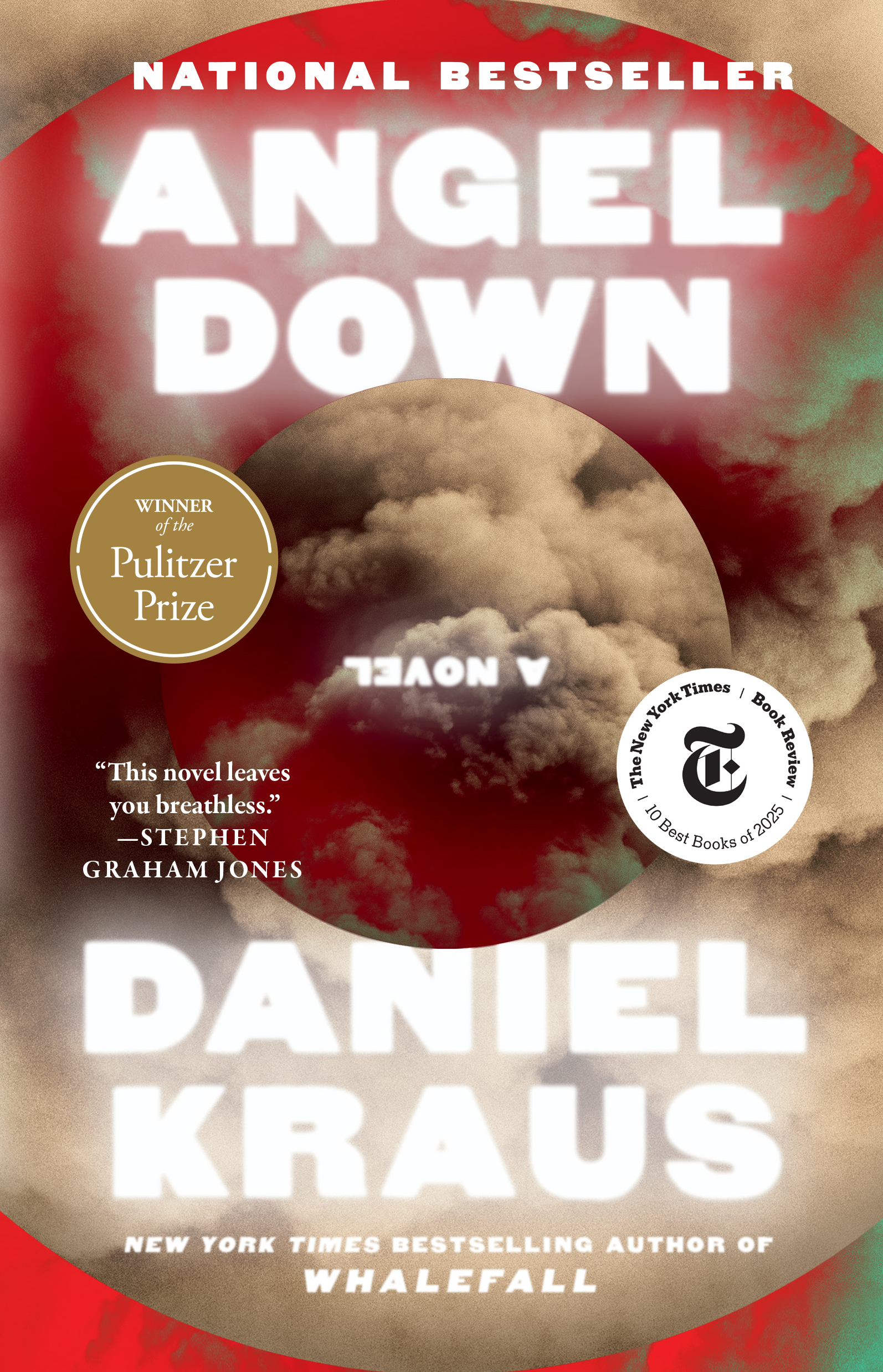
Angel Down

by Daniel Kraus

I read Daniel Kraus’s Whale Fall years ago and absolutely loved the story, writing style, and themes, so when I learned of Angel Fall, I immediately bought it. Well, I had to order it because no bookstore near me carried it. But it sat on my bookshelf for months, and when I heard it had just won this year’s Pulitzer Prize, I decided it was now the time to read it. And you know what? My copy has a plethora of sticky tabs and annotations throughout. It’s not a quick read, or at least it wasn’t for me. There were so many profound themes, beautiful phrases, and places in the text that I want to revisit in the future.

The novel is set in France during World War I and follows Cyril Bagger, the son of a bishop whose personality is such that he is somewhat of  a con artist, let’s just say he’s not fighting in the war for the sake of freedom. Despite his ideology, or lack thereof, Cyril serves as a Private First Class in the army, with the official duty of a grave digger. Early in the story, Cyril and four other soldiers are sent to investigate mysterious shrieks coming from the trenches because, as they are told, “the army does not leave a man behind” (pg. 41).

When Cyril and Arno, a fourteen-year-old soldier who lied about his age to enlist, attempt to cross No Man’s Land, they discover an angel trapped in barbed wire. They free her and carry her to safety. The angel has a mysterious quality—her radiant appearance is veiled under a cloak, and anyone who sees her perceives their deepest desire: for some, she appears as a missing loved one to others,  a path to fortune. The soldiers who accompanied Cyril want to possess the angel for their own gain, but Cyril does not. The angel tells him, “You are the only one to ask nothing of me” (pg. 189).

The novel is a heavy read. Not that it’s sloggy or difficult, but it is very visceral in its depiction of war and prompts the reader to search their own heart for a personal understanding of humanity, especially during a time of conflict. It is also written as a continuous sentence (although I did find punctuation a very few times). In fact, Kraus writes, “like the carnage won’t ever end, it’s a sentence in a book careening without periods, gasping with too many commas, a sentence that, once begun, can’t ever be stopped, a sentence doomed to loop back in on itself to form a terrible black wheel that, sooner or later. Will drag each and every person to their grave” (pg 6). And the writing style does, indeed, create a tone of unending dread with the feeling of horrific monotony. The novel is also rich in symbols: the angel, the novel The Count of Monte Cristo, and the Bible, just to name a few. It is a novel worthy of the Pulitzer as it is a sobering story of not only the physical and psychological horrors of war, but also the potential moral ambiguity that comes with killing for an ideal. It is a discussion of theology, philosophy, morality, politics, and history. It is also, in a way, an examination of conscience…so yes, as I said, it is heavy. 

Because of Kraus’s beautiful writing and the thought-provoking themes, Angel Down lingered in my mind for weeks after I finished reading, making it one of my most memorable books of the year thus far.

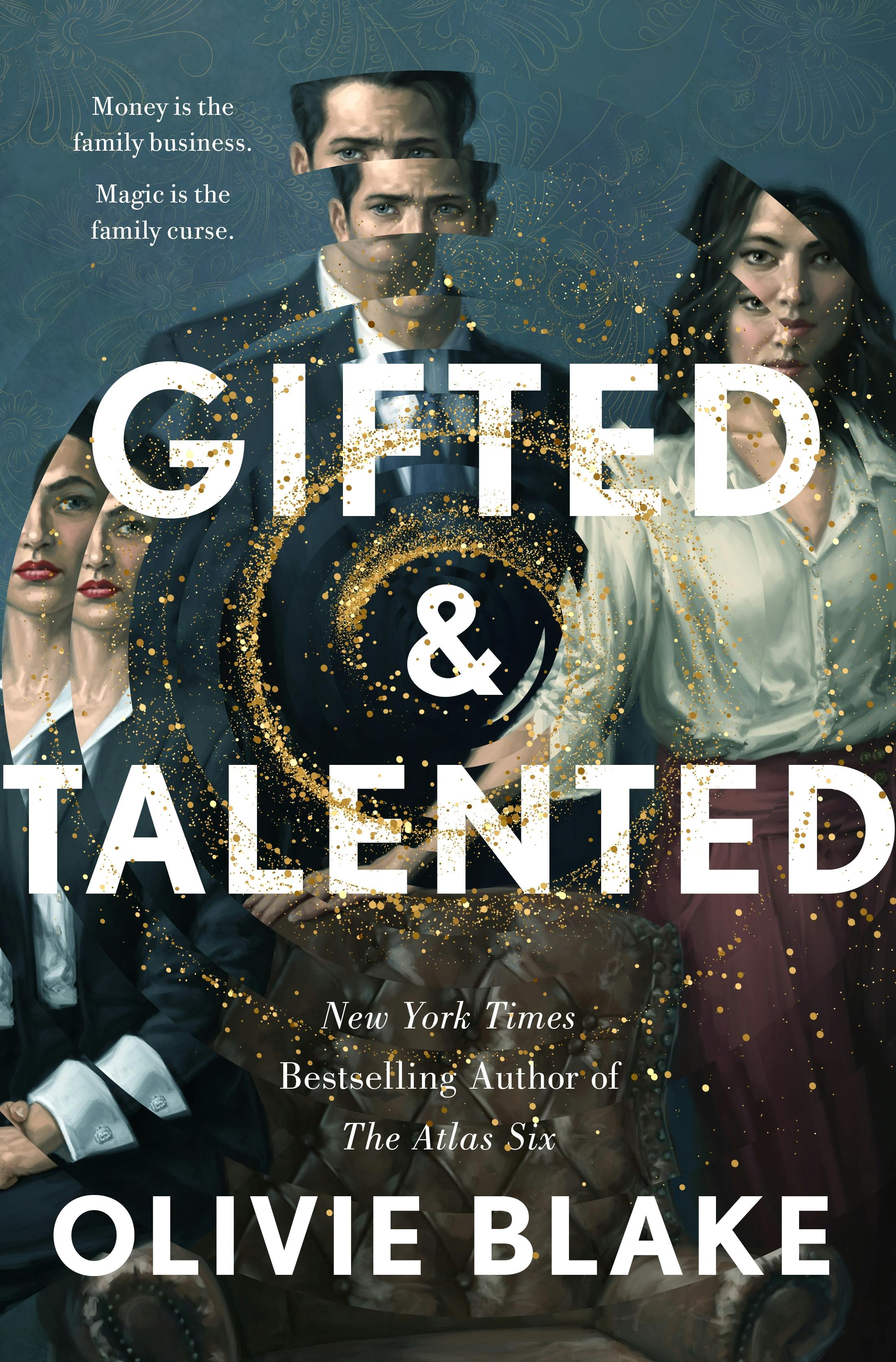
Gifted and Talented

by Olivie Blake

I admire Olive Blake’s writing tremendously. In this novel, she convincingly narrates the story from an omniscient point of view; in fact, her name is Death. So is she really dead? That is the question I kept asking myself as I read until….the other characters began to refer to her, then I knew she was actually a flesh and blood character, or is she? This question of mine makes sense once you start reading the book. Gifted and Talented is a novel about siblings. Actually think of the series Succession, but with heirs who are “telepathically and electrokinetically gifted.”

The novel’s plot is simple: the wealthy founder and CEO of a groundbreaking company dies, and each of his three children (two of whom are all but estranged from him) finds their way back home to discover who has inherited the company. And, of course, each of the adult children comes complete with their own massive set of luggage. Meredith, who always thought she would be the next in line, was somewhat shunned by her father and ended up working for a competitor building and marketing her happiness app “Chirp”; however, her ethics have come into question because her ex-boyfriend has discovered she has been using her “gift” to manipulate buyers into a false sense of happiness. Arthur, the only son, is a washed-up politician who is more of a frat boy than a man of the people. Seemingly kind-hearted but leading a life of debauchery, Arthur really doesn’t want to be a politician, especially because his gift, if unharnessed, would be very difficult to explain to the voters. But the guilt his father put upon him made him. And then there is Eilidh, once a promising ballerina, and closest to her father, the only Wren offspring to work with her father, who doesn’t really know what she wants, especially because her gift, when unleashed, is the most dangerous of them all. Then there is Death, and you will learn all about her as you follow the story.

A very well-written book with the most extraordinary character development. In fact, the book is mostly about character development, their discovery of self, their reckoning with their truth and the possibility of redemption and reconciliation. If you like character-driven books rather than plot-driven ones, you will enjoy this book immensely.

Thank you to Tor Publising and Netgalley for the copy,.

The Tumbling Girl a Variety Palace Mystery #1

I love a good Victorian mystery. Minnie Ward and Albert Easterbrook are the protagonists. Minnie is a writer at the Palace, a circus-like playhouse featuring magic, acrobats, songs, and animal acts. One day, Rose, a “tumbling girl” and headline performer, disappears. Soon, it becomes clear she was brutally murdered, yet the police insist it is suicide, dismissing her as a woman of “questionable” reputation. Certain Rose would never kill herself; Minnie and Rose’s mother, Ada, hire former policeman-turned-private investigator Albert Easterbrook to prove it was not suicide.

As the plot progresses, we get drawn into the world of private men’s clubs, corrupt politicians, and a string of “Stanhopes” (I had to look it up) that possess clues to the crime. We also learn that  young women are anxious about walking alone because of the notorious “hairpin” killer who has yet to be apprehended. 

I really enjoyed Minnie, a modern woman during suppression. Her bravery, intelligence, and humour make her an engaging protagonist. I also love her interactions with Mr. Easterhouse—could there be a spark?

The novel introduces several suspects. Even though Rose’s killer becomes somewhat obvious midway, there is a twist I didn’t anticipate.

Absolutely a cozy mystery to add to your TBR list. To my delight, it’s designed as a series, so I can revisit Minnie and Albert in future installments.

Thank you, Pushkin Press and Netgalley, for the copy.

Sunburn

by Chole Michelle Howarth

I love any novel set in Ireland. I often thought of myself as part Irish, but according to Ancestry, I’m only 2% Irish…give or take 10%. Nevertheless, I have a love for the people, the country and the culture. That said, I naturally gravitated to Sunburn when a copy became available.

The novel starts “ Now is the time between birth and slaughter. Another Summer has arrived. I spend my days waiting for something to happen. Something glorious, even something tragic. Nothing ever happens.” (pg 1). Now, if it doesn’t exactly capture every teenager’s mindset at the beginning of summer, I don’t know what does. 

Sunburn takes place approximately 30 years ago in the small Irish town of Crossmore. Lucy is our main protagonist, a young girl struggling with her identity, and she comments, “Recently I have really wanted to figure out who I am” (Howarth). This novel is about Lucy figuring out who she is.  what her heart wants, what her family and friends expect from her, and what society expects from her. She has a best friend, Martin, a neighbour with whom she grew up, and the unspoken expectation that their friendship will turn into something romantic. In fact, Lucy is beginning to notice that Martin’s interest in her is shifting from mere camaraderie to something more romantic. In the meantime, Lucy finds herself drawn to her classmate Susanna, an attraction that confuses her and complicates her life, as she is at a time when she must make life-altering decisions. Will she stay and live a life with what is familiar, her town, her friends and family, making a life for herself similar to her mother? Or will she follow her heart, which means leaving the life she has lived thus far?

Howarth is masterful at capturing the mindset of a teenager experiencing not merely teenage angst, but the struggle to acknowledge the truth behind her identity. 

Howarth’s prose is absolutely beautiful and thought-provoking. Some examples: “ I can’t stand being on the outside of what everyone else is feeling.”Sometimes knowing someone for a long time is the only reason you’d be friends with them. It isn’t much of a bond, and still it is unbreakable” “ Even at my small age, I understood that there were limits to love, and I felt sure that one day people would run out of love for me,” Lucy loves Martin in her own way he “makes her feel grounded” and this line absolutely broke me “ when he leaves, I watch from the back door as he disappears down the garden, out into the dark road, taking the last of today’s goodness with him.” 

A beautiful novel with a discussion-generating plot and themes, all wrapped in beautiful prose.

A perfect novel to use in High School classrooms, either as a mentor text showing the effectiveness of character voice and the impact of first-person narrative, or as an independent novel study.

Thank you to Melville House and Netgalley for the copy.

The Jellyfish Scientist Maude Delap and Her Mesmerizing Medusas

by Michelle Cusolita Illustrated by Ellen Rooney

In the years 1899 to 1900, Irish Scientist Maude Delap studied the compass Jellyfish. Maude was so thorough in her research she actually traced the jellyfish’s entire lifecycle. This picture book not only has THE MOST charming illustrations of the jellyfish, it also possess illustration of Maude in her laboratory looking through microscopes and her drawing in her lab book.

Maude’s research was so thorough, it serves as a basis for jellyfish research today. 

This book serves as a wonderful addition to any STEM study. I will also serve as an inspiration for any young scientist to muck about in their environment and observe life around them

thank you to Charlesbridge and Netgalley for the copy.

The Correspondent

by Virginia Evans

I absolutely love reading epistolary novels. They make me want to write letters again. Real letters. We live in such an “instant” time where, at the click of a button, we can communicate with no pondering, no pause to clarify our thoughts, no attempt to communicate not just effectively but beautifully.

Years ago, I was lucky enough to read letters my grandfather wrote to  a young woman who would just happen to become my grandmother. They were simple but heartfelt, and I truly felt like I got to know a grandfather I had never met, a man who existed before he was ever a “grandfather” to me. I think we have become a people where, unless we feel we have something important or riveting  to say, we say nothing at all. And yet what we should be doing, what people like my grandfather, did so naturally in the past, is simply share the simplicity of their everyday lives. Little things: the simple goings-on of the day, what you ate for dinner, what books you’re reading, or something as unassuming as the weather.

I lived in Glasgow for a portion of a year, many, many years ago, back when the only internet you could access was at the local internet café where I had pay by the hour. So I wrote letters the old fashioned way to everyone and anyone in my address book: old university friends, my little nieces who were too young to read, previous colleagues, just to tell them about my everyday life living in Scotland. And I received a plethora of mail in return, sometimes twice a day (the Royal Mail was absolutely magnificent). It is a practice I miss deeply. 

All this to say: I absolutely loved The Correspondent.

Our main character is 73-year-old Sybil Van Antwerp, a retired law clerk for a celebrated judge. Sybil has always written letters, first to her best friend Rosalie, whom she met at summer camp as a young girl, and eventually to an ever-growing constellation of recipients: her brother Felix, living in France; her children; her neighbour Mr. Lubeck; various authors she admired, among them Joan Didion and Ann Patchett; a university dean; and others. Her mailing list expands across a lifetime, and we come to understand not only her ritual for letter-writing (she has specific days and times set aside, and spends about an hour crafting each letter, a discipline we learn about through her friendship with a young student who becomes enchanted by the practice) but her motivation as well.

Woven through the novel is something more tender and more sorrowful: through letters, we learn that Sybil is losing her eyesight, and we come to know the heartbreak and tragedy that has quietly shaped her life. And throughout all of her correspondence  Sybil has been writing to someone she never names. In these letters, we meet a different Sybil entirely, unguarded, reflective, sharing her most personal feelings and regrets. These letters are written never to be sent. 

The Correspondent is a beautifully crafted love letter to the art of letter-writing itself. It is also a novel about identity and grief, and the preciousness of relationships and the ways we choose, or fail, to communicate across a life. By the end, I desperately wanted to receive a letter from Sybil myself. It is a quick read, and an easy one to fall into and stay until finished.  

The Reformatory

by Tananarive Due

Set in 1950s Florida, The Reformatory follows twelve-year-old Robbie Stephens, who is sent to the segregated Gracetown School for Boys after defending his sister Gloria from the unwanted advances of Lyle McCormick. But Robbie’s sentencing isn’t just punishment for that act. It’s a trap. His father, Robert Stephens, is a Black man falsely accused of raping a white woman who has fled to Chicago. A union organizer with enemies in powerful places, Robert is being lured back through the incarceration of his own son.

We soon learn that Robbie is spirit sensitive. He sees ghosts, or “haints,” and this gift is both a blessing and a curse. A blessing because he feels the presence of his mother, a comfort that helps him endure the atrocities he faces. A curse because he also sees the ghosts of boys who came before him, those who died violently at the hands of the evil, psychopathic Warden Haddock, by fire, by beating, by every manner of physical and emotional harm imaginable, all desperate to avoid being sent to the “Shed.”

Meanwhile, Gloria is fighting on the outside to secure the legal help her brother desperately needs. Alongside Ms. Lottie, the woman tasked with caring for Robbie and Gloria after the death of their mother and a Warrior Queen if there ever was one, she races to get Robbie released before it’s too late.

The Reformatory is classified as a literary, historical, and horror novel. And while you might assume the horror comes from its supernatural elements, make no mistake. The true horror here is entirely human. It is the vile and calculated evil of those who use their power to torture children and discriminate against people whose skin is a different colour than their own. The ghosts are almost beside the point.

Trigger warnings: physical and sexual abuse, blood and violence.

The Harrowing

by Kristen Kiesling and Rye Hickman

The Harrowing

Kristen Kiesling Rye Hickman

Rowen Sterling is the daughter of worm farmers. You would think worm farming would be a rather mundane, banal job but unfortunately Rowen has had her share of trauma, not only did her mother die a violent death at the hands of another, her father has become distant and, she’s in her senior year of high school and has some important life decisions to make, like what college to attend, and if she is falling in love her her best friend Lucas. And just to compound these stresses, Rowen has been having disturbing dreams of murder and death. One night, Rowen is kidnapped and taken to a facility called Rosewood. Her father is behind her kidnapping and claims it’s for her own good. You see, Rowen is blessed/cursed with a gift; she can predict who will die and who will commit murders just by touching them. The trainers at Rosewood tell her that those with a red aura will commit a crime of passion, and those with a black aura are psychopaths. And that she and the other young people at Rosewood will be trained and tasked with going out into society to determine who is indeed an imminent criminal. Rowen is all for her involvement; her mother, after all, was murdered, and she would like to prevent the same trauma from happening to others. However, it’s not that simple. A load of ethical questions come into play, like how moral is it to imprison someone who hasn’t committed a crime yet? And, what if you sense an aura around someone you love? 

I really enjoyed this graphic novel. Its premise was interesting, albeit a bit confusing at times (parts of the characters’ backstories seem ill-placed). The artwork is wonderful, coloured in white, black, and various shades of grey, with additions of red and pink. Colours and artistry that suit the subject matter very effectively. 

The story is bloody and violent and definitely aimed at 15-18 year olds. 

3 Books by Mona Awad

If you’ve never heard of Mona Awad, I need you to stop what you’re doing and pay attention, because I’m about to send you down a rabbit hole you will not regret.

I’ve only read three of Mona Awad’s works, and all three can be classified as dark academia my favourite genre. Canadian author Mona Awad has quite theimagination. She writes novels that read like fevered dreams, especially for those of us who have a history of viewing ourselves as insecure, anxious, and at times with self-doubt.

My first experience with Awad was her novel All’s Well.  Honestly, I bought,this novel, because I thought the cover was beautiful, and because it was a reference to Shakespeare’s play. Miranda Fitch is a college drama teacher who is bound and determined to produce Shakespeare’s All’s Well That Ends Well, mostly because she wants to relive a time in her life when she was at the height of her acting career, playing the lead role of Helen. Her students, however, are equally bound and determined to perform Macbeth — a play that Miranda holds directly responsible for her debilitating chronic pain. When she meets three strange men at a bar (men who symbolize the three witches of Macbeth) Miranda engages in the most bizarre conversations. Soon after, the physical and emotional pain she carries begins to transfer onto the people she dislikes, and Miranda starts to feel a dark, intoxicating sense of power  at the expense of others.

Now, BunnyBunny is the most wild of novels. Samantha McKey is part of a creative writing cohort at an Ivy League university. The entire story is told from her point of view, but we glean through her narrative (and she is an extremely unreliable narrator) that she is a loner. She views herself as superior to the others in her cohort, referring to them as “the Bunnies.” Soon, however, she is invited to join the Bunnies’ “Smut Salon” — a gathering where they meet to discuss their work. But the Smut Salon goes far beyond discussion. Soon the Bunnies are kidnapping, killing, and conducting all sorts of experiments to create. There are hints woven throughout that Samantha may be mentally ill, and that the world of the Bunnies and the Smut Salon is entirely a creation of her own mind.

​​The sequel to “Bunny:”  “We Love You, Bunny,” made me rethink every interpretation of “Bunny” I ever had. It’s written from the various points of view of the Bunnies themselves …they  finally  get to tell their side of the story. It seems Samantha, our protagonist and narrator from “Bunny”  has written a bestselling novel about, of all things, the Bunnies themselves. And they are not happy. Why? because they are not exactly written in the most flattering light. They kidnap Samantha and tie her up in the same attic where they once held their Smut Salon and conducted their gruesome creative experiments. In fact, the axe is still there — and it’s often picked up like a talking stick by the various narrators.

Where Bunny felt to me like a story about identity, creativity, and what one will sacrifice in order to create both an identity and a piece of art, We Love You, Bunny is more about on the creative process itself. It presents such questions as who owns a piece of art, what constitutes plagiarism, and what makes a creative work credible. Both novels, I believe, require a second reading and a long conversation in order to peel back all the layers

:Mona Awad is not for everyone but if you are someone who loves stories that blur the line between reality and imagination, that make you question everything you think you know about a character, and that stay with you long after you’ve closed the book she just might be exactly for you. I would love to know if any of you have read her work, and what you thought. As always, happy reading.