The Safekeep

by Yael Van Der Wouden

The Safekeep is a novel that explores themes of pain, loss, isolation, identity, and love. Set in the aftermath of World War II, the protagonist, Isabel, leads a life marked by routine and emotional detachment. Although she maintains a relationship with her two brothers—Hendrick, to whom she is close, and Louis, whom she finds irritating—her social circle is limited. Isabel continues to live in her childhood home following her mother’s death, with few connections beyond her aunt, uncle Karel, and Johan, a persistent suitor whom she entertains out of obligation. Her days are consumed by managing the household, particularly through meticulous inventory of its possessions. She fixates on counting the spoons daily to ensure nothing is missing. The house serves as her sanctuary and sole companion, yet it ultimately belongs to her eldest brother, Louis.

Isabel seems cold and rigid. When Louis brings his mistress, Rose, to live at the house for a month while he is away, Isabel is incensed, recoiling from any attempt at friendship from Rose, and especially affronted when Louis says Rose can sleep in their dead mother’s room.

Isabel’s life can be divided into two parts: before Rose and after. Rose becomes the catalyst for various revelations about Isabel’s history, relationships, and sexuality. The novel’s first third focuses on Isabel’s character and her daily routines, illustrating her lonely existence and posing the question of whether it is by choice. The second third explores Rose through her journal entries, as read by Isabel, while the last third examines the consequences of decisions made and the insights gained about oneself and others.

The novel is skillfully crafted. Its sensual scenes are neither gratuitous nor exploitative, and the unfolding love story is both poignant and ultimately hopeful.

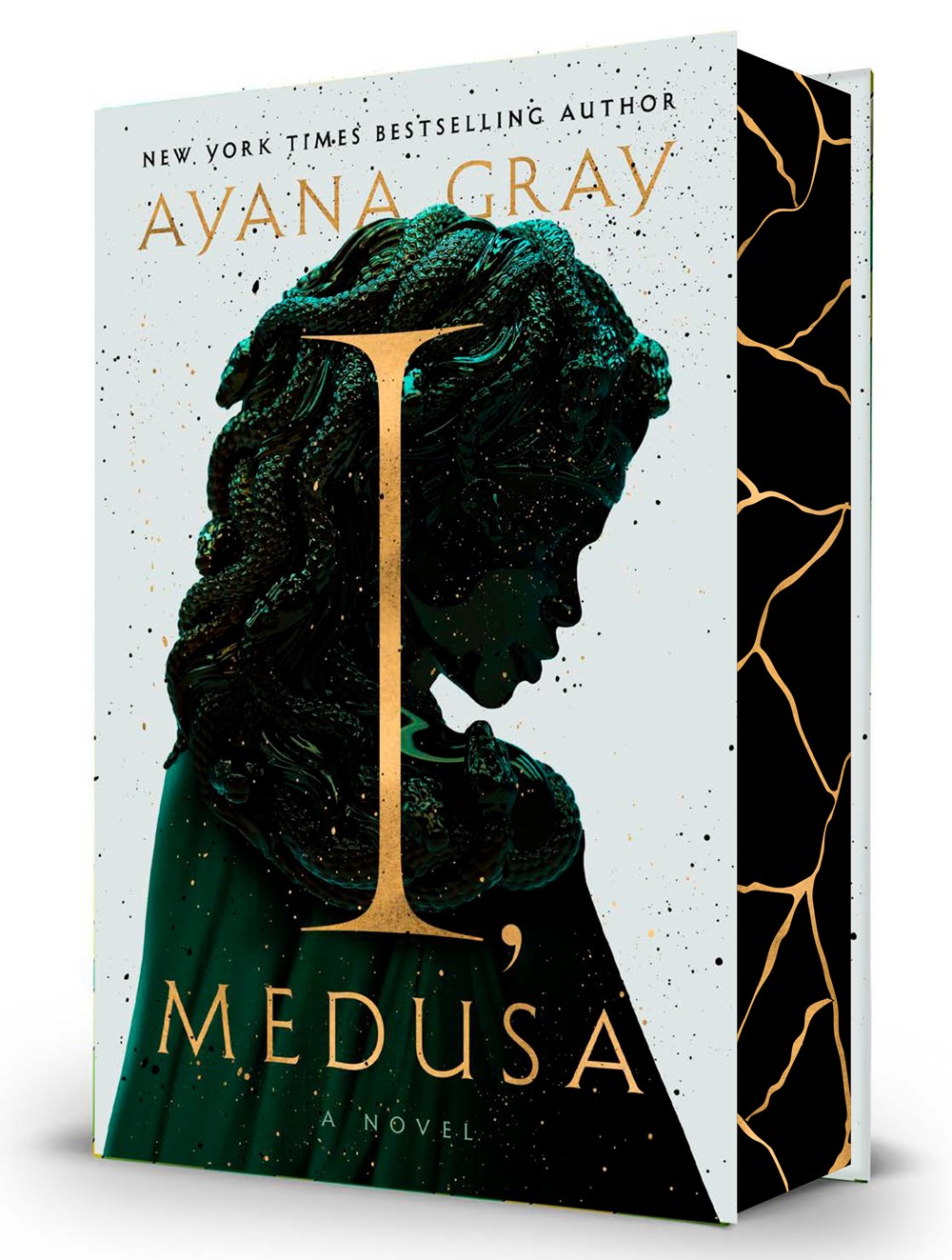
I Medusa

by Ayana Gray

“ He is wealthy and popular…he will not be punished. Meanwhile, the girls here are prey.” (I Medusa).

I Medusa turned out to be an unexpected surprise. The novel unfolds over a year. Medusa, or Meddy, is 17 and preparing with her sisters for a spring feast. Unlike her sisters—Euryale and Stheno, both goddesses—Meddy is mortal. Her parents, gods of the Sea Court but not Olympians, still resent their lesser status. Meddy feels powerless compared to her family but possesses intellect, courage, and a strong sense of justice. She is sensitive to injustices in the court, including discrimination and mistreatment of women and children. These qualities attract Athena, who invites Medusa to be her acolyte in Athens, where, as myth suggests, chaos soon follows.

Ayana Grey does an incredible job in humanising Medusa as a 17-year-old girl. From her infatuation with Posidon and her inability to recognise the fact that he is grooming her for his own sexual conquest (she is constantly making excuses for his behaviour, attempting to convince herself that he sees her as special and that his love for her is different from the “love” he has for his wife, Amphitrite, or his mistresses). In fact, we, the readers, can’t help but yell at her in her naivety… However, her way of thinking seems very age-appropriate.

Medusa is characterized as a young woman we can’t help but love, even though her choices frustrate us. Gray reminds us of her age and that her choices stem from her parents’ poor upbringing—for example, she has no idea what sex is and is confused by her body’s response to seeing Poseidon with a sea nymph during her spring feast. She is often ruled by her heart rather than her mind. Her pursuit of justice turns violent, first with her fists, then with the power her curse gives her.

*spoiler warning*

I was so brokenhearted at the end, even though it was no surprise. Meddy goes to sleep with hope and optimism in her heart. Dreaming of her future where she can use her curse in a way to benefit others, just to meet her demise before the sun rises. We get to know Meddy intimately; she is characterised as an empathetic, sweet young woman, even after she is cursed. She is a victim of those in power, not a monstrous villain as most myths portray her.

Ayana Grey uses her narrative to discuss the nature of rape culture and the issue of men in power getting away with exploiting young women … two issues that we are facing today. It would make an amazing book club pick or novel for study, as it offers a plethora of points of discussion.

Thank you to Random House and Netgalley for the copy

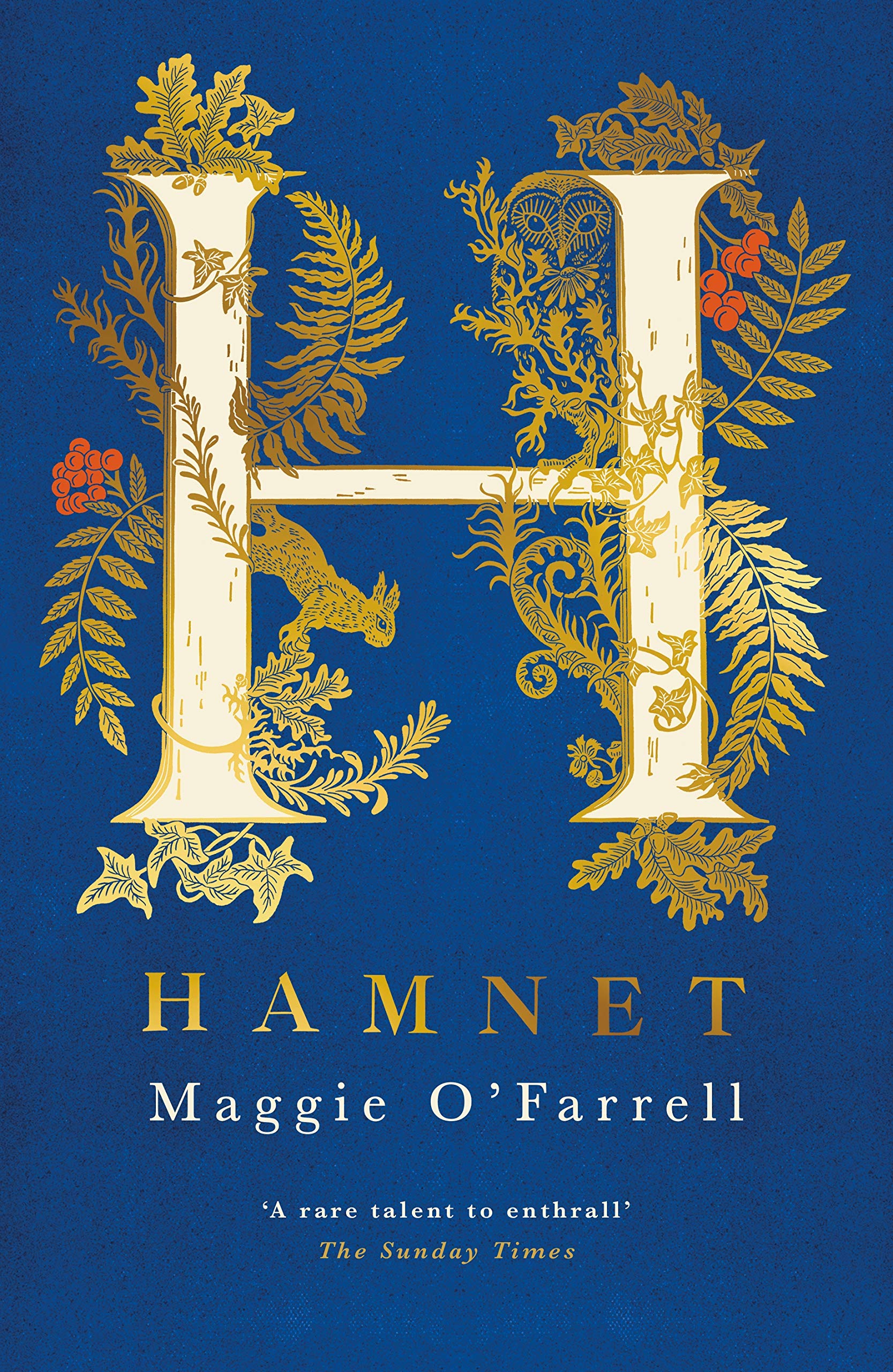
Hamnet

by Maggie O’Farrell

I love Shakespeare and loved teaching his works. When I taught Hamlet, I also explored Shakespeare’s life and the play’s historical background with my students.

Because of this, my review is personal and shaped by my love for Shakespeare and his famous play.

The novel begins as we meet Hamnet, the son of William and Agnes. He is desperately looking for an adult to help his twin sister, Judith, who has suddenly become very ill. We see the story through Hamnet’s eyes—his worry for Judith, his confusion when he can’t find help, and the pain he feels from his grandfather’s abuse.

I loved this book. The main character is Shakespeare’s wife, Agnes. (Shakespeare’s real wife was named Anne, but that detail doesn’t matter here.) Agnes has become one of my favorite female characters in literature. We first meet her as a young girl, witnessing her mother’s traumatic death during childbirth. Her mother was gentle, mystical, and almost otherworldly. Later, we learn about Agnes’s abuse by her stepmother, who always knew that Agnes’s mother was her husband’s true love. Like her mother, Agnes is a healer, a bee whisperer, and sensitive to the spirit world. Because of this, both her stepmother and the townspeople see her as odd and unmarriageable.

But when a young man arrives to tutor her brothers and takes a particular interest in her, she cannot help but recognize that beneath him, his hidden mind and a soul that is unlike any she’s known.

Spoiler alert!

We find out that poor little Judith has the plague, and Agnes uses every bit of learning she has gleaned over the years to cure her child. In the meantime, William, who is off with his players entertaining audiences with his plays, is sent. The attention is focused on Judith; all the while, we should be concerned about young Hamnet. Young Hamlet is the sweetest son/brother, selfless, smart, and incredibly brave. We, the readers, are indeed heartbroken over his death. 

The novel then explores the grief of Agnes and William. Agnes’s deep heartbreak stands out, especially since we have followed her life so closely throughout the story.

I am bewitched by O’Farrell’s writing. Its lyrical style is enchanting and impactful. She brilliantly varies timelines and various character points of view to keep the reader mesmerized with the story and empathetic towards her characters. 

I would definitely use this novel as a mentor text and as a literary study for my students.

Wild Reverence

by Rebecca Ross

Wild Reverence is a slow-burning Romantacy story. For most of the book, we are schooled in a world of Gods, Goddesses, and Mortals. We have the Immortals of the Under Realm and the Immortals of the Skyward Realm, and poor Matilda’s parentage includes both… which leaves a young girl struggling with a sense of identity and belonging. When tragedy occurs in her Under Realm home, she is forced to leave and find solace in Skyward, but will she be accepted? 

In the meantime, Matilda has met the boy of her dreams, Vincent, the only problem is she can only meet him in his dreams, oh, and he’s a mortal. For a chunk of this novel, Matilda’s and Vincent’s story is secondary; they “grow up,” each finding their place in the world (or, in Matilda’s case, her worlds), and each coming face to face with their newfound powers and the discovery of their weaknesses. Each faces betrayals and moments of weakness, but in these moments, each learns who they truly are and what potential they have to save the ones they love, unless, of course, it is contrary to what the fates allow.

So I’m not a huge fan of Romantacy, and I’ve never read anything by Rebecca Ross. I picked up Divine Rivals once and carried it around the bookstore, but didn’t end up buying it, and I am beginning to rue that day. Not that you need to read the Divine Rival books to fully enjoy Wild Reverence. I really admire Ross’s writing. It is really quite beautiful. Her prose is vivid, and the plot unravels like a movie in my imagination. 

A perfect Christmas read AND a perfect gift for those in your life who are fans of Romantacy. 

Thank you to St Martin’s Press and Netgalley for the copy.

The Forest of Missing Girls

by Nichelle Giraldes

This book is a creepy hybrid where young women go missing and the community comes together to track down their kidnapper, or worse yet a serial killer and a supernatural science fiction novel (I’d reference a novel in particular but then I would be hugely spoiling the plot). 

The novel starts with Lia Gregg returning home to her mother, Elizabeth, and her sister, Evie, to their little house in the woods. Her father is there too, but he seems disengaged from his family and, well, is basically disengaged from the entire plot, to be honest. Lia has experienced a breakup with her boyfriend, and she’s feeling a little lost. Soon after her arrival, Evie and her friend Maddie are hanging out in the backyard when Maddie disappears. Maddie’s disappearance immediately causes concern because, for years now, young girls have been mysteriously disappearing from the area. 

Soon, we, the readers, come across a chapter written from a different point of view. We are suddenly experiencing an alternative plot from the viewpoint of a very confused girl. Could she be Maddie? Could she be another one of the numerous girls who have gone missing? All we know is that she is absolutely clueless about who and where she is. All she knows is that there is this woman named “Mother” who is caring for her.

I was really entertained by this novel. It is a puzzle, and as soon as I started putting together the pieces, when all of a sudden a picture started forming, I couldn’t wait to see what the picture looked like in its entirety. 

I would have a problem with the science-fiction/supernatural element of this novel, but Giraldes skillfully weaves it into her storyline.

A great book to add to your Christmas reading list!!

Thank you to Poisoned Pen Press and Netgalley for the copy.

The Mad Wife

by Megan Church

This novel drew me in and had my attention until I finished reading the final page. Written in first person, we are immersed in the life of Lulu, a housewife living in the 1950s. Lulu was once an aspiring photojournalist, filled with dreams and ambitions of her own. But upon meeting the love of her life,  she puts aside these ambitions for dreams of a new kind. To become a wife to Henry and a mother to
Lulu’s attempt to be the perfect housewife is manifested in her obsession with making the perfect moulded jelly salad. In fact, she becomes known as the neighbourhood queen of moulded food. 
When I first began reading this novel, I inferred that Lulu may be suffering from postpartum depression compounded by the fact that she is again pregnant. Her emotional fragility, compounded by the resurfacing memory and guilt associated with the death of her father and the needs of her disabled brother, Lulu does not seem to be managing.
When a new family moves into the neighbourhood, Lulu becomes obsessed with knowing who they are, especially the wife, Bitsy. Lulu believes Bitsy’s emotionless behaviour is a result of being lobotomised, a practice often conducted in the 50’s to treat “housewife fatigue” and “female hysteria”. 
Lulu’s behaviour soon becomes so erratic that her husband feels like there is no other alternative but to place her in an asylum where she is continuously medicated and prescribed electroshock therapy. Is Lulu truly mad? She is definitely an unreliable narrator, but if you look closely at her words, you can see that they often hold an element of truth. We also learn of a particularly truamatizing event in Lulu’s life that most likely contributed to her break. 
Meagan Church artfully crafts this novel to follow Lulu’s descent into melancholy and paranoia. We experience her fatigue, the weight of unrealistic expectations, her guilt, heartbreak and ultimately her ‘madness’. The novel also serves as a powerful critique of society’s dismissiveness towards female health even today. ‘All you need to do is lose weight. ‘It’s hormonal. Here are some tranquillisers. Let’s shock the sadness and melancholy out of you. ‘Or maybe we should sever the neural tracts in your brain, that should make you docile and happy.’ It’s a stark reminder of the struggles women have faced and continue to face in the realm of mental health.
I was quite captivated by this novel. It is rich with symbolism, character development and theme. And it definitely is a wonderful example of an unreliable narrator.
Thank you to Source books and Netgalley for the copy.

The Book of Kindness

by Egor Klopenko and illustrated by Ksenea Pateleena

I found this book absolutely charming. In fact, I teared up on several occasions while reading it. The book is filled with little stories about kindness. The first story tells of a storyteller (the author) and how he decides to write a book for his small son, but how frustrated he was with the process until he realized “you should only write about what matters most”, and in this case, of course, he must write about kindness.

One story is about kindness personified as a member of the family who goes missing one day and the sadness that ensues. Another is about who is kindest of them all, and makes the case for a little star to be the kindest. One of my favourites is about the “kindwings” that “fly around town whispering kind words to everyone”.

A beautiful book to treasure in any classroom.

Thank you to Egor Klopenko and Netgalley for the copy

The Witch’s Orchard

by Archer Sullivan

The Witch’s Orchard is a propulsive crime novel, with glimmers of Appalachian superstition and “witchyness”. Annie Gore, a private investigator, is approached one day by Max, the brother of a missing girl. Years ago, when Max was just a young boy, three little girls went missing, one of them his sister, and law enforcement has been unsuccessful in finding the kidnapper. Creepily enough, an Applehead doll was left in each of the young girls’ stead. Jessica, Oliva, and Molly and only Olivia was returned. Annie Gore’s investigation leads her to learning more about the people and the folklore of the area. It also leads her to make new friends, so when tragedy strikes again (and again), it hits closer to home when Annie knows the next victim. 

This novel was a perfect summer read for me (I read it in a day!). It immediately captured my interest and held it with its suspenseful plot. The unpredictability of the resolution kept me engaged, making it a perfect choice for anyone who loves a good crime novel!

I will be looking out for more of Archer Sullivan’s books in the future!

riThank you to Netgalley and St. Martin’s Press for the copy.

This Vicious Hunger

by Francesca May

Francesca May

This Vicious Hunger, a Victorian Gothic novel, weaves a unique narrative that resonates with the themes of Grim’s Fairy Tales and Dracula.
Thora Grieve is the daughter of an academic, a man who happens to also be an undertaker. Although Thora is a brilliant young woman herself, she is obliged to marry soon after her father’s death. Fortunately, her husband dies mere months after the wedding, and her mother-in-law informs her that she had kept a secret: an invitation to go to the city and study under the tutelage of an eccentric, renowned botanist who was experimenting with the power and potency of plants.
As a woman, Thora is not allowed to live on campus, so her mentor finds a room for her at the top of an old building with a window that overlooks a beautiful garden. Soon, Thora observes a beautiful woman visiting the garden, tending to the various flowers and trees. Thora is unable to enter the garden because the gate is locked. So she introduces herself to the mysterious woman whose name is Olea. Olea refuses entry to Thora because she claims the plants she tends are extremely toxic and that she herself has developed a tolerance to their poison.
Thor begins to feel an unsettling attraction to Olea and soon craves her company. 
Also, Thora realised that her mentor is importing dangerous plants from exotic countries with nefarious intent.
As the story unfolds, Thora finds herself caught in a web of unfamiliar desires and ambitions. She begins to lose not only control but also seems a victim of her own impulses and desires. The cost of this loss is high-it could mean the sacrifice of scientific discovery, the loss of a one true love, or even the loss of her own self.
Despite the occasional pacing issues, I found This Vicious Hunger to be a compelling read. While some parts felt drawn out, the novel’s narrative kept me engaged throughout.

Thank you to Orbit Books and Netgalley for the copy.

The Red Letter

By Daniel G. Miller

Yay! We are back with Hazel Cho! The brilliant, chaotic private investigator we met in Miller’s “The Orphanage by the Lake”. I love Hazel. I love reading the story from her point of view, where we see her deductive reasoning, logic, and at times paranoid thinking work their way through the intricacies of a case. In the Red Letter, Hazel is asked by her old acquaintance and “friend” attorney Shavali (who, to make things weird, just happens to be the ex of Hazel’s boyfriend Jack to help defend a young man whom she believes is wrongfully accused in the horrific death of a priest.
Hazel refuses the case at first, but the security footage of the violent, gruesome death of Fr. Kenneally triggers her, and she can’t help but conjure images of the trauma she experienced in her first case. However, under pressure from Shavali and Kenny, she agrees, and soon regrets the decision.
Soon, there is another murder, with the victim dying the same way. Another… so obviously, the suspect cannot be the young man sitting in prison. But who could it be?
As the story progresses, the murders become closer and more personal, with Hazel herself fearing for her life and the lives of those she loves.
I liked this book! It is a quick read; however, the plot seemed rushed, allowing for no substantial character development. For example, the death of a key character didn’t really affect me all that much because we didn’t get a chance to get to know them. And I didn’t feel sorrow for the heartache experienced by those suffering the loss. Additionally, at times, it seemed there were numerous opportunities for the author to build suspense, but the action was rushed through too quickly.
I like Miller’s writing. I like Hazel. I will be reading more of Hazel Cho’s adventures.

Party of Liars

by Kelsey Cox

If you want a REALLY good “whodunit”, Party of Liars is a perfect fit. Almost like a game of Clue, we have a collection of characters all gathered under the same roof to celebrate Sophie’s 16th birthday. Sophie is the daughter of Ethan, a handsome and charismatic psychiatrist, and stepdaughter to Dani, a former social influencer who is now Ethan’s wife and mother to their baby daughter, Charlotte. All live in the notorious mansion on the hill, a place that stood empty for years because of its dark past but now fully renovated (including the removal of an entire facade to be replaced by glass to replicate a real-life dollhouse.

Poor Dani is having a difficult time, with postpartum depression mixed with a bit of loneliness, she is being to see things, things like the form of a woman in white who hides behind curtains and skulks in the bushes, and most disturbing she is beginning to hear things….like the cry of a baby, a baby that isn’t hers.

Dani isn’t the only one with “issues”. We also meet an assortment of other characters who all seem to be dealing with unresolved anger and bitterness, or a delusional sense of justice. 

The evening of the birthday party, a death occurs. Someone plummets from a balcony to the stone steps below. Who is this person? Was it an accidental death? Was it a murder?

Cox writes her novel in a series of chapters, each written from the point of view of a different character. Dani, Ethan, the superstitious nanny Orlaith, Ethan’s ex-wife Kim, Mikayla, a friend of Sophie’s, could all be the victim or the suspect. 

I enjoyed this novel immensely. I especially enjoyed the distinct voice each character brings to their specific chapter. Cox also writes in such a way that it took me a while to determine my suspect (and I’m pretty good at predicting within the first third of a novel…but not this one!!!). Most of the novel takes place over the day, from the pre-party to the party and ultimately the post-party, with flashbacks embedded to build character and motive.

Kelsey Cox is a skilful mystery writer. Her character building, plot construction, and proficiency in creating atmosphere and suspense make this a perfect summer read and one I would recommend to my High School students.

Salt on Her Tongue

By C.S. Porter

Why didn’t I know about C.S. Porter?  Salt on Her Tongue is the second instalment of the Kes Morris File series, and now I am desperate to read the first, Beneath Her Skin. 
Kes Morris is a homicide detective who was put on leave in the previous book (I am not aware of the specifics behind this leave, but it doesn’t significantly impact my enjoyment of this novel, as I was still able to fully appreciate it without reading the first book.) In this book, her new captain calls her to work on a missing person’s case (as a favour to him). Kes is a little put out, her speciality after all is murder, not missing persons. But she is told she must, so she does. This case takes to to a small village in the Bay of Fundy where our missing girl was last seen. And although the girl’s boyfriend is distraught over her disappearance, the locals believe she left on her own until a witness claims to have seen her talking to a man. Soon, what starts as a missing person’s case ends up as a murder case, and Kes is bound and determined to find the killer. The twist is, could the murder be the missing girl? Additionally, the villages seem somewhat secretive, not entirely forthcoming with any information, so could they be responsible? 
I really enjoyed the character of Kes and her problem-solving strategies. She is a strong, intelligent, socially savvy policewoman who independently (except for her IT friend Chester) resolves mysteries and murders on her own.
The novel’s fast-paced plot and interesting characters make this a perfect summer read.
After reading Salt on Her Tongue, I can’t wait to dive into the first book, Beneath Her Skin, and eagerly anticipate the release of the third novel in the Kes Morris Files.

Thank you to Netgalley and Nimbus press for the copy.

We Do Not Part

by Han Kang

The only other novel I’ve read by Han Kang was The Vegetarian, and I knew then that Kang was an author like no other. Using lyrical, poetic language rife with symbolism and metaphor, Kang takes deep political and historical issues and persuades us to think deeply about the human condition. The plot of  We Do Not Part is quite simple; our main character, Kyungha, receives an urgent text from her friend Inseon. Insean has suffered an injury and is being treated in a hospital in Seoul. Inseon tasks Kyungha to go to her home on Jeju Island to care for her bird, which has lost its mate and cannot live longer than a few days in isolation. 
Getting to Jeju Island is quite a task in and of itself; not only does Kyungha suffer debilitating migraines, but she now has to deal with incredibly unreliable remote transportation, blizzards, and hunger. Also, Jeju Island isn’t an island; it has a traumatic history where a massacre of tens of thousands of islanders had been slaughtered by anti-communist troops. This novel weaves from reality to surrealism, a ghost story, a psychological study, and a discovery of self.
This novel would make an amazing novel study for high school students. Not only would it serve as a mentor text, but it would also serve as a master class in writing. The themes it possesses would make for deep and meaningful class discussions.
Look at this beautifully descriptive quote: 
“Snow falls. On my forehead and cheeks. On my upper lip, the groove above it. It is not cold. It is only as heavy as feathers, as the finest tip of a paintbrush. Has my skin frozen over? Is my face covered in snow as it would be if I were dead? But my eyelids must not have grown cold. Only the snowflakes clinging to them are.”

Thank you to Random House and Netgalley for the copy.