This is a sad, frustrating, yet compassionate story. In this book, is the main villain (I was going to write "antagonist", but villain is more appropriate) is alcohol that seduces and creates monstrous behaviour sympathetic characters.
Although Agnes seems to be the main character, this is Shuggie's story. He is our anti-hero. For most of the story, Shuggie is a child trying to survive the hardships of poverty in Glasgow without an adult's guidance to help. It is Shuggie who has to take care of his alcoholic mother once his father abandons the family for another woman.
Agnes is both beautiful and ugly. She leaves her first husband, "The Catholic", the father of her first two children, to marry a taxi driver by the name of Hugh Bain and soon after gives birth to Shuggie.
I felt NO sympathy for Agnes for most of the book; I thought it was her vanity more than her addiction that led to her make the stupid, selfish decisions that jeopardized her life and the life of her children…until I came across this quote "She loved [Hugh], and he had needed to break her completely to leave her for good. Agnes Bain was too rare a thing to let someone else love. It would do to leave pieces of her for another man to collect and repair later." To me, the cruelty and selfishness of Hugh outweighed Agnes's weakness.
Like I mentioned earlier, though, this is Shuggie's story. His heartbreak over his mother, his father's treatment, and his confusion about his sexuality make him a genuinely sympathetic character.
I thought about Shuggie long after I finished reading.
Tag: #goodbooks
The Pull of the Stars by Emma Donoghue
“…that’s what influenza means, she said. Influenza delle stelle- the influence of the stars. Medieval Italians thought the illness proved that the havens were governing their fates, that people were quite literally star-crossed.” (pg 147).
The Pull of the Stars is a novel that takes place over 3 days in a “Maternity/Fever” ward at St. Lukes hospital in Dublin, Ireland. It’s 1918, and the Spanish flu has grabbed hold of the country, leaving death and sorrow.
Our main character is Julia Power, the lone nurse on the ward tending to incredibly sick women who are about to give birth. Thankfully Julia is joined by Birdie Sweeney, a volunteer who, although incredibly naive about how the human body functions, is brave and tireless and a quick study who proves her usefulness.
The story centres around three patients who will eventually give birth while suffering from the ravages of influenza. True to life, each delivery is be different, resulting in different outcomes for both mother and child.
As if by some miracle, Julia and Birdie are eventually guided by Dr Kathleen Lynn, a member of the Irish Citizen Army wanted by the police.
Dr Lynn is my favourite character. We only get glimmers of her back story, but I was mesmerized by her words and actions. She was brave, confident and ultimately, a woman who knows who she was and what she stood for and, interestedly enough based on a REAL Dr. Lynn who practiced medicine in Ireland.
Be warned that the author does not hold back when describing complicated childbirth and other traumatic medical procedures. It is a gory story.
The Pull of the Stars is a bloody read with strong female characters…my favourite kind of book.
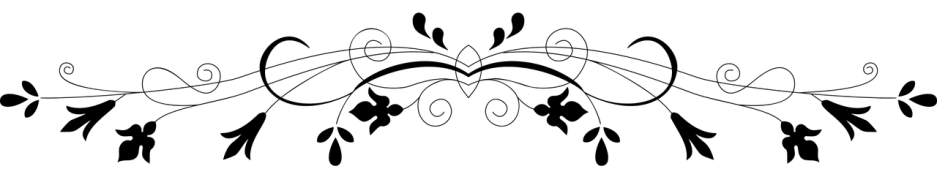
The Midnight Library by Matt Haig

Ok, I’ve read a lot lately about Matt Haig’s books. I’ve meant to increase my exposure to speculative fiction, and Haig’s books seem as good a place to start. If you look on Goodreads, almost all of his books have a 4+ star rating (not that Goodreads ratings matter. Ok, Goodreads reviews may gently nudge me towards a title or two). Haig’s premises to me, seem deeply philosophical, and I love books that make me think. So I finally picked up one of his titles, his newest The Midnight Library. And yes, it did make me think.
Our anti-hero Nora has had a REALLY bad day. Her cat died, she lost her job, and no one is responding to her texts. So Nora decides to die. No, I did not just spoil the plot…the first sentence literally says so.
Because of a choice she makes, Nora finds herself in the Midnight Library, a sort of purgatorial holding place where she is forced to consult a “book of regrets” and then choose from books that hold all the choices she could have made in life. Once she opens a “book of choice” she is transported to that life where she experiences what “could have been”.
I don’t know about you, but I’ve often thought about “what could have been if I’d only…”
Which undoubtedly is a wasteful use of time. This novel reminds me of this waste. I really appreciated the slow and steady character growth Nora exhibits. An example is her view of loneliness. On page 5 Nora states “all though she’d studied enough existential philosophy to believe loneliness was a fundamental part of being human in an essentially meaningless universe”, but by page 120 this view has changed to “amid pure nature solitude took on a different character. It became in itself a kind of connection. A connection between herself and the world. Between her and herself.” Loneliness vs solitude. HUGE paradigm shift. One, we all must make at least once in our life. I’m not going to tell you Nora’s perception of “loneliness” at the end of the book, but you can probably surmise what it will be.
Even though this book is philosophical, it is extremely accessible. It was a perfect “deep” read during a time in our history where I find reading deeply difficult.
It’s a good book! Read it!