
by Rachel Hochhauser
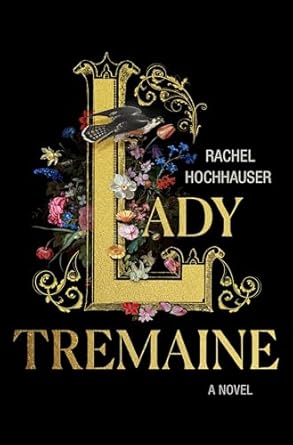
Thank you to Netgalley and St. Martin’s Press for the copy.
I both listened to and read this novel.
Lady Tremaine is more than just a twist on the Cinderella story. It’s a feminist retelling of a tale many of us grew up with, where a beautiful girl loses her parents and is mistreated by her stepmother and stepsisters. In this version, Hochhauser focuses on Lady Tremaine, whose full name is Ethedreda Verity Isolde Tremaine Bramlay. The story opens with Lady Tremaine hunting with her peregrine falcon. After her second husband’s death, she tries to keep up the appearance of wealth so her two daughters and stepdaughter have a chance to marry well and secure their futures in a society that limits women’s options. Ethel, as she’s called in the novel, understands the risks her daughters face as unmarried women. The book then goes back to her youth, when she met her first love, Henry, who introduced her to falconry and became her closest friend. As the daughter of a successful brewer, Ethel’s family has some standing, but they aren’t considered true equals by the upper class. Henry isn’t the eldest son in his family, so their marriage doesn’t cause much attention.
When Henry dies suddenly, Ethel’s father-in-law tries to marry off her two young daughters, who are only seven and eight, to avoid paying for their care. To protect them from becoming child brides, Ethel looks for a second husband and meets Lord Bramley, who is Elin’s (Cinderella’s) father. Like in the original fairytale, this marriage is short-lived, and Ethel is left widowed and without money. She stays at the estate but struggles to maintain it. With her daughters and two loyal servants, Ethel works hard to keep things going, while Elin stays in her room, preparing for marriage and living a sheltered life.
As per the fairytale, the court soon holds a ball so that the prince can meet a young marriageable woman. The ball presents the perfect opportunity for Ethel to prepare her daughters for a union that will secure all of their futures…however, the prince and his family aren’t all they appear to be. Will Ethel find a way to secure her daughters’ safety and future, or will she inadvertently expose them to the exploitation that exists within families of political power and wealth?
I really enjoyed this novel. A fairytale, voiced by a middle-aged woman, telling of her experiences, the wisdom gleaned from them, and the ferocity with which she makes the decisions she does to provide a better life for her daughters. She is a courageous character who becomes heroic rather than villainous.
I loved reading and listening to this novel. Written in first-person point of view, the narrator, Bessie Carter, is wonderful at embodying Ethel’s character and at varying the voices of secondary characters.
I would definitely introduce this novel into my High School Classroom as an independent choice for a novel study or small group study.
You can buy Lady Tremaine the beginning of March.
Thank you to Negalley and St. Martin’s Press and Macmillan Audio for the copies.

 Ink And Spine