
The Midnight Train

By Matt Haig

The second book in the Midnight World series
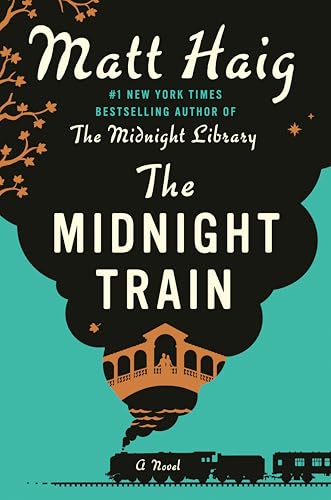
If you liked The Midnight Library, you will like The Midnight Train.

Eighty-one-year-old Wilber Budd has just finished his piano lesson when he receives a phone call from his past. Maggie, the love of his life, his ex-wife, whom he hasn’t spoken to in years, a lifetime really. She called because she had dreamed of him, after all these years, and just wanted to hear his voice. Wilber is filled with joy, though his joy is tinged with guilt. After the call, Wilber finds the last letter his wife wrote him, which ends with: “I love you, Wilber, but I am also leaving you. I don’t know where the past hides, but I will meet you there.” He feels responsible for the dissolution of their marriage, and he has missed Maggie tremendously. Wilber then has what we believe to be a heart attack.

When he “dies,” he finds himself on a train with a lady from his past. Mrs Agnes Deborah Amaryllis Bagdale of Bagdale’s Bookshop, where Wilber used to visit as a child. Agnes is Wilber’s spirit guide of sorts, there to guide him through his life. The train will stop at various points in Wilber’s life, where he must get off and relive pivotal moments that shaped him into the man he was when he died. But there are rules Wilber must follow on this journey: he must get off the train, he must not be seen or interact with his younger self, and he must not be there when his “past” self falls asleep.

As Wilber journeys through his memories, the urge to break the rules grows stronger. Each forgotten moment tugs at his heart, wishful for a chance to rewrite the past, especially his story with Maggie. Readers are swept into Wilber’s struggle, feeling the raw ache of longing and the bittersweet weight of choices. We, too, are compelled to reflect on our own regrets and treasured moments.

This novel is an inviting, heartfelt read, gentle yet stirring. Matt Haig’s writing wraps the reader in warmth, exploring the quiet beauty and pain of love, regret, and the persistence of hope amid personal loss.

Thank you to HarperCollins and NetGalley for the copy.
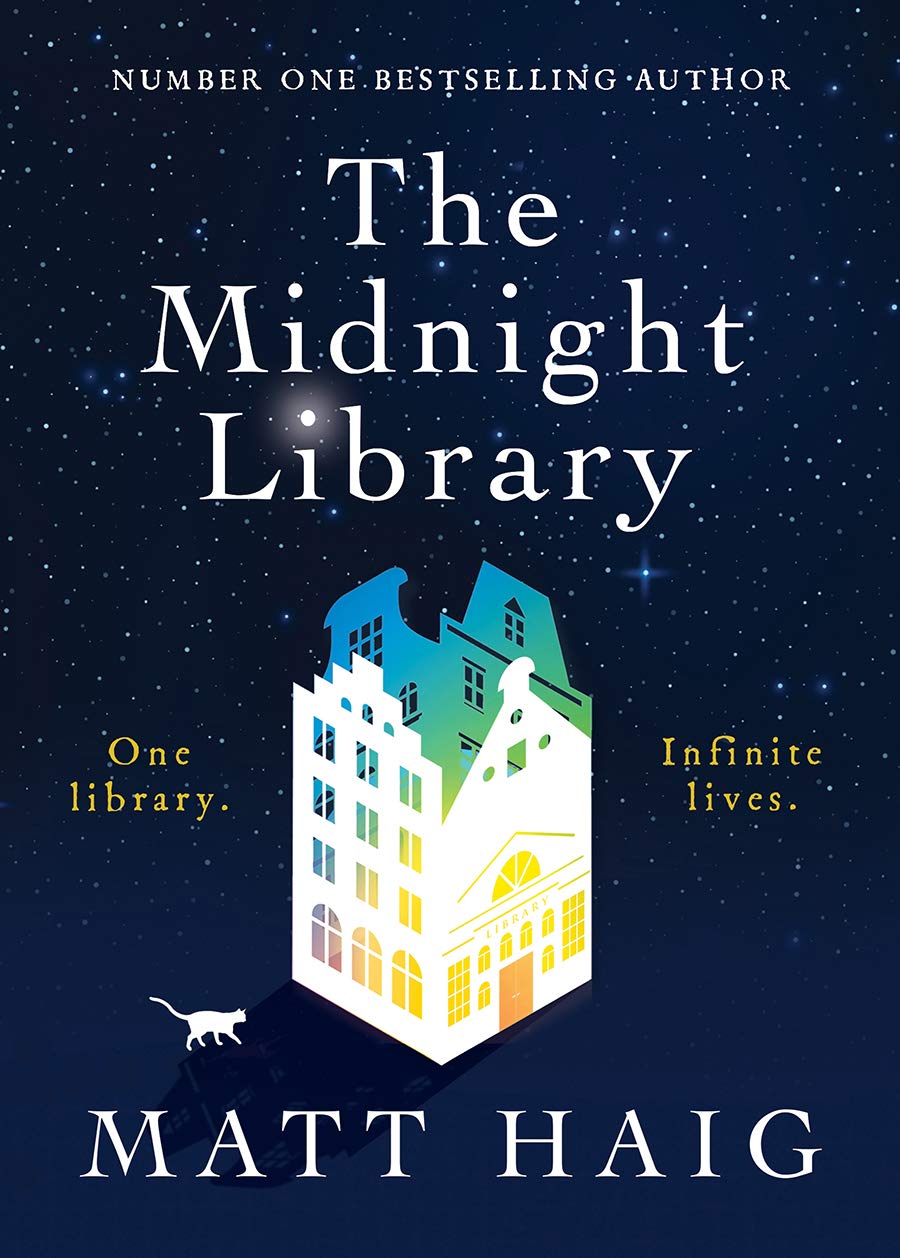
The Midnight Library by Matt Haig

Ok, I’ve read a lot lately about Matt Haig’s books. I’ve meant to increase my exposure to speculative fiction, and Haig’s books seem as good a place to start. If you look on Goodreads, almost all of his books have a 4+ star rating (not that Goodreads ratings matter. Ok, Goodreads reviews may gently nudge me towards a title or two). Haig’s premises to me, seem deeply philosophical, and I love books that make me think. So I finally picked up one of his titles, his newest The Midnight Library. And yes, it did make me think.
Our anti-hero Nora has had a REALLY bad day. Her cat died, she lost her job, and no one is responding to her texts. So Nora decides to die. No, I did not just spoil the plot…the first sentence literally says so.
Because of a choice she makes, Nora finds herself in the Midnight Library, a sort of purgatorial holding place where she is forced to consult a “book of regrets” and then choose from books that hold all the choices she could have made in life. Once she opens a “book of choice” she is transported to that life where she experiences what “could have been”.
I don’t know about you, but I’ve often thought about “what could have been if I’d only…”
Which undoubtedly is a wasteful use of time. This novel reminds me of this waste. I really appreciated the slow and steady character growth Nora exhibits. An example is her view of loneliness. On page 5 Nora states “all though she’d studied enough existential philosophy to believe loneliness was a fundamental part of being human in an essentially meaningless universe”, but by page 120 this view has changed to “amid pure nature solitude took on a different character. It became in itself a kind of connection. A connection between herself and the world. Between her and herself.” Loneliness vs solitude. HUGE paradigm shift. One, we all must make at least once in our life. I’m not going to tell you Nora’s perception of “loneliness” at the end of the book, but you can probably surmise what it will be.
Even though this book is philosophical, it is extremely accessible. It was a perfect “deep” read during a time in our history where I find reading deeply difficult.
It’s a good book! Read it!