
By Matt Haig
The second book in the Midnight World series
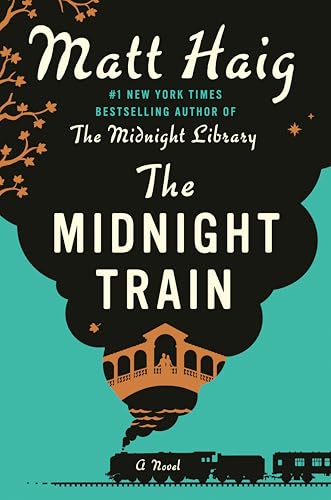
If you liked The Midnight Library, you will like The Midnight Train.
Eighty-one-year-old Wilber Budd has just finished his piano lesson when he receives a phone call from his past. Maggie, the love of his life, his ex-wife, whom he hasn’t spoken to in years, a lifetime really. She called because she had dreamed of him, after all these years, and just wanted to hear his voice. Wilber is filled with joy, though his joy is tinged with guilt. After the call, Wilber finds the last letter his wife wrote him, which ends with: “I love you, Wilber, but I am also leaving you. I don’t know where the past hides, but I will meet you there.” He feels responsible for the dissolution of their marriage, and he has missed Maggie tremendously. Wilber then has what we believe to be a heart attack.
When he “dies,” he finds himself on a train with a lady from his past. Mrs Agnes Deborah Amaryllis Bagdale of Bagdale’s Bookshop, where Wilber used to visit as a child. Agnes is Wilber’s spirit guide of sorts, there to guide him through his life. The train will stop at various points in Wilber’s life, where he must get off and relive pivotal moments that shaped him into the man he was when he died. But there are rules Wilber must follow on this journey: he must get off the train, he must not be seen or interact with his younger self, and he must not be there when his “past” self falls asleep.
As Wilber journeys through his memories, the urge to break the rules grows stronger. Each forgotten moment tugs at his heart, wishful for a chance to rewrite the past, especially his story with Maggie. Readers are swept into Wilber’s struggle, feeling the raw ache of longing and the bittersweet weight of choices. We, too, are compelled to reflect on our own regrets and treasured moments.
This novel is an inviting, heartfelt read, gentle yet stirring. Matt Haig’s writing wraps the reader in warmth, exploring the quiet beauty and pain of love, regret, and the persistence of hope amid personal loss.
Thank you to HarperCollins and NetGalley for the copy.

