
Fox

by Joyce Carol Oats

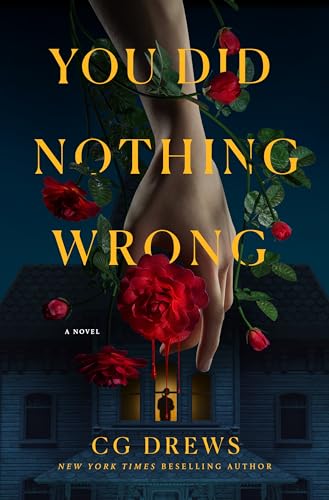
It took me a while to read this novel. Because of its VERY heavy subject matter, I had to take a good, long break between reading sessions. Not because it wasn’t incredibly engaging, but because I couldn’t sit with the incredibly “icky” feeling that would sit and grow in the pit of my stomach, but then again, most of Joyce Carol Oats’ writing makes me feel unsettled. She does not tiptoe around issues and immerses her readers in this psychological web of disturbed characters.

Everyone loves Mr Fox. He is a romantic, dashing English teacher who recites poetry. All the adolescent girls in his class adore him, and each feels especially special if chosen for his “Looking Glass Bookclub.” However, as his name implies, Mr Fox is a sexual predator who preys on his students. He is selective with the students for his club: they must be pretty and come from wealthy, powerful families.

One morning, a damaged car is found stuck in a bog. Inside is the mutilated body of Mr Fox. 

Who could have killed him? Was it the Headmistress who had a crush and discovered his secret? Or a parent, seeking revenge for their daughter’s trauma? The detective faces many suspects.

As the story progresses, more secrets are revealed, revealing a dark side of human nature. 

Oats mostly writes in the first person, placing us in the minds of various characters, including Mr Fox. Spending time inside the mind of a serial paedophile is incredibly taxing, so reader beware.

This novel explores class, exploitation, secrets, lies, and half-truths. Every character is deeply flawed. It’s hard to find any redeeming qualities among them.

Even though Joyce Carol Oates often writes on difficult topics, she is one of my favourite authors. Her talent with prose (she shows rather than tells) snares the reader until the end, when she releases you, unsettled.

Obvious trigger warnings for child sexual abuse. 

Thank you to Netgalley and Random House for the copy.

The Mad Wife

by Megan Church

This novel drew me in and had my attention until I finished reading the final page. Written in first person, we are immersed in the life of Lulu, a housewife living in the 1950s. Lulu was once an aspiring photojournalist, filled with dreams and ambitions of her own. But upon meeting the love of her life,  she puts aside these ambitions for dreams of a new kind. To become a wife to Henry and a mother to
Lulu’s attempt to be the perfect housewife is manifested in her obsession with making the perfect moulded jelly salad. In fact, she becomes known as the neighbourhood queen of moulded food. 
When I first began reading this novel, I inferred that Lulu may be suffering from postpartum depression compounded by the fact that she is again pregnant. Her emotional fragility, compounded by the resurfacing memory and guilt associated with the death of her father and the needs of her disabled brother, Lulu does not seem to be managing.
When a new family moves into the neighbourhood, Lulu becomes obsessed with knowing who they are, especially the wife, Bitsy. Lulu believes Bitsy’s emotionless behaviour is a result of being lobotomised, a practice often conducted in the 50’s to treat “housewife fatigue” and “female hysteria”. 
Lulu’s behaviour soon becomes so erratic that her husband feels like there is no other alternative but to place her in an asylum where she is continuously medicated and prescribed electroshock therapy. Is Lulu truly mad? She is definitely an unreliable narrator, but if you look closely at her words, you can see that they often hold an element of truth. We also learn of a particularly truamatizing event in Lulu’s life that most likely contributed to her break. 
Meagan Church artfully crafts this novel to follow Lulu’s descent into melancholy and paranoia. We experience her fatigue, the weight of unrealistic expectations, her guilt, heartbreak and ultimately her ‘madness’. The novel also serves as a powerful critique of society’s dismissiveness towards female health even today. ‘All you need to do is lose weight. ‘It’s hormonal. Here are some tranquillisers. Let’s shock the sadness and melancholy out of you. ‘Or maybe we should sever the neural tracts in your brain, that should make you docile and happy.’ It’s a stark reminder of the struggles women have faced and continue to face in the realm of mental health.
I was quite captivated by this novel. It is rich with symbolism, character development and theme. And it definitely is a wonderful example of an unreliable narrator.
Thank you to Source books and Netgalley for the copy.

Sweet Fury

by Sarah Bischoff

I REALLY enjoyed this book. It was the soap-operatic suspenseful novel I needed to get me out of a minor reading slump. Told from various points of view, the reader soon realizes they cannot trust any narrator.

Lila Crayne is beautiful and brilliant. She is THE most sought-after actress of the moment. She has everything she could have ever wished for: beauty, fame, a handsome famous actor as a fiance and now the role of a lifetime. Lila and her husband are producing a feminist version of F. Scott Fitzgerald’s “Tender is the Night” (a rendition I would love to read in real life). For Lila to fully envelope her character, she seeks therapy under the care of Johna Gabriel, who coincidentally has an infatuation with F. Scott Fitzgerald. The story is told in the third person narrative with chapters in first person under the guise of Jonah’s private patient notes on Lila and Lila’s journal. Soon, forbidden attractions occur, secrets are revealed, and half-truths are believed, culminating in a shocking act of violence. 

I enjoyed this novel’s pace, plot, and finding very few characters with redeeming characteristics. Now, I want to go out and read Fitzgerald’s Tender is the Night.

Thank you to Netgalley and Simon and Schuster for the free copy

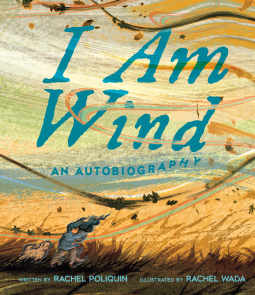
I Am Wind: An Autobiography

written by Rachel Poliquin illustrated by Rachel Wada

This book is BEAUTIFUL. Poetry, science, culture, folklore, history artwork. This book is a perfect example of how to use a multitude of genres to teach a concept.  A quintessential hybrid text. 

First of all, Wind is personified. It is the main character of the text. Wind tells us their story through poetry:” I Am Wind/I whistle. I howl/I’ll steal your hat, your house, your kitten, your kite/ I whisper whisper whisper secrets in the leaves…I am the Great Rushing in All Directions” (Poliquin). Wind is portrayed as a beautiful, gentle friend and destructive enemy. 

Wind also tells us their story through history with little “Wind Chronicles,” which describe types of winds in various cultures and record historical events of destruction and peril caused by tornados and storms.

Wind also charmingly tells of its characteristics directly (as if in an extended character sketch): how it is created, the types of wind forces, how man has harnessed Wind for its own uses (sailing, wind farms), how it is perceived in mythology, and its multitude of names in various cultures.

Throughout all of this wonderful poetry, prose, and information are the most beautiful paintings in the most vibrant colours. A multitude of lessons could be created from the artwork alone.

For educators and families with young children, I am Wind: An Autobiography is a delightful addition to your library. It’s not just informative; it’s engaging and absolutely beautiful. This book will captivate your little ones, making learning a fun and interactive experience.

…oh and the book creators live in British Columbia so we’ve got some Canadian content AND indigenous content (this always makes me happy).
I will be recommending this book to every teacher I know!

I will definitely be recommending this book to every teacher I know!!

You will be able to own this book November 5, 2024

Thank you to NetGalley and Penguin Random House for the free copy.

Pretty Ugly

David Sederis and Ian Falconer

This picture book is fantastic in so many ways. First, it’s funny and a wee bit gross. Second, it has a multitude of universal themes, so it doesn’t matter how old you are when you read it; you GET it. This book would be an amazing text to use when introducing Socratic discussion of the subjectivity of “beauty.” Fourthly (yes, FOURTHLY!!!), it makes THE most effective text to teach writing in any grade.

In his picture book “Pretty Ugly”, David Sedaris shows us that looks are irrelevant to the depth of familial love. When Anna made ugly faces so often that one permanently stuck, she tried everything, including visiting a doctor to change her appearance to what it was before, but to no avail. Her family tries to assure her that “beauty is on the inside” and that they love her very much. Pondering her family’s words, she reaches inside and turns herself inside out, ultimately making herself more beautiful than before.

This book is concise and perfect for teaching how to summarize. It also lends itself nicely to personal and persuasive writing.  For example, an introductory paragraph for a persuasive essay for junior high could be:

“Beauty is in the eye of the Beholder” is a phrase we have heard so often it has become trite. How can we internalize the authenticity of this statement? Why picture books, of course. In the picture book “Pretty Ugly”, David Sedaris shows us that familial love renders looks irrelevant.

So, if you’re looking for an exemplar to teach summarizing, paragraph writing, or persuasive writing, this book is perfect.

Or, if you want to read a picture book that will make you think while you giggle, “Pretty Ugly” is perfect.

….oh, I just realized you could also use the title to teach oxymorons.

Thank you Netgalley and Astra Books for the free digital copy.

From Another Planet

Some days I feel temporary.


Like I’m just a visitor from another planet. Just here until the Mother Ship comes and takes me home.
And I think, “I have so much to do in such a small amount of time”. Spending more time making a list of all the important things that need to be done before I go.
Just to lose the list.


Or a holographic image. Seeming lifelike and tangible from a distance, but the closer you get, you see the fragility of my existence.
An image without substance.


On other days I feel sturdy and rooted and permanent. Absorbing information. Dendrites growing. Emitting my learning and my expertise. Building something of importance. Strong and sturdy for those who need to use me for support or for reference, or for ingenuity. Creating stories, strengthening relationships.
Contributing more than just carbon dioxide.


Neither feeling upsets or confuses me. I merely note the incongruity between the two and wonder what I will feel tomorrow and if anyone ever feels the same.


But most days, I feel as though I just think too much about how I feel.
And I’m tempted to be “sexist” and blame it on my gender.
Or “Freudian” and blame it on my upbringing.
Or “Catholic” and blame it on an examination of conscience.


And I realize that there is no one or nothing to blame.