The Dark Library

by Mary Anne Evans

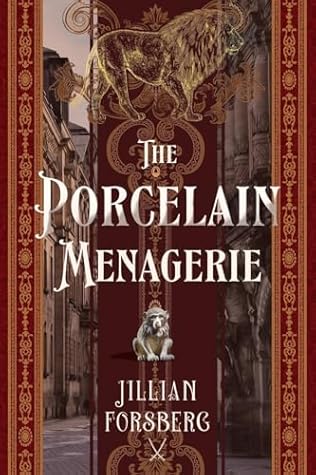
Don’t you absolutely love the cover of this novel?

Our setting is in the University town of Bentham on Hudson, right in the middle of the Second World War. Our initiating incident is the apparent suicide of  Dean Jamison, who jumps from a tower at the university. Coincidentally, it is immediately after he meets with Estella (or E as she prefers to be called). Obviously, his death appears suspicious,  I mean, to those who worked closely with him, he didn’t seem depressed or desperate, condescending and patriarchal, sure, but if anything, overly controlling. Our protagonist, E, is naturally stunned by the dean’s sudden death. Still, it’s not like she’ll miss him, even though he was a colleague and ‘friend’ of her late father (himself a professor) he was never supportive of E’s position as professor of literature, for example, not giving her the title of professor,(because she was only holding the position until the ‘rightful’ instructors returned from war), and relegating her to the smallest, most obscure office on campus. Luckily, E’s closest friends also work at the university, Margorie and Leontine.

So Dean Jamison’s death immediately creates suspense, because if it, secrets are revealed and we soon learn that E’s father is entwined in treacherous political dealings. Which is somewhat surprising to E It’s not like she adored her father. E lives a rather solitary life with only the family’s housekeeper Annie as “family”. Before her post as professor, Estella had led a somewhat everyday life as a High School teacher until she was summoned home by Annie because her mother had disappeared and her father had taken ill.

The Dark Library is quite a little mystery. It is deftly written in that one of the central mysteries is solved about halfway through the novel (a rather central mystery in that it serves in developing E’s character and furthering the secondary plot). The second mystery that serves to answer all of our unanswered questions. 

A mystery, a romance, with tinges of historical content, this novel is a wonderful addition to your summer TBR list. It also makes for an engaging addition to any High School library. Thank you to Poisoned Pen Press and Netgalley for the copy.

We Do Not Part

by Han Kang

The only other novel I’ve read by Han Kang was The Vegetarian, and I knew then that Kang was an author like no other. Using lyrical, poetic language rife with symbolism and metaphor, Kang takes deep political and historical issues and persuades us to think deeply about the human condition. The plot of  We Do Not Part is quite simple; our main character, Kyungha, receives an urgent text from her friend Inseon. Insean has suffered an injury and is being treated in a hospital in Seoul. Inseon tasks Kyungha to go to her home on Jeju Island to care for her bird, which has lost its mate and cannot live longer than a few days in isolation. 
Getting to Jeju Island is quite a task in and of itself; not only does Kyungha suffer debilitating migraines, but she now has to deal with incredibly unreliable remote transportation, blizzards, and hunger. Also, Jeju Island isn’t an island; it has a traumatic history where a massacre of tens of thousands of islanders had been slaughtered by anti-communist troops. This novel weaves from reality to surrealism, a ghost story, a psychological study, and a discovery of self.
This novel would make an amazing novel study for high school students. Not only would it serve as a mentor text, but it would also serve as a master class in writing. The themes it possesses would make for deep and meaningful class discussions.
Look at this beautifully descriptive quote: 
“Snow falls. On my forehead and cheeks. On my upper lip, the groove above it. It is not cold. It is only as heavy as feathers, as the finest tip of a paintbrush. Has my skin frozen over? Is my face covered in snow as it would be if I were dead? But my eyelids must not have grown cold. Only the snowflakes clinging to them are.”

Thank you to Random House and Netgalley for the copy.

Oye

by Melissa Mogollon

Rarely is a novel so effectively written that you feel like you are a part of the family. Such it was for me with Melissa Mogollon’s Oye. Luciana is our protagonist; in fact, through her phone calls to her sister Mari, we are given access to her story, albeit her side of the story. Luciana’s voice is so convincing that I felt as though I was speaking to my sister, and boy, did I often find her annoying, moody, and melodramatic; mind you, Luciana is only 17 years old, so that’s that. 
The story starts with Luciana informing her sister Mari (who is away at university and therefore not directly a part of the family drama)of the family’s plans to evacuate due to Hurricane Erma. This life-threatening situation forces them to confront their relationships and responsibilities. Luciana is naturally stressed because she is left with her mother to convince her Abue to go with them. However, they notice that Abue is in desperate need of medical attention. Sure enough, Abue is diagnosed with a life-altering condition. Therefore, it is up to Luciana to manage the family trauma. Luciana’s Abue is one of the most charismatic characters I have met…a 70-year-old who views herself as a femme fatale, and you know what…she kinda is. 
Accompanying her Abue on her medical journey, Luciana learns about her family history, a history filled with heartache, trauma and unforgivable decisions.
Oye is a novel that beautifully captures the process of character development. Luciana’s ‘coming of age’ is a gradual and gentle journey, which adds to her authenticity. The novel’s prose is a testament to how diction, tone, and word choice can effectively shape a character, making it a perfect mentor text for teaching character development. 
The author also utilises some incredibly beautiful ( as well as humorous) metaphors. For example, “Starfish are reminders to heal yourself… to pause and regrow your own body parts first.”
There is no huge quest, no dragons to slay, or princes to save, but this novel portrays an incredibly realistic way of how family relationships, responsibility, identity, and forgiveness are essential for peace and understanding of self and others.

What Feasts At Night (Sworn Soldier Series #2)

by T. Kingfisher

As a huge fan of the first book in the Sworn Soldier series, What Moves the Dead, I was so excited to read this second novella and see what adventures befall Alex Easton after their nightmarish experience at the Usher Estate (review here). 
Alex and their loyal, albeit grumpy valet Angus return home to Gallacia, specifically to the family hunting lodge. They are motivated mostly by their new friend Mrs Potter (whom we met in the previous novella) ‘s desire to study the mushrooms indigenous to the Gallacian mountains. 
What was hoped to be a leisurely and restful vacation is anything but. First of all, the caretaker of the lodge has unexpectedly died a mysterious death. No one in the village, especially the caretaker’s daughter, wishes to talk about the circumstances of his death…but his death is clouded by superstition and terror. As well, Alex is plagued by a recurring nightmare of a ghoulish woman who sits on their chest and steals their breath. This nightmare conveniently plays into the local superstition of the moroi.
Not one for superstition, Alex, Angus, and Mrs Potter (who is a woman of science, after all) are determined to come to a more logical understanding of Alex’s nightmares, which turns out to be more difficult than they first believed.
I so enjoy Kingfisher’s writing. I especially like the Sworn Soldier series (so far), which are both charming yet horrifying at the same time. A delightful combination!

Thank you to Netgalley and Tor Publishing for the copy!

Sunrise On the Reaping

by Suzanne Collins

Years ago, I was a fan of the Hunger Games series, and I read the first book aloud to my ninth-grade class. They naturally loved it. I was delighted to find out that Collins has now written a prequel from Haymitch’s point of view. 

Written in first person, we, the reader, get to know Haymitch personally. The novel unfolds on Haymitch’s 16th birthday, the day of the Reaping. Despite his numerous entries to secure food and supplies for his family, Haymitch has avoided being chosen. We delve into the intricacies of the Haymitch family, his ties with the Everdeen family, his fears, his wit, and most importantly, his love for Lenore Dove.

As we all know, Haymitch is, in fact, chosen to represent District 12 for the Hungar Games, even though the circumstances under which he is chosen are questionable. 

Of course, the novel’s main action occurs in the Arena for the Hunger Games. Due to specific meetings and acquaintances, Haymitch’s task in the Arena isn’t just to survive; it is to sabotage the Game in the hopes of bringing down the Hunger Games and, ultimately, President Snow.

This novel, in line with the Hunger Games series, is intense and fast-paced. I found it intriguing to unravel the layers of Haymitch’s character and understand the roots of his eventual struggles with substance abuse. Suzanne Collins’ incorporation of verses from Edgar Alan Poe’s poem “The Raven” creates a perfect opportunity for teachers to discuss patterns and connections between the two pieces of literature. The poem’s verses beautifully mirror Haymitch’s feelings towards Lenore and his trauma in the Games, particularly in the final chapter.

Collins also employs nursery rhymes and the lyrics from The Hanging Tree to help support themes.

Trigger warnings: extreme brutality, murder and death.

The River Has Roots

by Amal El-Mohtar

“There was a time when grammar was wild-when it shifted shapes and unleashed new forms out of old. Grammar like gramarye, like grimoire. What is magic but a change in the word…but that is the nature of grammar-it is always tense, like an instrument, aching for release, longing to transform present into past into future into will. (pg. 1-3)

The Hawthorn sisters, Esther and Ysabel, live in the small village of Thistleford located on the edge of “the beautiful county of Acadia, the beautiful land- the land beyond; antiquity”  in other words, the beautiful land of Faerie. The sisters have 2  jobs: the first is to weave beautiful willow baskets, and the second most important is to sing to the willows. You see, “when they sang together, you could feel grammar in the air”. Ester, the eldest, is being pursued by the bachelor Mr. Pollard, who “always had the beseeching expression of a whining dog; his hand, bafflingly, were always somehow both cold and moist”…needless to say, Esther is in no way interested. Instead, her heart belongs to Rin (a beautiful nonbinary character). Rin is Fae; Rin is beautiful, loving, brave, and adoring. However, Ester is in a dilemma; although she loves Rin, she vows to never break the bond she has with her sister Ysabel. She loves her sister beyond life itself, and their bond is intricately woven together, not just because they are sisters but because of the magical bond created by the grammar when they sing.

When a violent incident occurs and tragedy strikes, Esther has to choose between living in the world of Faerie with her love and staying in human form or living in the land of humans in the form of a swan. Will the bond between the sisters survive the conflict that ensues? 

This novel is a treasure trove for literary analysis. Its symbols, including the river Liss, the Willows, Mr Pollard, and the land of Faerie, are rich and complex, offering ample material for exploration. The novel’s prose, too, is a delight, best savored when read slowly and contemplatively, much like a piece of poetic verse.

This novel is also beautifully published, interspersed with what looks like linocut artwork by artist Kathleen Neeley, enchanting and folkloric.

If you loved How To Lose the Time War, co-written by El-Mohtar you love this novel.

The Amalfi Curse

by Sarah Penner

Haven Ambrose has found her way to Positano, Italy, to lead a team of archaeologists in researching sunken wrecks off the Amalfi Coast, a place rich in history filled with folklore of curses and witches. But Haven isn’t there to study history folklore or besides her research, Haven has a second more personal reason for participation in this expedition, before her father’s death, he, as a renowned nautical archaeologist himself died he made her promise to return to his last dive site where he believed he had found a lost trove of rare gemstones.  No one on Haven’s expedition team knows this; if they did, they would be sure to claim them for their own. 
Upon her arrival, Haven is immediately drawn into a mysterious incident: a yacht is ensnared in a whirlpool, collapses, and vanishes beneath the waves, taking most of the crew with it. Could this tragedy be linked to the fabled Amalfi Curse?
Now, for the second timeline, there is indeed a second timeline that occurs more than 200 years before Haven’s arrival. This is Mari’s story. In Positano, the women are stregheria- sea witches who protect their village from pirates, specifically the infamous Mazza brothers. Mari is the most powerful strega, and she is integral to the success of the protection spell. The only problem is that she longs to escape her home and run away with her American sea-faring lover to live a life away from the unpredictable sea. 
The two timelines are masterfully interwoven, keeping me engrossed and endearing me to both female protagonists. Yet, the portrayal of the female community and the potency of the stregheria truly captivated me. This novel had me delving into Italian folklore, sea witches, Positano, and the Amalfi Coast, sparking a desire to visit these places.
I wish a few plot points were fleshed out a bit more, and I would have appreciated a bit more backstory for a couple of the characters.
The Amalfi Curse is a perfect novel for your summer reading list.

Thank you to Netgalley and Park Row Books for the copy!

Blood on Her Tongue

by Johanna Van Veen

This is the second novel I’ve read by Johanna Van Veen, and it just confirmed to me that she is, in fact, one of my favourite authors. I do not naturally gravitate to horror, but when I have, it is usually to authors such as her. Before you read this novel, be sure to read the forward; it does prepare the reader for what lies ahead. Yes, it is creepy, yes, it is bloody, but it’s also a whole lot of fun. This novel will keep you entertained from start to finish. In fact I was so intrigued that I read it in a day!

Set in what I believe to be the Victorian era, Lucy receives a very unsettling letter from her twin, Sarah. Sarah’s letter is incoherent, pleading, and desperate, and her handwriting is beyond agitated.

Sarah’s letter was soon followed by her husband’s letter, requesting Lucy come to Sarah’s assistance.

Lucy isn’t completely surprised by this; madness, after all, does run in the family.

When Lucy arrives, in an effort to discover the cause of her sister’s madness, she begins to read Sarah’s journals. These journals aren’t just a person’s recollection of the day’s thoughts and events; they are also scholarly in nature. It seems a body has been found on the property, but not any body, a Bog Woman wonderfully preserved centuries after her demise. Sarah’s obsession over the Bog Woman seems to have ignited her madness, so much so that we, the readers, start to believe that she may, in fact, be possessed by the Bog Woman’s spirit because soon Sarah ceases to be Sarah as Lucy has known her to be.

As with most Victorian stories, the male characters are far from appealing. For instance, Sarah’s husband is dismissive, condescending, and extremely narcissistic, which makes him an unsympathetic character. However, Van Veen does not paint the sisters as sympathetic characters either, but the characterization did get me rooting for them at the end.

This novel is highly atmospheric. It is gruesome, suspenseful, and quite humorous at times (to the expense of a couple of characters). I enjoy Johanna Van Veen so much because, despite the heavy themes, the plot is gruesome fun. If you are not a fan of body horror, maybe stay away from this one, but if you enjoy a good, gruesome, spooky tale, you’ll definitely enjoy Blood on Her Tongue. 

Thank you to Netgalley and Poisoned Pen Press for the copy.

Haunt Sweet Home

by Sara Pinsker

Mara has been going through life thinking she is a nobody, a failure. There is nothing like a family Thanksgiving dinner to make her feel more like a loser, especially when her cousin Jeremy is there, Jeremy, who seems to have been born with a golden horseshoe up his butt. Unable to find a job that pays her bills, Mara takes a job (or did she beg?) with her cousin’s unique television show “Haunt Sweet Home”. Now, Haunt Sweet Home is not your typical home renovation show. It’s a show that not only films the renovation of a room or two, but also serves as a ghost hunter, recording any ghostly phenomena that happen to take place. The more frightening, the more significant the audience. 

As part of the filming crew, Mara has firsthand knowledge of the authenticity of the paranormal activity, but she is in no position to debate the ethics of the truth behind “reality TV.” Instead, she just does her job during the week and spends her weekends living out of a tent, attending to her wood carving, the only talent she acknowledges in herself. 

The book is written in first-person narrative and focuses more on Mara’s emotional development than the plot. Her personal running narrative is one of self-deprecation, self-searching and self-realization. Pinsker writes this narrative in a way that resonates with anyone who has ever felt insecure about who they are. Mara’s slow but steady realization of her strength is a journey many can identify with. But Mara does not come to this realization on her own; she makes a friend whilst on the job, someone who seems to know who she truly is, someone who appears to be just the right person to support her in this journey of self-discovery and growth, the only problem is, is this friend real or not?

This turned out to be a different “ghost” story than I expected. It is in no way scary; it is rather more of a story that is a running narrative of a young woman’s self-discovery and growth. A light, easy read but not scary or suspenseful. 

Thank you to Tor Publishing Group and Netgalley for the free copy

The Maid’s Secret

by Nita Prose

Oh, how excited I am to be immersed again in the world of Molly the Maid. Molly is one of the most charming, engaging protagonists I’ve ever met. I desperately needed to catch up with her and her adventures. Thankfully, Nita Prose has graced us with another Molly the Maid novel, which is slightly different from the first two; in this third novel, we get to know Molly’s Gran Flora more intimately through Gran’s journals. Gran’s journal is a series of letters to her granddaughter charting her life as a young girl and ending with her on her deathbed. The reader quickly learns that Gran’s life is nothing like we suspected. Growing up in a family of wealth, Gran/Flora wanted for nought, but with this wealth came social obligations that Flora fought against. Flora was a bit of a rebel; she wanted to go to university instead of finishing school, choose her love (gasp!), and not be obliged to marry someone her parents deemed suitable. 

Gran’s diary holds not only the purpose of telling her granddaughter about her family history but also clues to the mysterious Faberge egg of Gran’s that just so happens to be in Molly’s possession. An egg that, for most of her life, Molly perceived as a mere trinket of no worth, but with the surprise appraisal from thMollly’srown and Beagle” (an Antiques Roadshow-esque event scheduled at the Regency Grand), she discovers that it is worth millions and she is thrust into the spotlight.

Just like the previous two books, this one is also a mystery—one that involves a great heist, the theft of the Faberge Egg! Molly and our friends Juan, Mr. Preston, and Angela, to name a few(because they really are our friends by now), all play a crucial role in solving the case. Their unique skills and perspectives add depth to the story, making the audience feel like they are part of the team. And with all this sleuthing, Molly has to plan her wedding!  

Nita Prose has a unique way of weaving the past and the present in a way that is engaging and easy to follow, with absolutely no errors in continuity. The book is written in alternating chapters of Gran/Flora’s journal and the present-day Molly adventure. This narrative structure adds depth to the characters and keeps the reader engaged. One could easily just read Flora’s chapters as a book in itself. 

Although my favourite chapters were those with Molly and the gang attempting to solve a crime, I did enjoy being immersed in Gran’s world and getting a fuller understanding of her backstory and what made her such a remarkable mentor for Molly. 

Thank you to Netgalley and Penguin Random House for the copy!

The Mask of Merryvale Manor

by Pete Sherlock

The Mask of Merryvale Manor is an entertaining and sometimes unsettling mystery. The novel begins on a dark and sultry evening at Natasha Merryvales’s wedding. Natasha and Ben have escaped the wedding party in an attempt to spend time alone together…the only problem is that Ben isn’t the groom; in fact, he is Natasha’s cousin. If this doesn’t complicate matters enough, whilst walking along the bank of the lake, they stumble upon a corpse, half buried in the water. Not only is this discovery shocking to all, but a few family members coincidentally recognise the shoe. They can, therefore, identify the corpse. But there is a dark secret surrounding the dead woman that someone in the family is privy to, and it is so condemning that it could lead someone to murder.

The plot of this novel is engaging enough, although a few segments are rather slow. Ben’s character is also quite interesting. Still, the story is written from his perspective. It is a first-person narrative, so the reader is left wondering exactly how reliable he is. 

I really appreciate the author’s writing skills and story ideas. Still, I did figure out the “guilty party(ies)” (no spoilers) well before the end of the novel.

It’s definitely worth a recommendation.

…plus I think the cover is cool!

Thank you to Fairlight Books and Netgalley for the copy!

I Died on A Tuesday

by Jane Corry

Have you read this book? I picked this one up at the airport. It is a good “light” read (light as in style and prose, not necessity the subject matter; I mean, it is, after all, about death).

The story is set in the aftermath of a horrific hit-and-run and delves into the consequences and repercussions for everyone involved. 

Twenty years ago, on a quiet seaside road, Janie was riding her bike early in the morning when she was suddenly struck by a white van. But Janie did not die ( now, this isn’t a spoiler because the VERY first chapter is written in italics from Janie’s point of view). Horrifically, Janie remains in a comma, alone with only her thoughts and memories of the life she had led thus far. 

The story is also about Robbie, a famous singer-songwriter and musician. Now Robbie is linked to Janie. You see, he was a passenger in the van that hit her all though years ago, and he is riddled with guilt, not just because he was riding in the vehicle involved in a hit and run, but because he knows who was driving and divulging that truth would put his and his family’s lives at risk. 

The novel is written from alternating points of view: Janie, Robbie and a middle-aged woman named Vanessa. Now, Vanessa’s link to Janie is that her husband was one of the detectives assigned to find the person responsible for Janie’s injuries. Vanesa also serves as a victim’s advocate in court.

There is also a smattering of other characters with chapters written from their points of view, newspaper clippings of the case, diary entries and song lyrics. 

This novel is a perfect vacation novel. It possesses simple themes of guilt, redemption, forgiveness and resilience. Short chapters, varying points of view and a plot filled with twists and turns and connections that, for the most part, the reader can’t see coming. 

Sweet Fury

by Sarah Bischoff

I REALLY enjoyed this book. It was the soap-operatic suspenseful novel I needed to get me out of a minor reading slump. Told from various points of view, the reader soon realizes they cannot trust any narrator.

Lila Crayne is beautiful and brilliant. She is THE most sought-after actress of the moment. She has everything she could have ever wished for: beauty, fame, a handsome famous actor as a fiance and now the role of a lifetime. Lila and her husband are producing a feminist version of F. Scott Fitzgerald’s “Tender is the Night” (a rendition I would love to read in real life). For Lila to fully envelope her character, she seeks therapy under the care of Johna Gabriel, who coincidentally has an infatuation with F. Scott Fitzgerald. The story is told in the third person narrative with chapters in first person under the guise of Jonah’s private patient notes on Lila and Lila’s journal. Soon, forbidden attractions occur, secrets are revealed, and half-truths are believed, culminating in a shocking act of violence. 

I enjoyed this novel’s pace, plot, and finding very few characters with redeeming characteristics. Now, I want to go out and read Fitzgerald’s Tender is the Night.

Thank you to Netgalley and Simon and Schuster for the free copy