
by Diego Muzzio
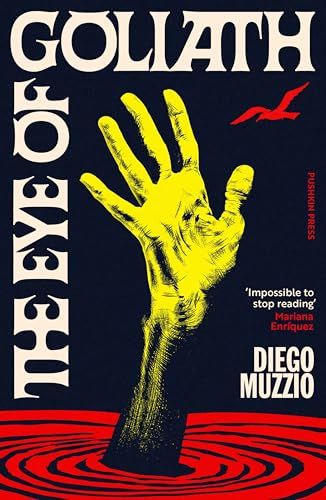
This review contains spoilers!
I was first drawn to this novel because it was described as being like Dr. Jekyll and Mr. Hyde. I also saw something of a much darker Piranesi in it, with flashes of Coleridge’s The Rime of the Ancient Mariner. And who doesn’t love a spooky psychological gothic mystery set in an asylum and an abandoned lighthouse?
This is a story within a story. Our protagonist, Dr. Edward Pierce, is haunted and traumatized by his experiences in the war. He even carries a frightful souvenir: a piece of shrapnel still lodged in his head, which he calls “the metallic rat.” It causes crippling headaches, and with them a morphine addiction.
At the sanatorium, Dr. Pierce takes on a new patient, David Bradley. Bradley is an engineer who was sent to an abandoned lighthouse off the coast of Argentina to repair its lantern. Bad weather leaves him stranded there, and he becomes haunted by, and then obsessed with, the last lighthouse keeper, Evans. Evans murdered his own family and was sent to the lighthouse because no one else would take the job. Bradley keeps a journal during his time on the island, and it charts his mental deterioration. Is he really being haunted by Evans’s ghost and stalked by a black albatross?
Bradley is eventually rescued, but his mind is shattered. He is mute and almost catatonic, and he “swims” across the floor until he is too exhausted to go on.
Dr. Pierce becomes obsessed with the journal and reads it several times. He devises a treatment that reenacts a scene from the trenches of the Western Front so that Bradley can face his hell head-on. [Spoiler] We learn that Bradley committed a murder himself, and that his guilt helped drive his breakdown at the lighthouse.
Meanwhile, Dr. Pierce’s obsession with his patient seems, to me, to be a way of distracting himself from his own PTSD. He is also a very proud man who uses his patients, his controversial therapies and his writing to define who he is.
I found this novel propulsive and provocative. It is poetically horrific in its portrayal of madness and the horrific repercussions the experience of war can bring. It would be an effective novel for study in high school, both for its themes and the author’s style.
Thank you to Pushkin Press and Netgalley for the copy.

